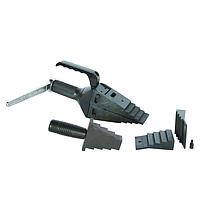
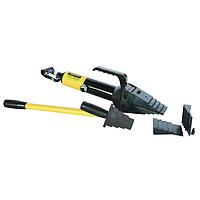
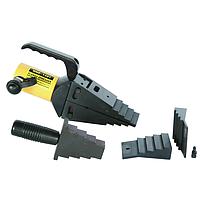
Flange Spreader
Opening pipe flanges safely and controlling flange position during maintenance, gasket replacement, or line separation requires more than general-purpose hand tools. In shutdown work, pipeline service, and heavy industrial assembly, the right flange spreader helps create a controlled gap while reducing the risk of flange damage, uneven force, or unsafe manual prying.
This category focuses on tools used for flange separation and related alignment work in bolted joint applications. Whether the job calls for a compact mechanical unit or a higher-force hydraulic solution, choosing the correct tool depends on access gap, required spread, flange thickness, and how much force must be applied in a controlled manner.
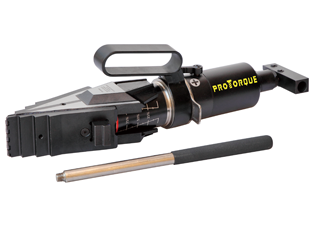
Where flange spreaders are used
Flange spreaders are commonly used in oil and gas maintenance, process plants, power generation, water treatment, ship repair, and other industrial environments where bolted flanged joints must be opened for inspection or service. Their role is to separate flange faces progressively, creating access for gasket removal, cleaning, replacement, or further disassembly.
Compared with improvised methods, a purpose-built spreader provides more predictable force application and better control in confined spaces. This is especially important when working around valuable pipework, critical sealing surfaces, or assemblies that must be reopened and reassembled with minimal distortion.
Mechanical and hydraulic options
Within this range, both mechanical and hydraulic flange spreaders are represented. Mechanical models are often suitable for lighter-duty work, maintenance teams that prefer simple operation, or applications where external hydraulic power is not necessary. Hydraulic designs are typically chosen when higher force, smoother spreading action, or more demanding flange separation conditions are involved.
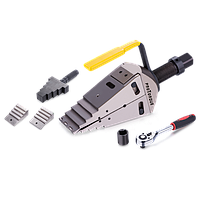
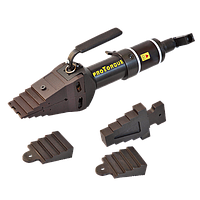
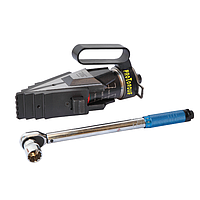
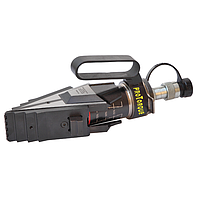
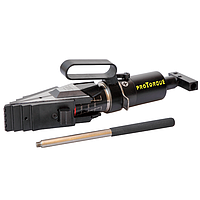
Examples in this category include the Protorque FSW14TM Mechanical Flange Spreader for manual operation and hydraulic alternatives such as the Protorque FSW25TE, Protorque FSH-14, and Protorque FS-109. For buyers comparing equipment across the range, the key distinction is not just power source, but how the tool fits the jobsite: available entry clearance, expected spread distance, and the load needed to open the joint safely.
What to consider when selecting a flange spreader
A practical selection process starts with the physical dimensions of the flange and the available insertion point. Some tools in this category are designed to work from a very small access gap, making them suitable when flange faces have only limited initial separation. Jaw geometry, tip clearance, and maximum spread all affect whether the tool can be inserted and whether it can create enough opening for the next maintenance step.
Force capacity is equally important. Smaller service work may only need a lower-capacity unit, while larger or more resistant joints may require significantly higher output. Models in this category cover a range from compact hydraulic spreaders such as the Protorque FS-56 up to higher-capacity options like the Protorque FSW25TI Integral Flange Spreader. Weight also matters for field work, particularly if technicians need to carry the tool to elevated or difficult-to-access locations.
For bolted joint work that includes both separation and repositioning, it can also be useful to review related alignment tools from Protorque. In many maintenance workflows, spreading and alignment are closely linked, especially when preparing for reassembly.
Flange alignment tools in the same workflow
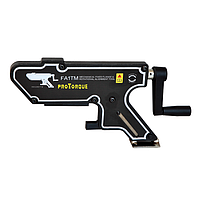
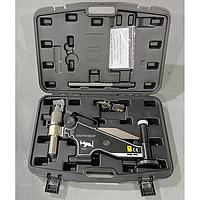
Although the category centers on spreaders, flange maintenance often requires a second step: bringing bolt holes back into position for safe, accurate reassembly. That is where flange alignment tools become relevant. Products such as the Protorque FA1TM, FA4TM, FA9TM, and FA9TE are intended for controlled alignment rather than separation, helping technicians correct positioning without resorting to impact-based methods.
From a workflow perspective, spreaders and alignment tools support different stages of the same task. A spreader opens the joint; an alignment tool helps return the flanges to the correct relationship for bolting. For maintenance planners and MRO buyers, understanding that distinction helps avoid selecting a single tool for a job that actually requires two different functions.
Examples across the Protorque range
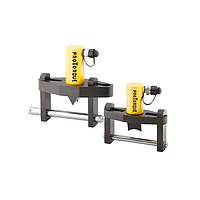
This category features several representative tools from Protorque, covering different operating preferences and force levels. The Protorque FSH-14 and FSH-15 Integral Flange Spreader are suitable examples of hydraulic designs used where a compact, dedicated spreading solution is needed. The Protorque FSH-14H offers a higher-weight hydraulic configuration for jobs where the application setup allows it.
For users evaluating flange thickness compatibility and stud-related constraints, the Protorque FS-56 and FS-109 provide another style of hydraulic spreading approach. Meanwhile, the FSW series illustrates how hydraulic and mechanical variants can exist within a similar duty class, which is helpful when standardizing tools across maintenance teams with different site conditions or operating preferences.
Supporting tools around flange work
Flange separation rarely happens in isolation. Teams often need additional assembly and maintenance tools during shutdown, installation, or overhaul work. Depending on the procedure, a socket wrench set may be required for bolt handling, while a repair kit can be useful for tool upkeep and continued readiness.
For broader workshop or field support, users may also review other assembly tools when building out a complete maintenance toolkit. These related categories can help buyers source the surrounding equipment needed for bolted joint service rather than focusing only on the flange spreader itself.
Choosing the right fit for maintenance and shutdown work
The best choice depends on how the tool will actually be used in the field. A compact mechanical spreader may be enough for occasional service tasks and straightforward flange separation. A hydraulic model may be the better fit when repeatability, higher force, or reduced manual effort is a priority. In either case, the more relevant comparison points are access gap, spread range, tool weight, and the type of flange assembly being serviced.
For industrial buyers, maintenance teams, and contractors, this category provides a focused range of flange spreaders and related alignment tools for controlled bolted joint work. Reviewing the available Protorque models by operating method and capacity can help narrow the selection to tools that match the demands of real maintenance conditions rather than generic workshop use.
Get exclusive volume discounts, bulk pricing updates, and new product alerts delivered directly to your inbox.
By subscribing, you agree to our Terms of Service and Privacy Policy.
Direct access to our certified experts