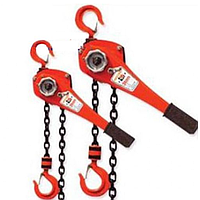
Chain blocks
Handling suspended loads safely is a routine requirement in workshops, assembly lines, maintenance areas, and construction sites. When lifting needs to be reliable without relying on complex powered systems, chain blocks remain a practical solution for positioning equipment, components, and heavy materials with better control.
This category brings together manual lifting devices and related hoisting equipment used for lifting, pulling, tensioning, and access support in industrial environments. Whether the task involves machine installation, maintenance work, material handling, or field operations, selecting the right hoist type and load class helps improve both safety and workflow efficiency.
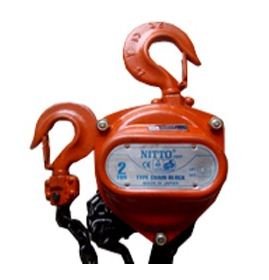
Where chain blocks are used in industrial work
Manual hoists are commonly chosen where lifting points are fixed, operating frequency is moderate, and portability matters. In fabrication shops, they are used to raise motors, gearboxes, fixtures, or machine parts during assembly and repair. On job sites, they help installers align structural parts and hold loads in position during fitting.
They are also useful in places where electrical power is unavailable or where a simple mechanical lifting method is preferred. For many maintenance teams, a chain block is not only a lifting tool but part of a broader toolkit that may also include a socket wrench set or a repair kit for complete installation and service work.
Key operating principle and main components
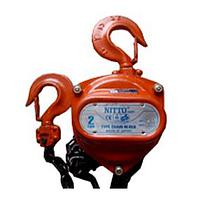
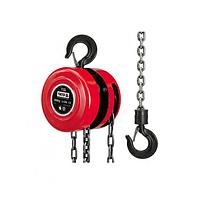
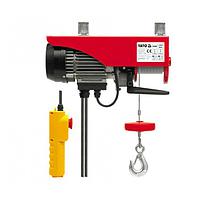
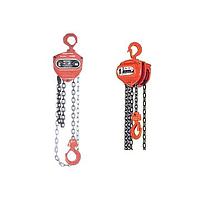
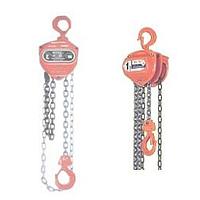
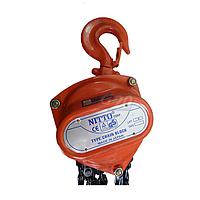
A chain block works by transferring operator force through gears and a load chain to raise or lower a suspended object. In manual models, the user pulls the hand chain, and the internal gear reduction multiplies force so heavier loads can be lifted with controlled motion. An integrated braking mechanism holds the load in place when pulling stops.
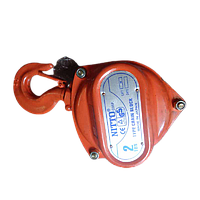
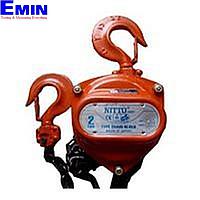
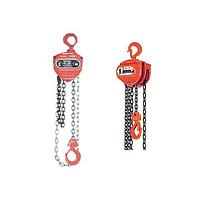
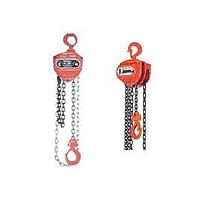
The basic assembly usually includes an upper hook for suspension, a lower hook for the load, the load chain, the hand chain, gear train, and brake system. Stable operation depends on correct vertical alignment, proper hook engagement, and using the unit only within its rated capacity.
Common product types in this category
This category is centered on manual chain hoists, but users often look for related lifting and pulling equipment depending on the application. A standard hand chain hoist is suitable for vertical lifting, while a lever chain hoist is often selected for pulling, tensioning, or short-stroke lifting in tighter working positions.
For example, the Nitto range includes models such as the Nitto 50VP5x3m hand chain hoist for heavier lifting tasks and the Nitto HSH-1T Lever Chain Hoist for more flexible pulling or positioning work. For medium-duty applications, the MAX MX2 Pulling Pulley 2ton is another example of manual lifting equipment used where compact handling and controlled load movement are important.
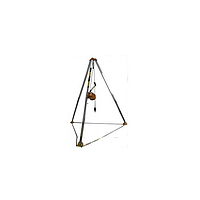
Some products in the broader selection also support specialized field work rather than conventional workshop lifting. Samyon winches such as the JC-1000, JC-2000, and JC-3000 are designed for controlled cable handling and depth-related operations, while the ADELA RT-025 Tripod supports lifting and access scenarios where a portable anchoring structure is required. These products do not replace standard chain blocks, but they show the wider hoisting ecosystem that industrial users may evaluate alongside manual hoists.
How to choose the right chain block
The first selection point is rated load capacity. The hoist should match the real load with an appropriate safety margin based on the lifting method, hook position, and operating conditions. In this category, examples range from compact 1-ton and 2-ton options up to 5-ton models, which is useful for matching the hoist to light maintenance work or heavier installation tasks.
Lifting height is the next practical factor. A 3 m lift is common for workshop use, but the required chain length depends on beam height and travel distance. Product weight can also matter if the hoist needs to be transported frequently between workstations or field locations.
Buyers should also consider the actual motion required. If the job involves straight vertical lifting, a hand chain hoist is usually appropriate. If the load must be pulled, aligned, tensioned, or repositioned horizontally or at an angle, a lever hoist may be more suitable. For supporting setup and adjustment work around machines, technicians may also need complementary hand tools such as a hex wrench set for fastening and alignment tasks.
Safe use and inspection points
Before operation, inspect the hooks, latches, chains, brake action, and suspension point. The load chain should not be twisted, and the hoist body should hang vertically. Any visible deformation, unusual resistance, or signs of wear should be checked before lifting begins.
During use, lift smoothly and avoid shock loading or side pulling unless the equipment is specifically intended for that purpose. Operators should keep the load balanced, ensure the travel path is clear, and never exceed the stated capacity. After use, lower the load in a controlled manner and store the hoist in a dry, clean area to reduce corrosion and unnecessary wear.
Representative products for different lifting needs
For heavier manual lifting, the Nitto 50VP5x3m model is a relevant option in the 5-ton class with a 3 m lifting height. For lighter work, the Nitto 1Tx3M provides a more compact 1-ton alternative, while the Nitto 20VP5-3M Pulling Pulley and MAX MX2 2ton address common mid-range handling needs.
Where the application extends beyond overhead lifting, specialized equipment can become more relevant than a standard chain hoist. Samyon automatic winches, including the JC-1000A and JC-2000A, are intended for controlled cable movement and measurement-related operations, and the ADELA RT-025 Tripod supports temporary lifting or retrieval setups with a portable frame. These examples are useful when buyers are comparing manual hoists with adjacent solutions for site work or inspection tasks.
How this category fits into a broader assembly and maintenance workflow
In real industrial environments, lifting is rarely a standalone activity. Hoists are often used together with fastening, adjustment, and disassembly tools during machine installation, overhaul, or line relocation. That is why buyers reviewing chain blocks may also want to explore other assembly tools that support handling and fit-up work around the lifted load.
A well-chosen hoist helps reduce manual strain, improves positioning accuracy, and supports safer handling procedures. The best option depends on the actual load, lifting height, working space, and whether the job calls for vertical lifting, pulling, or a more specialized cable-handling setup.
FAQ
What is the difference between a hand chain hoist and a lever hoist?
A hand chain hoist is mainly used for vertical lifting, while a lever hoist is often better for pulling, tensioning, and short-distance positioning where space is limited.
How do I select the right load rating?
Start with the actual load weight, then consider lifting conditions, attachment points, and working safety requirements. The hoist should never be used above its rated capacity.
Are all products in this category standard chain blocks?
No. The category may also include related hoisting and support equipment such as tripods or winches, which are relevant for users comparing lifting and handling solutions for different industrial tasks.
Choosing from a chain block category is ultimately about matching the lifting method to the job, not just picking a capacity number. If you compare load rating, lifting height, operating style, and the surrounding maintenance workflow carefully, it becomes much easier to identify the most suitable hoist or related lifting equipment for your application.
Get exclusive volume discounts, bulk pricing updates, and new product alerts delivered directly to your inbox.
By subscribing, you agree to our Terms of Service and Privacy Policy.
Direct access to our certified experts