
Conductivity TDS Controller
Stable control of dissolved solids and conductivity is essential in many water treatment and process applications, from simple dosing loops to continuous quality monitoring. When operators need a compact way to measure EC or TDS and trigger alarms, relays, or analog output signals, a Conductivity TDS Controller is often the practical choice for panel mounting or local control integration.
On this page, you can explore instruments designed for continuous measurement and control in systems where water quality directly affects process performance, product consistency, or equipment protection. These devices are commonly selected for applications such as filtration skids, chemical dosing systems, utilities, light industrial water treatment, and hydroponic nutrient monitoring.
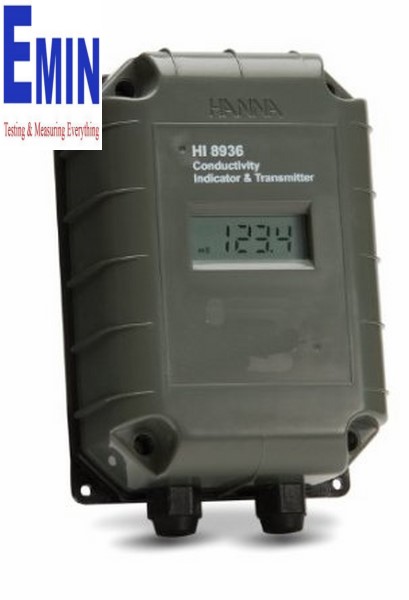
Where conductivity and TDS controllers are typically used
Conductivity and TDS are widely used as practical indicators of ionic concentration in water and process liquids. In real installations, a controller helps convert that measurement into action, such as switching a relay when a setpoint is exceeded, sending a 4-20 mA output to a PLC, or supporting local operator adjustment.
Typical use cases include rinse water control, RO system monitoring, dosing management, nutrient solution checks, and general water quality supervision. For broader system needs, users comparing multiple parameter types may also review water quality controllers and monitors to assess whether a single-parameter controller or a wider monitoring platform is more appropriate.
Understanding the difference between EC and TDS control
Conductivity measures the ability of a liquid to conduct electrical current, which is influenced by dissolved ions. TDS, or total dissolved solids, is often derived from conductivity using a conversion factor, making it a convenient value for operators who prefer ppm or mg/L as a control reference.
In practice, the choice between EC and TDS depends on how the process is managed. If your specification, SOP, or control logic is built around conductivity units such as μS/cm or mS/cm, an EC controller is usually more direct. If plant staff or treatment targets are defined in ppm or mg/L, a TDS controller may be easier to use and interpret on the shop floor.
Common controller formats in this category
This category includes compact panel and mini-controller formats suitable for local installation. Many models are designed for continuous process duty and include setpoint adjustment, manual calibration, automatic temperature compensation within a defined range, and relay-based dosing control.
Representative examples include the HANNA BL983313-2 Conductivity Mini Controller, the HANNA BL983320-2 for low-range EC control, and the HANNA BL983319-2 TDS Controller with analog output. For users looking at multi-parameter functionality, the EZDO 4801C combines conductivity, TDS, and temperature in one controller, while the EZDO 4803C adds transmitter functionality for signal integration.
Selection points that matter in real installations
The most important starting point is the measurement range. Low-conductivity water, purified water loops, and final rinse applications may require very different ranges from cooling water, general treatment systems, or nutrient-rich solutions. Choosing a controller with the right range helps maintain usable resolution and more meaningful process control.
A second consideration is signal and control integration. Some installations only need a local relay output for dosing or alarm action, while others also require a 4-20 mA interface for connection to PLC, SCADA, or remote indicators. Mounting format, supply voltage, and whether the controller includes or requires a separate probe should also be checked before selection.
For applications focused on very low conductivity or deionized water performance, it may also be useful to compare a water resistivity controller, since resistivity can be the more suitable control parameter in high-purity systems.
Examples of product types available
Several products in this category illustrate how controller choice can align with operating range and control style. The HANNA BL983322-2 is aimed at low-range EC control, while the HANNA BL983317-2 covers conductivity measurement up to 10.00 mS/cm and supports analog output for integration into wider control systems.
On the TDS side, models such as the HANNA BL983315-2 and HANNA BL983321-1 suit installations where ppm-based setpoints are preferred. For broader monitoring tasks in hydroponic or nutrient management environments, the HANNA HI981420-02 GroLine Monitor extends beyond EC/TDS to include pH and temperature, which can be relevant where several water chemistry variables interact in the same process.
If your project standardizes on a specific supplier, it can also be helpful to review the broader HANNA product range or compare with the available EZDO instruments for alternative controller styles and integration preferences.
How these controllers fit into a wider process control system
A conductivity or TDS controller rarely works in isolation. In a typical setup, the controller receives the signal from a compatible probe, compensates for temperature where supported, displays the live value, and then drives relays or analog outputs based on user-defined thresholds. This makes it useful for chemical dosing, alarm annunciation, diversion logic, or trend monitoring through external control hardware.
In water treatment skids and utility systems, conductivity control is often part of a larger instrumentation chain that may also include pH, dissolved oxygen, level, and flow devices. That broader context matters when choosing a controller, especially if the installation needs a consistent enclosure format, common output standards, or similar calibration workflows across multiple measuring points.
Choosing for application, not just for range
While range is important, the best fit usually comes from matching the controller to the process objective. A compact low-range unit may be ideal for purified water supervision, while a broader-range controller can be more suitable for chemical process water or general conductivity-based dosing. In systems where operators want both local control and signal transmission, a transmitter-controller style device can simplify panel design.
It is also worth considering maintenance routines. Controllers that support straightforward calibration and clear setpoint adjustment are often preferred in plants where downtime must be minimized. When the process includes other water chemistry variables, reviewing related categories such as DO controllers or fertigation systems may help define a more complete monitoring architecture, though the right choice depends on the actual parameter being controlled.
Final considerations before you buy
This category is intended for buyers who need dependable control around EC or TDS measurement rather than handheld spot checking alone. Whether the requirement is a mini controller for dosing, a panel device with analog output, or a multi-parameter solution for nutrient and water quality management, the right selection starts with process range, output needs, and installation conditions.
If you are narrowing down options, compare the target measurement units, required control logic, available outputs, and the practical role of the controller within your system. A well-matched conductivity or TDS controller can make everyday operation more consistent, easier to supervise, and simpler to integrate into a larger water treatment or process control setup.
Get exclusive volume discounts, bulk pricing updates, and new product alerts delivered directly to your inbox.
By subscribing, you agree to our Terms of Service and Privacy Policy.
Direct access to our certified experts
