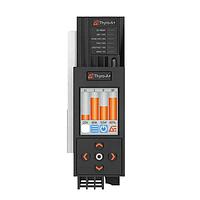
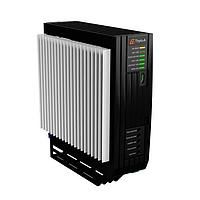
Power controller
Stable power management is a practical requirement in switchboards, industrial panels, building systems, and utility monitoring points. When engineers need better visibility into voltage, current, power factor, energy use, or communication data for higher-level control systems, a power controller category becomes highly relevant for both monitoring and operational decisions.
On this page, you can explore devices used to supervise electrical parameters, support breaker monitoring, and integrate power data into plant or facility automation. The selection is especially useful for projects that need panel-mounted instruments with communication capability, local display, and dependable measurement for daily energy management or more advanced power quality analysis.

Where power controllers fit in industrial systems
In many applications, the device is not just a meter for reading volts and amps on the front panel. It often acts as a bridge between field-level electrical data and supervisory systems, helping maintenance teams, panel builders, and facility engineers understand what is happening inside feeders, motor control sections, or distribution boards.
Depending on the installation, these units may support breaker monitoring, basic energy tracking, alarm handling, or communication through common industrial protocols such as Modbus RS-485 or Modbus TCP/IP. That makes them suitable for projects where local indication and networked visibility are both important.
Typical measurement and monitoring needs
A practical power controller usually needs to cover the core values used in electrical supervision: current, voltage, active power, reactive power, apparent power, frequency, power factor, and energy consumption. For many facilities, this level of data is enough to improve load awareness, compare operating conditions between panels, and identify abnormal behavior before it becomes a larger issue.
Some models in this category also go further by supporting harmonic monitoring, voltage disturbance observation, or event-oriented diagnostics. That is especially useful in installations with variable loads, sensitive equipment, or a need for closer analysis of power quality over time.
Examples from Schneider and OMRON
Several products in this category illustrate the range of use cases well. From SCHNEIDER, the PM5000 and PM8000 series are positioned for different levels of monitoring depth. Models such as METSEPM5111, METSEPM5331, METSEPM5341, and METSEPM5563 are suitable when users need panel-based measurement with communication and practical integration into energy management or breaker-related supervision.
For more advanced monitoring, PM8000 series models including METSEPM8240, METSEPM8243, METSEPM8244, and METSEPM82401 are relevant in systems where harmonics, voltage events, waveform capture, or alerting functions matter. On the OMRON side, KM1-PMU1A-FLK, KM1-PMU2A-FLK, and KM50-E1-FLK show how compact power monitoring can be applied in control panels that require electrical visibility and communication without making the design unnecessarily complex.
How to choose the right device
The best selection process starts with the job the device must perform in the system. If the main requirement is local visibility and routine electrical monitoring, a model with a clear display and essential measurements may be enough. If the data must be sent to PLC, SCADA, or BMS platforms, communication type becomes a more important filter.
It is also useful to check whether the application needs only measurement or also some level of I/O interaction for status or control purposes. In this category, some devices include digital inputs and outputs, while others focus more on data acquisition and communication. Engineers should also review control power range, current input expectations such as 1A or 5A systems, panel space, and whether Ethernet-based communication is preferred over serial networks.
For users comparing related control hardware, it can also help to review broader options such as multi-function controller solutions when the project combines several monitoring or control tasks in one system.
Communication and integration considerations
In modern plants, electrical data is most useful when it is shared rather than isolated. Many devices listed here support Modbus RTU over RS-485, while some models add Modbus TCP/IP for easier connection into Ethernet-based architectures. This helps power information move into SCADA dashboards, energy reports, remote alarms, or centralized building management systems.
Integration becomes even more valuable when electrical monitoring is only one part of a larger control strategy. A facility may combine a power controller with a power monitoring device category selection for panel upgrades, or compare adjacent product groups such as load cell online controllers in applications where process control and utility data need to be viewed together.
Applications in panels, facilities, and energy management
Power controllers are commonly used in LV distribution panels, machine power sections, utility incomers, and sub-metering points. In these roles, they support daily tasks such as checking load balance, identifying inefficient operation, following energy consumption trends, and verifying electrical conditions before maintenance work or system expansion.
They are also relevant in projects that monitor ACB and MCCB status or electrical behavior around critical feeders. In commercial buildings and industrial facilities alike, this kind of data supports better troubleshooting and creates a clearer basis for decisions about energy use, equipment loading, and system reliability.
Why product range matters in this category
Not every project needs the same monitoring depth. A compact controller with core measurements and RS-485 communication may be suitable for standard panel work, while a more advanced instrument is a better fit for sites that care about waveform capture, harmonic behavior, or more granular energy analysis. That is why the category includes both straightforward panel instruments and higher-level models intended for demanding monitoring environments.
Brand variety also matters, but specification fit should come first. In this category, OMRON and SCHNEIDER are particularly relevant because the available products clearly reflect different practical levels of functionality, from routine electrical supervision to more detailed power quality monitoring.
Short FAQ
What is the difference between a basic power meter and a power controller?
In practical industrial use, the distinction often comes from integration and function depth. A basic meter may focus on displaying electrical values, while a power controller is more likely to support communication, system monitoring, and interaction with broader control or management platforms.
When is harmonic monitoring necessary?
It becomes more important when the facility includes non-linear loads, sensitive electronic equipment, or recurring electrical quality issues. In such cases, advanced models can provide more meaningful diagnostic data than standard measurement-only devices.
Is Modbus enough for most applications?
For many panel and facility monitoring projects, yes. Modbus RS-485 remains widely used, and Modbus TCP/IP is often preferred when the system architecture is Ethernet-based and easier network integration is required.
Choosing the right power controller depends on how much visibility, communication, and analysis your electrical system actually needs. A well-matched device can improve everyday monitoring, support smarter maintenance, and provide more useful data for automation or energy management without adding unnecessary complexity to the panel design.
Get exclusive volume discounts, bulk pricing updates, and new product alerts delivered directly to your inbox.
By subscribing, you agree to our Terms of Service and Privacy Policy.
Direct access to our certified experts