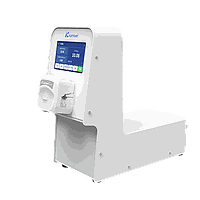
Dosing Pump
Accurate chemical feed is essential in water treatment, process control, and many industrial dosing tasks where consistency matters as much as flow rate. When selecting a Dosing Pump, buyers typically need more than a simple product list—they need a clear view of dosing range, pressure capability, compatible accessories, and how the pump fits into a wider monitoring or control setup.
This category brings together dosing pump solutions and related components used for controlled injection of chemicals such as acids, bases, disinfectants, and treatment agents. It is especially relevant for users who need repeatable low-flow dosing, straightforward maintenance, and practical integration with process systems.
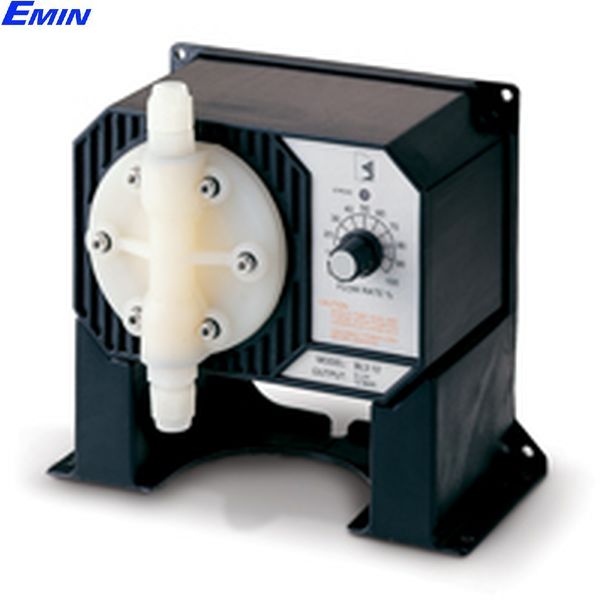
Where dosing pumps are typically used
A dosing pump is commonly chosen when a process requires precise chemical injection rather than bulk transfer. Typical applications include pH correction, water conditioning, disinfection, nutrient or reagent feed, and other treatment steps where the delivered volume must remain controlled over time.
In many installations, the pump is only one part of the system. It may work alongside a controller or with broader process control and monitoring devices to maintain stable operating conditions. This makes correct pump selection important not only for hydraulic performance, but also for process reliability.
What to look for when choosing a dosing pump
The first decision usually comes down to the relationship between required flow and discharge pressure. Some applications need higher flow at relatively low pressure, while others require smaller volumes delivered against more resistance. In this category, examples such as the HANNA BL1.5-2 BlackStone Dosing pump, HANNA BL3-2 BlackStone Dosing pump (2.9L/h), HANNA BL5-2 BlackStone Dosing pump, and HANNA BL10-2 BlackStone Dosing pump (10.8L/h) illustrate how dosing requirements can vary significantly from one installation to another.
Beyond capacity, buyers should also consider maintenance access, tubing compatibility, valve assemblies, and whether the system may later be expanded into a more automated control loop. For applications that combine measurement and dosing in one package, a unit such as the HANNA BL7916-2 pH Controller and Chemical Dosing Pump can be relevant where pH-dependent chemical feed is part of the process.
Pump accessories and replacement parts matter in long-term operation
For many B2B users, uptime is influenced as much by spare parts availability as by the pump itself. Dosing systems depend on wear components and fluid-contact parts that need periodic inspection or replacement, especially when handling aggressive chemicals or running continuously.
That is why this category is also valuable for users sourcing key replacement items such as the HANNA HI721004 Injection Valve Assembly, HANNA HI721102 Pumphead Top Discharge Valve, HANNA HI721103 Spare Pump Kit, Suction Valve Assembly, and HANNA HI 721005 Foot Valve Assembly. These parts support routine service work and help restore dosing performance without replacing the full pump.
Tubing compatibility and fluid path considerations
The fluid path is central to safe and repeatable dosing. Tubing size, material compatibility, valve condition, and suction-side stability all affect how accurately a pump can deliver chemicals over time. Even a well-selected pump may perform poorly if the tubing is not suited to the application or if the suction and discharge components are not maintained properly.
As an example, the HANNA HI720031 LDPE Tubing (50m) is positioned as a supporting component for BlackStone dosing pumps. In practical terms, accessories like this are not just add-ons—they are part of the overall dosing system and can influence priming behavior, feed stability, and service intervals.
Representative manufacturers in this category
This range prominently includes products from HANNA, a manufacturer widely associated in this catalog with dosing pumps, valve assemblies, tubing, and integrated pH control plus dosing solutions. The HANNA BlackStone series shown here covers different feed rates and operating profiles, which is useful for users comparing compact chemical dosing options.
Depending on project requirements, buyers may also review brands such as Blue White and GLobal Water for broader sourcing context. In practice, manufacturer choice is often influenced by the required dosing range, maintenance preferences, installed base, and whether the application is pump-only or part of a larger control architecture.
How dosing pumps fit into a control and monitoring system
In many industrial environments, dosing pumps are selected together with measurement and feedback components rather than as stand-alone devices. A chemical feed point may depend on pH, conductivity, residual disinfectant, or another process variable, and that usually means the pump must work in coordination with sensors, indicators, or control logic.
For buyers building or maintaining a complete system, it can be helpful to also review meters and indicators or related control accessories when planning installation and operation. This broader view is especially useful in treatment skids, process water systems, and compact dosing panels where mechanical, electrical, and monitoring elements are closely linked.
Typical selection approach for B2B procurement teams
A practical sourcing workflow starts with the chemical, target dosing volume, operating pressure, and duty cycle. From there, teams usually compare whether a simpler pump configuration is enough or whether the application calls for an integrated control-and-dosing unit. Maintenance strategy also matters: sites with critical uptime often stock suction valves, discharge valves, foot valves, and tubing together with the pump.
It is also sensible to review installation space, available power supply, and operator access for service tasks. In real operating conditions, the right choice is often the one that balances dosing accuracy, maintainability, and compatibility with the surrounding process equipment rather than focusing on one specification alone.
Find the right dosing pump for your process
This category is designed for users comparing compact chemical feed pumps, integrated pH dosing solutions, and the replacement parts that keep those systems running. Whether the requirement is a low-flow feed pump, a higher-capacity BlackStone model, or a specific valve or tubing component, the most effective selection comes from matching the pump and accessories to the actual process conditions.
If you are building a new chemical dosing setup or maintaining an existing one, use this range to compare pump types, supporting assemblies, and related control options in a more structured way. A well-matched dosing system helps improve process consistency, simplifies maintenance planning, and supports more reliable operation over the long term.
Get exclusive volume discounts, bulk pricing updates, and new product alerts delivered directly to your inbox.
By subscribing, you agree to our Terms of Service and Privacy Policy.
Direct access to our certified experts