Industrial Relays & Accessories
Reliable switching is at the heart of every control panel, machine interface, and automated process. When a system needs to isolate signals, drive loads, add timing logic, or simplify maintenance, Industrial Relays & Accessories provide the practical building blocks that keep automation systems responsive and serviceable.
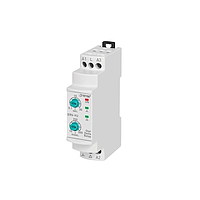
This category brings together relay technologies used across industrial control, equipment integration, and panel assembly. From general switching and timing functions to socketing and specialized relay formats, the right selection depends on load type, control method, installation style, and the level of protection needed in the application.
Where industrial relays fit in automation systems
Relays are commonly used as the interface between low-power control signals and higher-power field devices. In practice, they help PLCs, controllers, sensors, and operator devices switch motors, alarms, valves, lamps, and interlocking circuits without exposing the control side directly to the load side.
In many installations, relays also improve troubleshooting and maintenance. A socketed relay can often be replaced faster than a board-level switching element, and accessories such as mounting hardware or interface bases can make wiring cleaner inside densely populated enclosures. For broader control architectures, users often review related product groups such as industrial controllers alongside relay-based switching components.
Main relay types covered in this category
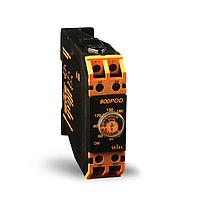
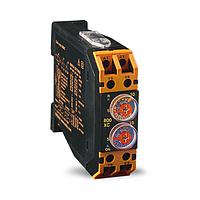
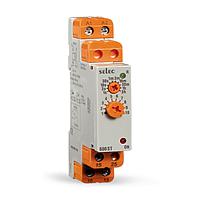
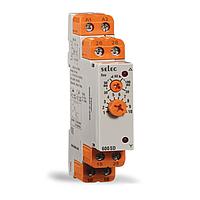
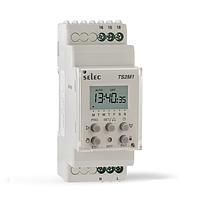
This category spans several relay families used for different control tasks. Time delay relays and timers are selected when a switching action must occur after a preset interval or according to a defined timing sequence. Solid state relays are often considered when long electrical life, silent operation, or high switching frequency is important. Safety relays support circuits where monitoring and fault response are critical, while low-signal and RF relay types serve more specialized signal-handling requirements.
Accessories matter just as much as the relay itself. Relay sockets, retainers, clips, and mounting hardware support easier replacement, more secure panel installation, and better service access. In real projects, choosing the relay without considering its socket, terminal style, and mounting environment can create unnecessary complexity during assembly or maintenance.
How to choose the right relay for the application
A practical selection process starts with the switching task. Consider the control voltage available, the type of load being switched, the expected operating cycle, and whether the application needs isolation, delay logic, or fast signal handling. Contact arrangement, relay technology, and mounting style should all align with the control panel layout and the electrical behavior of the connected equipment.
It is also important to think beyond the relay body itself. Environmental conditions, enclosure space, front-access serviceability, and wiring preferences can affect whether a plug-in relay with socket hardware is more suitable than another format. Where timed counting or sequence control is involved, users may also compare relay-based timing with dedicated counters and tachometers depending on the level of logic and display feedback required.
Relay accessories and panel integration considerations
Relay accessories are not just optional add-ons; they often determine how practical the final installation will be. Sockets and hardware can reduce downtime during replacement, improve wiring consistency, and support standardized maintenance procedures across multiple panels or machines.
For panel builders and maintenance teams, the mechanical side of integration is as important as the electrical side. Mounting method, terminal accessibility, labeling, and replacement clearance should all be considered early. In systems where relays are used to protect or segment electrical paths, it may also be useful to review related circuit protection components as part of the overall design.
Featured brand and product example
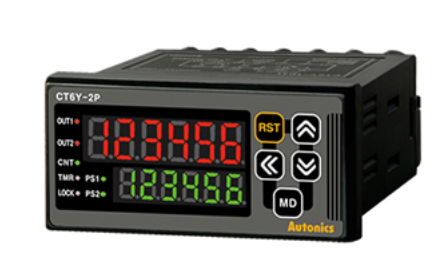
Among the manufacturers represented in this ecosystem, Autonics is a familiar name for industrial control and timing devices. A representative example is the Autonics CT6Y-2P2 Counter, which illustrates how timing and counting functions often overlap with relay-based automation tasks in practical machine control.
This model supports multiple count and timer operating methods, flexible signal input options, and panel-oriented installation features such as terminal block connection and front protection suited for industrial environments. While a dedicated counter is not the same as a relay, it is a useful reference point for applications where switching logic, pulse input handling, and timed control need to work together within a compact automation setup.
Typical use cases in industrial environments
Industrial relays and their accessories are widely used in packaging machines, conveyors, process skids, utility panels, material handling systems, and general factory automation. They are often selected to isolate control outputs, create interposing stages between controllers and field devices, or add simple timing and logic functions without redesigning the main control platform.
In retrofit work, relays can be especially useful because they help bridge older field wiring with updated control schemes. They also remain relevant in hybrid systems where sensors, cameras, counters, and electromechanical devices must work together. For machine builders working with vision-based inspection or trigger logic, adjacent categories like cameras and accessories may become part of the same solution stack.
What matters most for long-term reliability
Long-term relay performance depends on matching the device to the electrical and mechanical demands of the application. Frequent switching, inductive loads, limited cabinet ventilation, and difficult service access can all affect relay life and maintenance intervals. Choosing an appropriate relay type and the right accessory set helps reduce unplanned replacement and simplifies field support.
Standardization also plays a major role in B2B procurement. Using consistent relay formats and socket hardware across panels can streamline spare parts planning, technician training, and maintenance procedures. For OEMs, integrators, and plant teams, that consistency is often just as valuable as the relay’s switching function itself.
Supporting a more practical relay selection process
This category is designed for buyers, engineers, and panel builders who need a clear path to relay and accessory selection rather than a disconnected list of parts. Whether the priority is timed switching, signal isolation, socketed serviceability, or integration into a larger automation cabinet, the most effective choice is the one that fits the control strategy, load behavior, and maintenance workflow together.
By reviewing relay type, accessory compatibility, and system context as a whole, it becomes easier to narrow down components that support reliable operation in real industrial environments. That approach leads to cleaner panel design, simpler replacement planning, and a better fit between the relay solution and the machine or process it supports.
Get exclusive volume discounts, bulk pricing updates, and new product alerts delivered directly to your inbox.
By subscribing, you agree to our Terms of Service and Privacy Policy.
Direct access to our certified experts