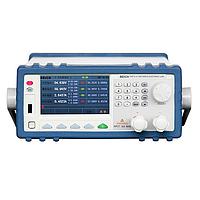
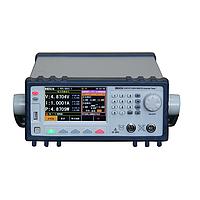
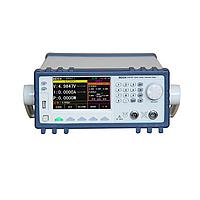
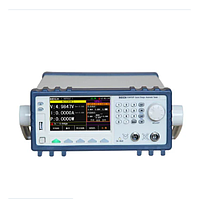
Charging Tester
Reliable charging verification matters wherever EV infrastructure, charging cables, and power delivery systems need to be checked before commissioning, maintenance, or troubleshooting. On this page, you can explore Charging Tester solutions used to evaluate charging stations, charging adapters, and related electrical behavior with a stronger focus on safety, functional checks, and diagnostic visibility.
These instruments are relevant for service teams, installers, inspection professionals, and technical buyers who need practical tools for confirming charging point operation, simulating vehicle and cable states, and identifying faults without relying on guesswork. The category also fits wider battery and electrical test workflows, especially when charging performance needs to be reviewed alongside power quality or battery-related test equipment.
Where charging testers fit in technical workflows
A charging tester is typically used to validate the interaction between an EV charging point and the expected vehicle-side conditions. In practice, that can include checking control pilot behavior, cable coding, phase presence, fault simulation, and protective functions such as RCD or related trip behavior. For commissioning teams, this helps confirm that a charger responds correctly before the site is handed over.
In maintenance and field diagnostics, these tools help isolate whether an issue comes from the charging point, the cable, the signaling state, or the surrounding electrical installation. This is especially useful when intermittent charging, state errors, or failed authorization and start conditions must be investigated in a structured way.
Common test tasks covered by this category
The products in this category illustrate several typical testing approaches. Some devices are designed for functional EV charger testing, including simulation of vehicle states such as A, B, C, D, or error conditions. Others support cable-side verification, continuity, insulation checks, current coding review, and pass/fail workflows for service documentation.
Depending on the model, users may also need to verify phase indication, PWM signal behavior, charging current calculation logic, voltage presence, rotary field, and fault scenarios like CP-PE short or protective conductor interruption. For organizations managing multiple charger types, choosing a tester with support for the required connector format and application scope is often more important than comparing specifications in isolation.
Representative product options from leading manufacturers
FLIR offers compact charger test solutions oriented toward practical field use. The FLIR EV45–T2 EV Charger Test Adapter and FLIR EV45–NACS EV Charger Test Adapter are examples of portable adapters built for charger validation with simulated charging states and fault checks. For teams that want a bundled setup, the FLIR EV-KIT-1 EV Charger Test Kit and FLIR EV-KIT-2 EV Charger Test Kit combine the adapter concept with a meter-based workflow for broader troubleshooting in the field.
Gossen Metrawatt covers a wider range of diagnostic depth, from straightforward checks to more advanced standardized testing. Examples include the PROFiTEST H+E EASY CHECK for AC charging stations, the PROFiTEST H+E BASE 32 and BASE C diagnostic units for charging points, and the PROFiTEST H+E CABLE for standardized testing of e-charging cables. For users who also need electrical safety verification around charging systems, the PROFITEST PRIME extends the workflow beyond functional simulation alone.
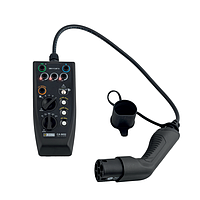
Chauvin Arnoux is represented here by the CA 6652 electric vehicle charging station tester, which supports testing in both single-phase and three-phase charging environments. This kind of instrument is particularly relevant when installers and service engineers need a dedicated tester for routine station checks without overcomplicating the process.
How to choose the right charging tester
The first question is usually the charging interface and test scenario. If your work mainly involves Type 2 charging stations, a dedicated Type 2 solution may be sufficient. If you support multiple connection types or a broader service network, it makes sense to look for a tester or kit that covers Type 1, Type 2, or NACS where applicable, while also supporting the specific state and fault simulations your workflow requires.
The second consideration is whether you need basic functional confirmation or a more complete diagnostic process. A simple charger adapter may be enough for quick on-site checks, while cable testing, insulation measurement, continuity testing, and automated pass/fail sequences are more relevant in formal inspection, repair, or quality control environments. If the charging installation must also be evaluated from the wider power side, some teams complement these tools with a battery monitoring equipment workflow or supporting electrical test instruments.
Usability also matters. Portable adapters and field kits are often preferred for mobile service calls, while bench-friendly or report-capable instruments may suit workshop, training, or recurring inspection tasks better. For more advanced environments, data storage, display clarity, and integration into existing maintenance procedures can influence long-term efficiency.
Functional testing versus broader electrical verification
Not every charging issue is caused by the charger interface itself. In some applications, the charging point behaves correctly, but upstream voltage quality, grounding, or installation conditions affect performance. That is why some buyers consider charging testers as part of a larger diagnostic ecosystem rather than a stand-alone purchase.
For example, the Gossen Metrawatt HDPQ PLUS Power Quality instrument can support analysis when power behavior needs more detailed attention. In battery-oriented test environments, users may also work alongside a battery impedance tester or a battery simulating DC power supply when validating related systems, power stages, or development setups. The right category mix depends on whether your priority is charger commissioning, electrical safety testing, cable inspection, or system-level analysis.
Typical users and application environments
Charging testers are commonly used by EV charger installers, maintenance contractors, service organizations, inspection companies, technical training centers, and industrial users responsible for fleet or site charging availability. In these environments, repeatable checks are essential not only for fault finding but also for documenting work quality and reducing unnecessary part replacement.
They are also relevant in production, incoming inspection, or service workshops where charging cables and charging points need consistent acceptance criteria. Models with automated routines and clearer pass/fail presentation are often helpful in these settings because they reduce interpretation time and support more standardized procedures across technicians.
What to review before ordering
Before selecting a unit, confirm the connector type, phase configuration, and whether the tester is intended for charging stations, charging cables, or both. It is also worth checking whether you need only simulation and indication, or additional measurements such as insulation resistance, continuity, voltage, frequency, or tripping behavior. Matching the tool to the real service task usually delivers better value than simply choosing the most feature-rich option.
It can also be useful to compare whether your workflow depends on portability, integrated display guidance, stored measurements, or compatibility with supplementary instruments. If your team already uses manufacturer-specific tools, keeping within the same ecosystem may simplify training and service consistency.
Conclusion
This category brings together practical tools for checking charging point behavior, charger-to-vehicle signaling, cable conditions, and related electrical safety functions. Whether you need a compact adapter for field diagnostics or a more advanced platform for standardized testing, the available options from FLIR, Gossen Metrawatt, and Chauvin Arnoux cover a range of professional use cases.
By selecting a tester that matches your connector types, diagnostic depth, and reporting needs, you can build a more efficient and dependable charging verification process. That usually leads to faster troubleshooting, clearer maintenance decisions, and better confidence in charger readiness across installation and service work.
Get exclusive volume discounts, bulk pricing updates, and new product alerts delivered directly to your inbox.
By subscribing, you agree to our Terms of Service and Privacy Policy.
Direct access to our certified experts