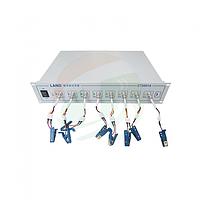
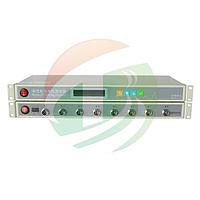
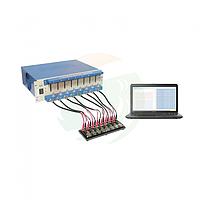
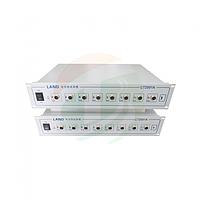
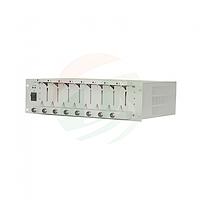
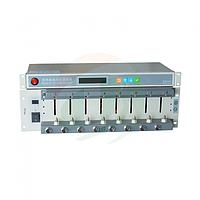
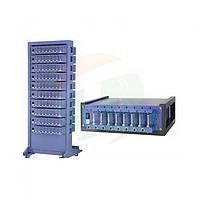
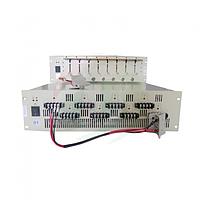
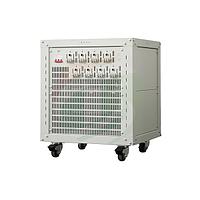
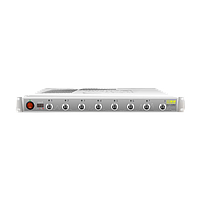
DC power suppy for battery test
Battery development, validation, and production testing all depend on a stable DC source that can do more than simply output voltage. In real test workflows, engineers often need precise charge and discharge control, fast response, programmable steps, data logging, and communication with upper-level software. That is why DC power supply for battery test systems are widely used in cell, module, and PACK evaluation environments.
On this page, you can explore equipment designed for different battery test ranges, from low-voltage research channels to high-power PACK platforms. The category is relevant for laboratories, pilot production lines, battery R&D teams, EV component testing, and manufacturers that need repeatable electrical test conditions with traceable data.
Where these systems fit in battery testing
A battery test DC power platform is typically used when the process requires controlled charging, controlled discharging, cycle testing, or simulation of operating conditions. Compared with a general-purpose bench supply, this type of equipment is built around test logic, channel management, protection functions, and reporting features that support engineering and quality workflows.
Depending on the application, the requirement may range from microcurrent and low-voltage cell testing to high-current PACK testing at hundreds of kilowatts. In broader battery labs, these systems are often used alongside battery monitoring equipment when voltage, temperature, or auxiliary channel acquisition must be extended beyond the main test channel.
Typical capabilities to look for
When selecting a battery test power system, the most important factors are usually voltage range, bidirectional current capability, power level, control accuracy, and response speed. Many projects also require programmable modes such as CC, CV, CP, CR, combined charge profiles, pulse operation, and step-based sequences for cycling or simulation.
Modern platforms in this category also place strong emphasis on data traceability. Useful functions may include TCP/IP communication, LAN-based integration, database storage, export to Excel or TXT, barcode-related workflow support, and configurable cut-off conditions based on voltage, current, time, or capacity. In production and qualification environments, these features are often as important as raw electrical performance.
Examples from NEWARE and WOCEN
NEWARE appears in this category with systems that cover both precision laboratory testing and supporting test architecture. For example, the NEWARE CT-9000-5V5A Battery Testing System is suited to low-voltage battery research where fine current control, high recording frequency, pulse capability, and DCIR-related testing are important. NEWARE also offers supporting devices such as the CT-ZWJ-4'S-T-1U control unit and the CA-4008n-1U-5VT-TC auxiliary access device, which help expand communication and auxiliary measurement functions in a larger test setup.
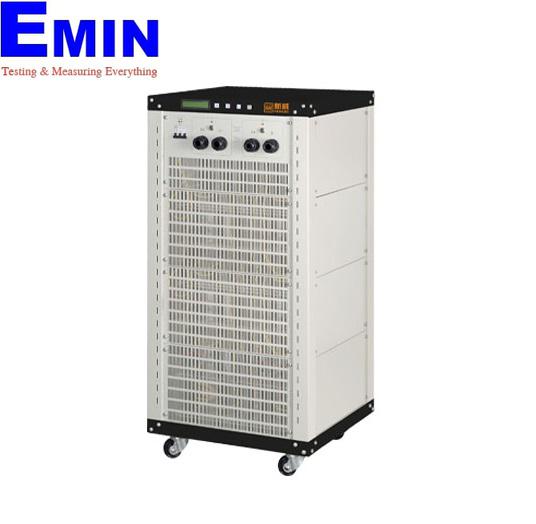
For higher-power applications, WOCEN provides PACK-oriented systems such as the WBTS-050-1000, WBTS-080-1000, WBTS-200-1000, WBTS-250-1000, WBTS-400-1000, and WBTS-500-1000. These platforms are aimed at demanding charge/discharge work with wide voltage coverage, substantial bidirectional current, programmable loop testing, and networked data management. They are relevant for EV battery PACK verification, endurance testing, and power battery process development.
From low-voltage cell testing to high-power PACK validation
One of the main reasons this category matters is the wide gap between use cases. A small-format battery research lab may prioritize current resolution, pulse width, and detailed waveform capture. In that case, a compact system with precise low-voltage control can be more useful than a large high-power platform.
By contrast, module and PACK testing usually requires a very different specification profile: higher voltage windows, larger bidirectional current, strong thermal and electrical protection, and efficient energy handling. Products such as the NEWARE CE-6002n-60V1000A-H Battery Test Equipment and the WOCEN WBTS series illustrate how this category supports both precision test tasks and heavy-duty energy storage or traction battery workflows.
How to choose the right DC power supply for battery test
The first step is to define the battery object under test clearly: cell, module, or PACK. That determines the required voltage range, current range, and whether the system needs only charging control or true bidirectional charge/discharge operation. It is also important to check whether channels must be independently controlled or combined in parallel for higher throughput or higher current demand.
Next, review the test method itself. If your process includes cycle life testing, pulse testing, DCIR-related routines, internal resistance analysis, or work-condition simulation, the equipment should support those functions natively or within the software environment. If your workflow also needs emulation rather than just charging and discharging, it may be useful to compare options in the related battery simulating DC power supply category.
Finally, look beyond the electrical headline values. Communication interfaces, software structure, report export, database compatibility, environmental operating limits, and safety protections all influence day-to-day usability. In B2B environments, these practical details often determine whether a system integrates smoothly into R&D, QC, or automated production testing.
System integration and test ecosystem considerations
A DC supply used for battery testing rarely works in isolation. It often sits inside a wider setup that includes control software, auxiliary voltage or temperature acquisition, LAN communication, and traceability tools. That is why products in this category often highlight Ethernet or TCP/IP communication, MySQL-based data handling, and optional expansion through CAN or RS485.
In some workflows, engineers also need dedicated tools for battery health checks outside full cycling tests. For those scenarios, a complementary instrument such as a battery impedance tester can add diagnostic value when characterizing internal behavior, screening incoming units, or comparing results across different test stages.
What buyers often compare in this category
Technical buyers usually compare equipment in this category based on a combination of test coverage and operational efficiency. Common decision points include:
- Voltage and current range appropriate for the battery chemistry and form factor
- Power level per channel and total system architecture
- Accuracy, sampling behavior, and response time
- Support for CC, CV, CP, CR, pulse, and loop-based test methods
- Protection functions for reverse connection, over-voltage, over-current, and short circuit conditions
- Software communication, data export, and long-term traceability
For engineering teams, the best fit is usually the system that matches the real test window without excessive oversizing. A well-matched platform improves repeatability, simplifies setup, and makes it easier to scale from development to routine validation.
Conclusion
This category brings together programmable DC power platforms for battery testing across a broad performance range, from fine-control laboratory systems to high-power PACK test equipment. Whether the goal is cell characterization, module validation, or large-format battery charge/discharge testing, the right solution depends on matching electrical capability, test functions, communication features, and protection design to the actual workflow.
If you are comparing options, start with the required voltage, current, power, and test mode, then review how the system handles data, integration, and auxiliary measurement. That approach makes it easier to identify a practical, scalable solution for long-term battery test operations.
Get exclusive volume discounts, bulk pricing updates, and new product alerts delivered directly to your inbox.
By subscribing, you agree to our Terms of Service and Privacy Policy.
Direct access to our certified experts