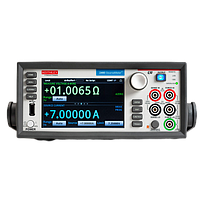
SMU Semiconductor Test
Accurate electrical characterization is essential when working with semiconductors, sensors, advanced materials, and low-power electronic components. In these environments, the ability to source and measure voltage and current in a tightly controlled way is often more important than raw power alone. That is why SMU Semiconductor Test instruments are widely used in R&D labs, device validation, wafer-level testing, and precision component analysis.
This category focuses on source/measure solutions designed for applications where trace-level current, stable sourcing, and repeatable measurement matter. Whether the task involves I-V characterization, leakage testing, pulsed measurements, or detailed evaluation of electronic devices, SMU platforms help combine multiple test functions into one instrument and simplify the overall setup.

Why source measure units matter in semiconductor testing
A source measure unit combines precision sourcing and measurement in a single channel, allowing engineers to apply voltage or current while simultaneously reading the device response. This is especially useful for semiconductor test workflows, where even small variations in current, leakage, or threshold behavior can affect product quality, yield, or design decisions.
Compared with using separate power supplies and meters, an SMU can improve synchronization, reduce wiring complexity, and support more controlled test sequences. For low-level device analysis, fine resolution and stable output are important because the instrument itself should not become the dominant source of noise or uncertainty in the measurement chain.
Typical applications in labs, validation, and production support
SMU-based testing is common in characterization of diodes, transistors, LEDs, photodetectors, sensors, and other semiconductor devices. Engineers also use these instruments for material research, battery-related cell studies at low power, and evaluation of components that need both forcing and measurement in multiple operating quadrants.
In practical terms, these systems are often selected for I-V sweeps, leakage current checks, breakdown-related investigation, and pulsed current or voltage testing. If your workflow also includes broader electrical troubleshooting, a digital multimeter category can be a useful complement for general bench measurement, while SMUs remain the stronger choice for tightly integrated source-and-measure tasks.
What to consider when selecting an SMU platform
The right instrument depends on the device under test, the test method, and the required throughput. Key selection points usually include channel count, voltage and current range, low-level measurement resolution, pulse capability, and digitizing speed. For benchtop characterization, a single-channel unit may be enough, while more advanced fixtures or parallel test setups often benefit from dual-channel or modular architectures.
Resolution is only one part of the story. Engineers should also look at output noise, compliance behavior, and how the instrument fits into the wider test system. In semiconductor environments, features such as low current sensitivity, fast sampling, and support for repeatable automation can have a direct impact on the usefulness of the measurement data.
Examples from KEYSIGHT and TEKTRONIX portfolios
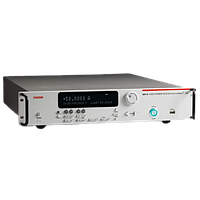
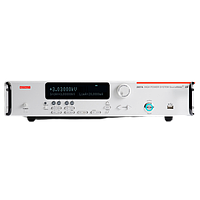
Several instruments in this category illustrate the range of use cases available from established test brands such as KEYSIGHT and TEKTRONIX. For example, the KEYSIGHT B2901C and B2902C Precision Source/Measure Unit models provide one-channel and two-channel options for general precision sourcing and measurement, making them relevant for device evaluation, component characterization, and routine semiconductor lab work.
For users who need higher precision and faster test response, models such as the KEYSIGHT B2911C and B2912C add stronger source/measure performance with fine resolution and pulse capability. Where lower noise power sourcing is important, the KEYSIGHT B2961C and B2962C Low Noise Power Source units are suitable examples of instruments aimed at sensitive measurements and low-noise test conditions.
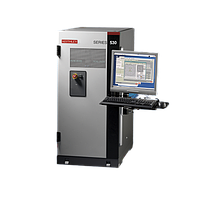
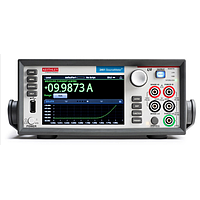
The modular side of this category is represented by the TEKTRONIX MSMU60-2 SMU Module, which is designed for use within a compatible mainframe-based system. This type of architecture can be attractive when test environments require scalable channel density, centralized control, or a cleaner path toward automated and semi-automated measurement setups.
Single-channel, dual-channel, and modular configurations
Single-channel SMUs are often chosen for focused bench testing, troubleshooting, and validation tasks where one device or one bias condition is evaluated at a time. Examples such as the KEYSIGHT B2901CL or B2910CL can suit users who need a compact solution for controlled measurements without the complexity of a multi-channel system.
Dual-channel SMUs become more useful when a device requires simultaneous biasing and measurement at two points, or when comparative testing and synchronized characterization are part of the workflow. Instruments like the KEYSIGHT B2902C, B2912C, or B2962C can support more flexible setups for transistor characterization, sensor interface evaluation, or DUTs with multiple terminals.
Modular SMU systems are often preferred in environments where scalability matters. They can fit larger test racks, support higher channel counts, and align well with production engineering or automated validation systems. For users planning future expansion, modularity can be as important as the initial electrical specification.
How this category fits into a broader measurement workflow
SMUs are rarely used in isolation. In many labs, they sit alongside oscilloscopes, switching hardware, programmable supplies, and analysis software to create a more complete electrical test environment. When the focus is specifically on device characterization and parametric measurements, browsing the broader SMU semiconductor test range helps narrow down the right format for the application.
It is also worth distinguishing SMUs from standard power supplies or standalone meters. A power supply may provide the required output, and a meter may read the result, but an SMU is designed to do both with tighter coordination and with stronger suitability for low-level semiconductor measurements. That difference is often critical when measuring small currents, evaluating non-linear device behavior, or building repeatable automated tests.
Choosing by test objective instead of specification alone
In practice, instrument selection should start with the measurement objective. If the goal is leakage analysis, low current sensitivity and low noise usually matter more than maximum power. If the task involves dynamic behavior or device pulsing, then pulse current capability and digitizing interval become more relevant. For multi-node devices, channel count and synchronization can be the deciding factors.
This category is therefore most useful when viewed as a set of tools for different semiconductor test scenarios rather than a simple list of electrical ratings. A careful match between DUT behavior, required accuracy, and system integration needs will usually produce better results than choosing by headline specification alone.
Find an SMU solution that matches your semiconductor test setup
From precision benchtop units to modular source/measure architectures, this category supports a wide range of semiconductor and electronic characterization needs. The available solutions from brands such as KEYSIGHT and TEKTRONIX are relevant for users who need controlled sourcing, accurate low-level measurement, and a practical path toward repeatable test workflows.
If you are comparing channel configurations, evaluating low-noise measurement needs, or building a more capable device characterization bench, this SMU category provides a focused starting point. Reviewing the intended test method first will make it much easier to identify the right instrument class for your lab, engineering, or production support environment.
Get exclusive volume discounts, bulk pricing updates, and new product alerts delivered directly to your inbox.
By subscribing, you agree to our Terms of Service and Privacy Policy.
Direct access to our certified experts