National Instruments (NI)
Engineers and test teams often need more than a single instrument—they need a flexible platform that can move from benchtop validation to automated measurement, data collection, and system integration. This is where National Instruments (NI) fits naturally into modern electronic and industrial test environments, especially when projects involve repeatable measurements, software-driven workflows, and scalable architectures.
On this category page, you can explore NI-related solutions within the broader measurement ecosystem, with a focus on applications such as automated test, data acquisition, control, and instrument connectivity. For organizations comparing technologies across the lab and field, NI is often considered alongside tools such as multimeters and more application-specific platforms used in electrical and electronic measurement.
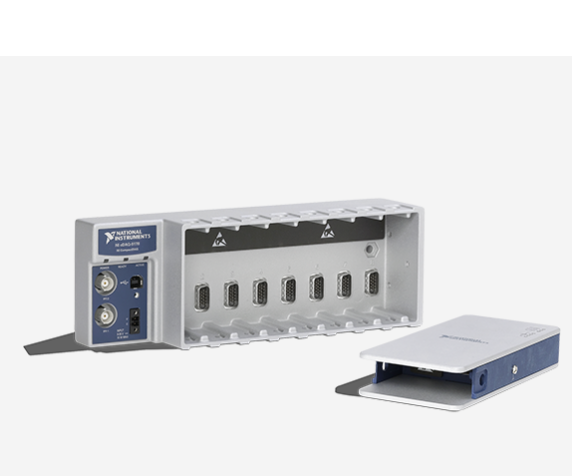
Where NI solutions are commonly used
NI is widely associated with environments where measurement needs to be automated, synchronized, or integrated into larger test systems. Typical use cases include electronics R&D, manufacturing validation, educational laboratories, industrial monitoring, and development setups where engineers want to combine sensing, signal handling, and software analysis in one workflow.
Instead of relying only on standalone handheld tools, many teams adopt modular test and measurement approaches when they need higher throughput, repeatability, or customized system behavior. This is especially relevant for applications involving repeated test sequences, multi-channel acquisition, and communication between instruments, controllers, and software.
A practical fit for automated measurement and control
One of the main reasons engineers look at NI platforms is the ability to build systems around real project requirements rather than around a single fixed instrument. In practice, this can support everything from sensor data logging and signal analysis to functional test benches and hardware-in-the-loop style setups, depending on the system architecture selected.
For users working on electrical validation, NI-related solutions may also complement categories such as SMU semiconductor test when precise sourcing and measurement are part of the workflow. The benefit is not that one product replaces all others, but that integrated measurement platforms can help unify control, acquisition, and analysis across different stages of development.
Understanding the NI ecosystem in this category
This category sits within a broader measurement structure that includes areas such as data acquisition and control, electronic test and instrumentation, wireless design and test, and accessories. Together, these areas reflect how NI is commonly used: not only as individual hardware components, but as part of a wider test system ecosystem built for configuration, expansion, and software interaction.
For B2B buyers, this matters because the selection process is usually tied to the full workflow—signal input, conditioning, communication, timing, analysis, and future scalability. A category like this is therefore most useful when viewed as a starting point for defining architecture, identifying compatible product families, and narrowing down the right approach for the application.
How NI compares within mixed-brand test environments
In many real facilities, NI does not operate in isolation. Test cells, labs, and industrial validation areas often combine products from several manufacturers depending on sensing technology, connectivity, process requirements, and software preferences. Brands such as Honeywell Test & Measurement and Endress+Hauser may appear in the same project landscape where NI-based systems handle acquisition, control logic, or automated testing.
This mixed-vendor reality is important for procurement teams and system designers. It means the evaluation criteria should go beyond brand familiarity and focus on integration needs, I/O requirements, deployment environment, maintainability, and the level of customization expected over the life of the system.
What to consider when selecting NI-related products
The right selection usually depends on how the measurement task will be executed day to day. A development lab may prioritize flexibility and software control, while a production line may care more about test repeatability, uptime, and easy integration into existing automation infrastructure. In both cases, it is useful to define the signal types involved, the number of channels, timing requirements, and whether the setup must expand later.
Buyers should also consider the difference between a simple instrument purchase and a longer-term system-level solution. If the application involves multiple devices, remote operation, logging, analysis, or custom sequences, the surrounding ecosystem—interfaces, accessories, support for expansion, and software workflow—can be just as important as the core hardware itself.
- Clarify whether the project is for R&D, validation, production test, or monitoring.
- Identify required inputs, outputs, synchronization, and communication interfaces.
- Consider future expansion if additional channels or functions may be needed later.
- Review accessory and integration needs early to avoid bottlenecks during deployment.
Applications beyond the lab bench
Although NI is often associated with laboratory and engineering use, the broader value appears when measurement must connect to decision-making or operational control. This can include equipment diagnostics, fixture-based testing, embedded verification, educational training environments, and semi-automated industrial inspection.
In some projects, NI-based setups may be evaluated alongside other specialized categories, such as Doppler radar solutions for motion-related measurement or domain-specific testers used in electrical maintenance. The selection depends on whether the need is a dedicated instrument for one task or a more configurable platform that supports broader measurement logic.
Who this category is most relevant for
This category is especially useful for design engineers, test engineers, maintenance teams, technical buyers, and integrators looking for structured access to NI-related measurement solutions. It also suits organizations that need to compare platforms across prototyping, verification, and deployment rather than buying isolated devices without considering system compatibility.
Because B2B requirements often involve documentation, repeatability, and internal standardization, NI-related product categories are most valuable when reviewed in the context of the full application. That includes not only what must be measured today, but how the measurement process will be managed, expanded, and maintained over time.
Choosing the right direction for your project
For teams building automated or software-connected measurement systems, NI remains a relevant option within the wider electric and electronic measurement landscape. The strongest fit usually comes when flexibility, integration, and structured test workflows matter as much as the measurement itself.
As you review this category, it helps to think in terms of the complete use case: signals, control strategy, data handling, accessories, and long-term scalability. That approach makes it easier to identify the right NI-related solution and to compare it realistically with other instruments and manufacturer ecosystems used in your application.
Get exclusive volume discounts, bulk pricing updates, and new product alerts delivered directly to your inbox.
By subscribing, you agree to our Terms of Service and Privacy Policy.
Direct access to our certified experts