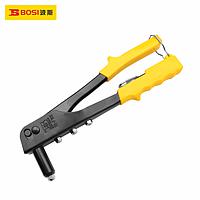
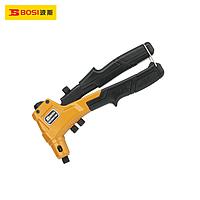
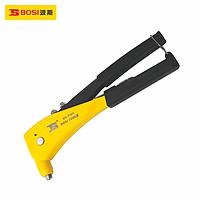
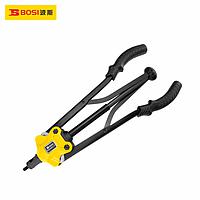
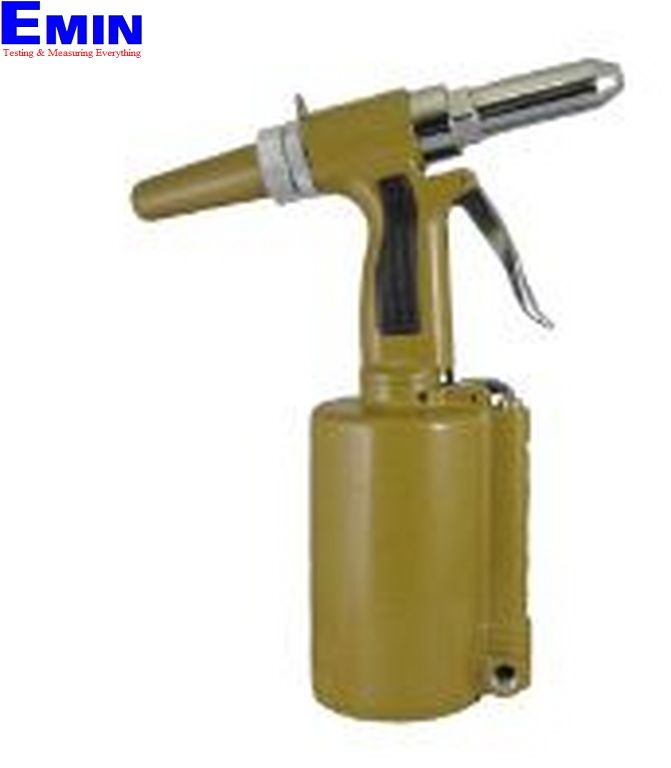
heavy-duty riveter
Reliable riveting matters when sheet metal, enclosures, frames, ducts, and fabricated assemblies need a fast and repeatable joining method. In busy workshops and industrial maintenance environments, the right tool helps reduce operator effort, improve consistency, and support higher throughput, especially when the job involves repeated installation of blind rivets across different material thicknesses.
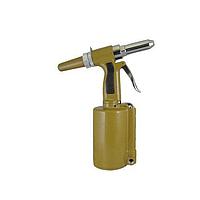
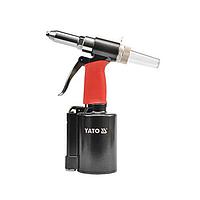
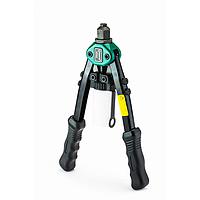
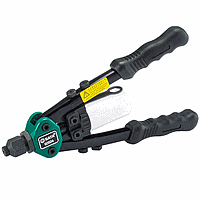
Heavy-duty riveters in this category are suited to users looking for manual high-leverage options as well as pneumatic and air-hydraulic tools for more demanding production work. The range covers practical solutions for maintenance teams, metalworking shops, assembly lines, and service operations that need dependable riveting performance without overcomplicating tool selection.
Where heavy-duty riveters are commonly used
Riveters are widely used where welding is unnecessary, access is available from one side only, or heat-free fastening is preferred. Typical applications include metal cabinet assembly, HVAC ductwork, automotive body repair, trailer and panel work, signage, appliance servicing, and general fabrication.
For maintenance departments and industrial contractors, a riveter is often part of a broader pneumatic tool setup. Depending on the task, teams may also work alongside air drills for pre-drilling holes or use air grinders for edge preparation and finishing before final assembly.
Manual, pneumatic, and air-hydraulic options
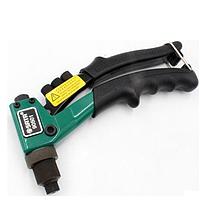
The most suitable tool type depends on rivet volume, rivet size, and operator workload. Manual high-leverage riveters are a practical choice for mobile service work, occasional assembly, and general repair tasks where compressed air is not available. They are simple to deploy and work well for lower-volume fastening.
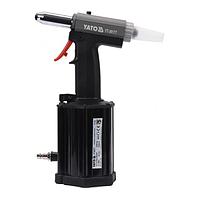
For repetitive use, pneumatic and air-hydraulic models help reduce physical strain and improve cycle consistency. These tools are often preferred in production cells or workshops where compressed air is already part of the infrastructure. If your process relies heavily on compressed-air equipment, it can also make sense to review related tools such as air screwdrivers or an air impact wrench for adjacent fastening tasks.
Representative tools in this category
Several products in this range illustrate the different usage profiles covered by the category. For manual work, models such as the SATA 90501 8" High Leverage Riveter, SATA 90504 11" High Leverage Riveter with Collection Bottle, and SATA 90502 13" High Leverage Riveter with Collection Bottle show the appeal of longer leverage designs for improving pull force while keeping the tool straightforward to use. Collection bottle versions can also help keep spent mandrels more contained in day-to-day work.
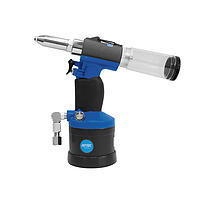
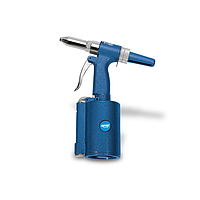
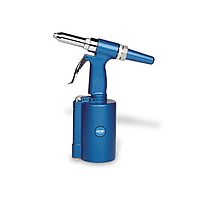
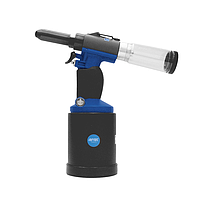
On the pneumatic side, the YATO YT-36171 Pneumatic Riveting Gun and Kawasaki KPT-517H Heavy Duty Riveter are suitable examples for users who need faster repetitive riveting with compressed air. For higher-demand applications, the AIRTEC 410 Composite air hydraulic riveter, AIRTEC 412 Hydropneumatic riveter, AIRTEC 413 Riveting gun, and AIRTEC 414 Composite air hydraulic riveter reflect the type of air-powered tools often selected where reduced operator fatigue and consistent pull action are important.
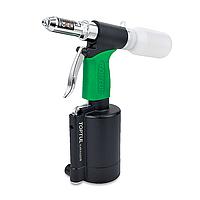
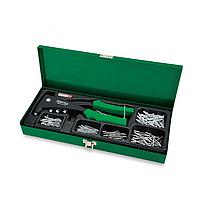
TOPTUL also covers both workshop and service needs with products such as the TOPTUL KARA0205B Air Hydraulic Riveter and the TOPTUL GAAD0103 Pro-Series Hand Riveter Set. For buyers comparing brands, dedicated manufacturer pages like TOPTUL and AIRTEC can help narrow the choice by preferred tool ecosystem.
What to consider when choosing a riveter
A good starting point is the rivet diameter range your application requires. Not every tool is intended for the same sizes, so compatibility with common blind rivet diameters should be checked first. Stroke length and traction capability also influence whether a tool can set rivets efficiently, particularly when moving toward larger diameters or tougher materials.
Compressed-air requirements matter as well for pneumatic models. Air pressure, hose size, and consumption per cycle affect real-world performance, especially when several tools share one air supply. Tool weight and overall length also deserve attention, because they directly affect ergonomics during overhead work, bench assembly, or longer production shifts.
Another practical point is the working environment. A compact hand riveter may be the better fit for field service or quick maintenance jobs, while an air-hydraulic unit is often better aligned with repetitive line work. If a shop handles multiple fastening methods across the same assembly process, balancing portability, cycle speed, and operator comfort usually leads to a better long-term choice than focusing on one specification alone.
Benefits of pneumatic and air-hydraulic riveting in production
When riveting is part of a repeated workflow, air-powered tools can deliver clear operational advantages. They help standardize pull action from one fastener to the next and can reduce the variability that comes with manual effort, particularly across multiple operators or long shifts.
Air-hydraulic riveters are especially useful where a smoother, higher-force setting action is needed without excessive operator fatigue. In many fabrication and assembly environments, that translates into better workflow continuity, less hand strain, and easier handling of medium to higher rivet volumes. Composite-body designs in some models may also support handling comfort by helping keep overall weight manageable.
Choosing by application instead of brand alone
Brand preference can be helpful, but tool selection should still begin with the job itself. A service technician repairing panels on-site may value a manual riveter set that covers several rivet sizes. A fabrication shop with regular compressed-air access may prioritize a pneumatic unit that supports faster cycles and stable performance over repeated use.
Likewise, heavier-duty assembly work may justify stepping up to specialized air-hydraulic models from established ranges such as SATA, KAWASAKI, TOPTUL, YATO, or AIRTEC. The best fit usually comes from matching the riveter to the expected rivet size, working frequency, air supply conditions, and ergonomic demands rather than choosing solely by familiar brand name.
FAQ
Is a heavy-duty riveter only for industrial production?
No. While many models are well suited to industrial use, this category also includes manual options that make sense for workshop repair, installation, and maintenance tasks.
When should I choose pneumatic instead of manual riveting?
Pneumatic or air-hydraulic tools are generally worth considering when riveting is repetitive, when larger rivets are used more often, or when reducing operator effort is important.
Do all riveters handle the same rivet sizes?
No. Rivet size compatibility varies by tool, so diameter range and tool capacity should always be checked against the intended application.
Find the right riveter for your workflow
Whether the priority is simple field repair, regular workshop assembly, or faster production fastening, this category brings together heavy-duty riveting tools for different operating conditions. Reviewing tool type, rivet size range, air requirements, and ergonomics will usually lead to a more efficient choice than comparing models on price or format alone.
If you are building out a complete compressed-air workstation, it also helps to consider how the riveter will fit alongside your other pneumatic tools and daily assembly process. A well-matched selection supports cleaner workflow, more consistent fastening, and easier operation over time.
Get exclusive volume discounts, bulk pricing updates, and new product alerts delivered directly to your inbox.
By subscribing, you agree to our Terms of Service and Privacy Policy.
Direct access to our certified experts