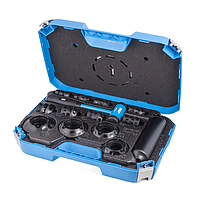
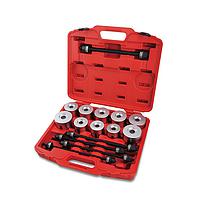
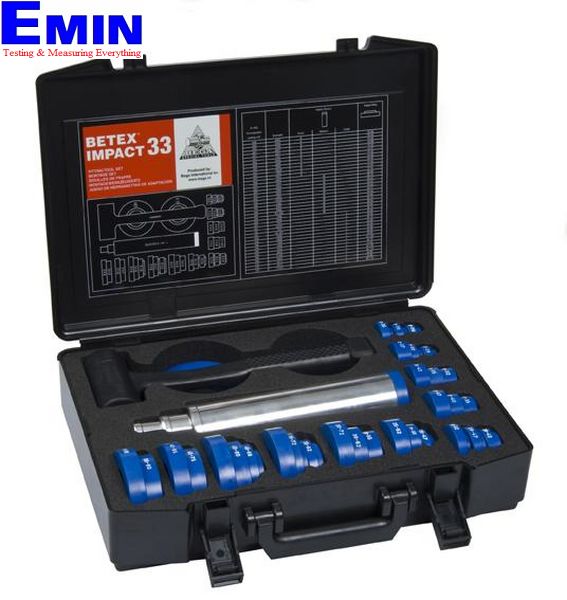
TOOLSET IMPACT 39
Efficient bearing installation depends on more than force alone. In maintenance workshops, assembly lines, and repair environments, the right impact toolset helps technicians fit bearings, bushings, and seals with better alignment, lower risk of damage, and more consistent results across different shaft and housing sizes.
TOOLSET IMPACT 39 is relevant for users who need a practical solution for controlled bearing mounting work. Within the broader bearing tool ecosystem, this type of kit is commonly used when components must be installed evenly and without transferring load through sensitive rolling elements. That makes it especially useful for mechanical service teams looking to reduce installation errors and improve repeatability.
Where this type of toolset is used
An impact bearing toolset is typically selected for maintenance and assembly tasks involving bearings, bearing races, bushes, and seals. Instead of improvising with punches or generic hammers, technicians use matched sleeves, rings, or tubes to apply force more evenly to the correct fitting surface. This approach helps protect both the component being installed and the surrounding assembly.
These toolsets are often used in industrial maintenance, automotive repair, equipment servicing, and general mechanical workshops. They are especially helpful when a team handles multiple bearing sizes and needs one portable kit that supports a wide working range without requiring a separate tool for every diameter.
Why controlled installation matters
Incorrect mounting is a common cause of premature bearing failure. If force is applied through the wrong ring, the bearing can suffer internal damage before the machine even starts operating. A properly selected impact installation toolset helps direct the load to the intended contact area, which supports better fitment and can reduce the chance of brinelling, deformation, or seal damage during assembly.
Another advantage is consistency. In B2B settings, maintenance quality often depends on repeatable procedures across technicians and sites. Using purpose-built tools instead of ad hoc methods can simplify training, improve workflow, and support safer handling of mechanical components during installation work.
Typical kit formats and examples
Some users need a dedicated impact-style set, while others may compare several bearing mounting and service tools before deciding. For example, the SKF range includes the SKF TMFT36 Closed bearing tube, a solution designed around controlled fitting across a defined diameter range. For workshops that value organized, application-specific mounting tools, this kind of product illustrates the importance of using matched components rather than improvised contact surfaces.
In the same working context, TOPTUL offers products such as the TOPTUL JEBC1890 Master Bearing Race and Seal Driver and the TOPTUL JGAI2701 Universal Bearing and Bush Remove / Install Sleeve Kit. These examples show how bearing service tooling may cover adjacent tasks as well, from seal and race driving to removal and installation of bushes using multiple sleeve sizes.
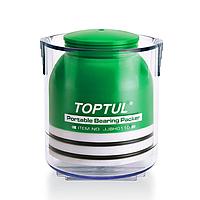
For lubrication work during assembly or service, the TOPTUL JJBH0110 Portable Bearing Packer is another useful example, although it plays a different role in the workflow. Rather than installing bearings directly, it helps prepare them properly before operation, which can be important in service environments where installation and relubrication tasks are handled together.
How to choose the right toolset
Selection usually starts with the component sizes you handle most often. A useful kit should cover the shaft, bore, or outer diameter range relevant to your maintenance work, while also providing accessories that let the user apply impact evenly. If the workshop deals with mixed applications, a broader set with multiple sleeves or rings may be more practical than a narrow single-purpose tool.
It is also important to consider portability, storage, and how often the tool will be used in field service versus bench work. A compact case-based set can be valuable for mobile maintenance teams, while a more extensive kit may suit fixed workshop environments better. In either case, the goal is the same: support clean, repeatable mounting procedures with less guesswork.
Relationship to other bearing service tools
An impact toolset is only one part of a complete bearing maintenance process. Depending on the task, technicians may also need tools for removal, heating, or other mounting methods. If the job involves dismounting worn components before installation, it may be useful to review available pullers for extraction work.
For applications where thermal mounting is more suitable, especially with larger or tighter fits, bearing heaters can be an important companion category. In practice, many maintenance teams combine these tools depending on bearing size, fit tolerance, accessibility, and site conditions.
What buyers should evaluate for B2B use
For industrial procurement, the decision is rarely based on a single repair job. Buyers typically look at whether the toolset fits the company’s common bearing sizes, whether it can standardize installation practice across teams, and whether it complements the existing maintenance toolkit. Ease of use, kit completeness, and suitability for repeated workshop use are usually more important than simply having the highest number of pieces.
It is also worth checking how the toolset aligns with your service scope. Some teams mainly install bearing races and seals, while others need broader capability for bushes and related components. Choosing a kit that reflects real maintenance routines can help avoid overlap and improve long-term value.
Practical benefits in daily maintenance work
When the right fitting tool is available at the point of service, technicians can work faster and with more confidence. A structured kit reduces time spent searching for makeshift adapters and can make assembly steps easier to document and repeat. This is particularly useful in plants where uptime, maintenance quality, and equipment reliability all depend on disciplined mechanical practice.
For organizations managing rotating equipment, a well-chosen bearing installation set supports more than convenience. It contributes to a more reliable assembly process, helps protect replacement parts during fitting, and fits naturally into a broader maintenance strategy built around appropriate bearing tools.
If you are comparing options in this category, focus on the actual mounting tasks your team performs most often, the size range you need to cover, and how the toolset will fit into your wider bearing maintenance workflow. That approach makes it easier to identify a practical solution for installation work today while supporting more consistent service quality over time.
Get exclusive volume discounts, bulk pricing updates, and new product alerts delivered directly to your inbox.
By subscribing, you agree to our Terms of Service and Privacy Policy.
Direct access to our certified experts