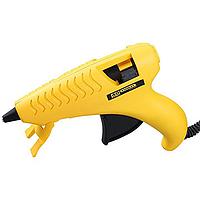
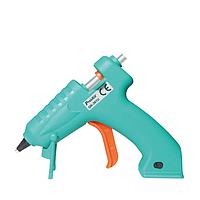
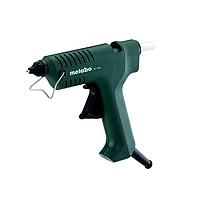
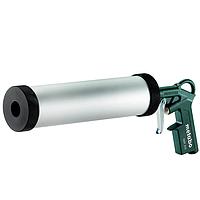
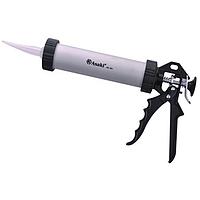
Glue gun, silicone gun
For assembly work, repair jobs, interior finishing, and maintenance tasks, choosing the right dispensing tool can make application cleaner, faster, and more consistent. Whether the job involves hot-melt adhesive for light bonding or sealant for joints and gaps, the glue gun, silicone gun category brings together practical tools for workshops, installers, electricians, technicians, and industrial users.
In day-to-day B2B environments, these tools are often selected not just by price or brand, but by adhesive type, working frequency, cartridge format, heating performance, and handling comfort. This category includes both hot-melt glue guns and manual or pneumatic caulking guns used for silicone, sealants, and similar materials across production, installation, and maintenance workflows.
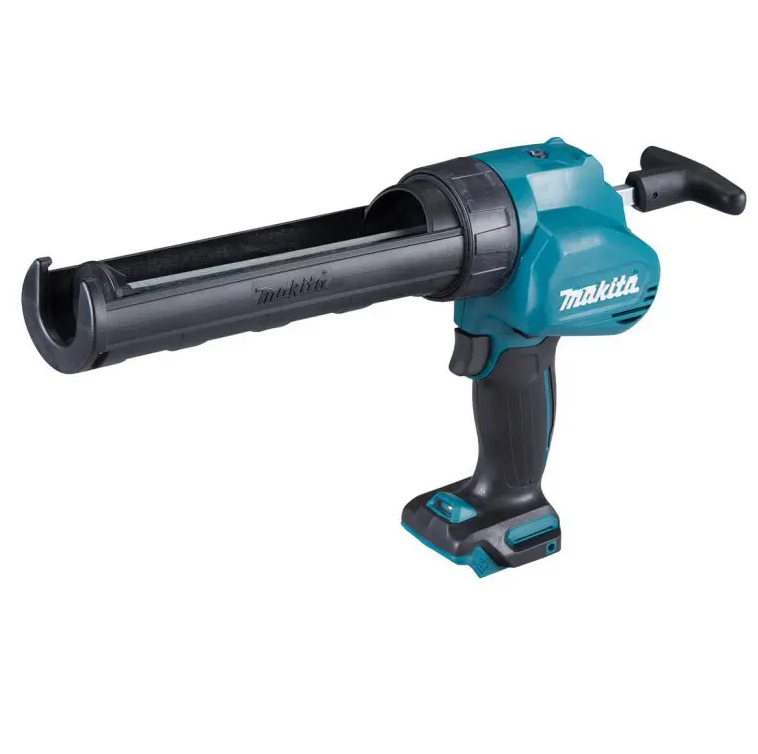
Where these tools are used
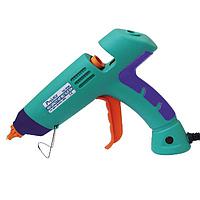
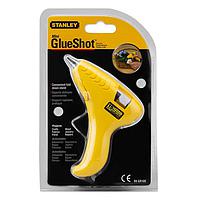
Hot-melt glue guns are commonly used for cable fixing, light assembly, packaging support, prototyping, display work, insulation positioning, and general repair. In technical workshops, they are useful when a fast-setting adhesive is needed for non-structural bonding and temporary hold during fitting or routing.
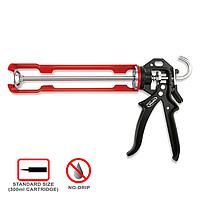
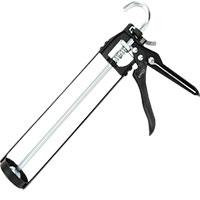
Silicone and caulking guns are more suitable for dispensing sealants, silicones, and dense compounds in construction, renovation, HVAC work, glazing support, and maintenance. They help control bead application in seams, edges, joints, and narrow access areas where manual precision matters.
Main product types in this category
This category typically serves two distinct application groups. The first is electric or battery-powered glue guns that melt glue sticks and dispense adhesive through a heated nozzle. The second is caulking or silicone guns that apply material from cartridges or tubes using manual force or compressed air.
For example, the Proskit range includes compact and professional hot-melt options such as the GK-368, GK-361U, GK-390B, GK-389B, and GK-392B. On the sealant side, users may look at models such as the TOPTUL JJAY0902, Toptul JJAY0903 revolving barrel version, YATO YT-6751, SATA 90510, and Tajima CNV-JUST/CHN for cartridge-based application. For higher-throughput pneumatic use, the AIRTEC 550 caulking gun adds another option where compressed air is available.
How to choose the right glue gun
When selecting a glue gun, start with the actual bonding task. Smaller tools are often suitable for bench work, electronics-related fixture positioning, light craft assembly, and mobile repair use, while higher-power models are better suited to longer operation, faster glue flow, and more continuous use.
Models in this category illustrate different working styles. The Proskit GK-361U battery-powered glue gun is useful when portability and cable-free operation matter, while the GK-390B, GK-389B, and GK-392B are better aligned with users who need AC-powered operation, larger glue sticks, and higher dispensing throughput. If fast warm-up is important for intermittent jobs, the STANLEY 69-GR20B is another practical example for quick, ready-to-use adhesive application.
What to consider when selecting a silicone or caulking gun
For sealant application, the first checkpoint is cartridge compatibility. Many jobs use 300 ml cartridges, so tool dimensions and barrel format should match the material packaging already used in the workshop or at the job site. After that, handling design becomes important, especially for repetitive use or work in confined spaces.
Users should also think about material viscosity, trigger force, and access angle. A revolving barrel design such as the Toptul JJAY0903 can help in awkward positions, while a tool like the Tajima CNV-JUST/CHN is suited to controlled dispensing in tighter spaces thanks to its application-oriented design. For routine manual sealing work, options from SATA, TOPTUL, and YATO provide practical choices for maintenance teams and installers.
Manual, battery, and pneumatic operation
Different power methods fit different workflows. Manual caulking guns are simple, portable, and easy to deploy on site without power supply requirements. They are often preferred for general construction and maintenance tasks where sealant volume is moderate and mobility is a priority.
Battery-powered glue guns support mobile workstations and field tasks where access to outlets is limited. They reduce cable clutter and can be convenient for quick assembly or repair work. Pneumatic caulking guns, such as the AIRTEC 550, are better suited to facilities already using compressed air and needing smoother, repeatable dispensing with less operator fatigue over repeated cycles.
Practical selection criteria for industrial buyers
In B2B purchasing, the right choice usually depends on more than one specification. Heating time, glue stick diameter, adhesive flow, ergonomics, tool weight, available power source, and expected duty cycle all affect usability. For sealant tools, buyers should also check cartridge size, barrel construction, frame strength, and how well the tool supports steady bead control.
It is also useful to consider the wider tool ecosystem. Teams handling installation and repair may pair adhesive application tools with related workshop equipment such as soldering tools for electrical work or drill machines for mounting and preparation tasks. Looking at the full workflow helps ensure the selected tool fits actual production or service conditions.
Representative brands and product coverage
This category includes a mix of widely recognized tool brands and application-focused models. For hot-melt adhesive work, Proskit and STANLEY are relevant examples within the listed range. For cartridge sealant and silicone application, TOPTUL, Tajima, YATO, SATA, and AIRTEC cover different handling styles and operating methods.
Not every user needs the same tool format. A maintenance team may prefer a straightforward manual caulking gun for occasional sealing, while a production or installation environment may prioritize a higher-output hot-melt glue gun or a pneumatic dispenser for repetitive work. That is why comparing tool type to task frequency is often more useful than comparing by brand name alone.
Choosing with application in mind
If the requirement is fast adhesive bonding with glue sticks, focus on warm-up time, glue output, and whether the work is bench-based or mobile. If the task involves silicone, sealant, or dense compounds, focus on cartridge size, thrust control, and operator comfort during extended use. This simple distinction helps narrow down the most suitable tools much faster.
Across repair shops, assembly lines, fit-out projects, and maintenance departments, the right dispensing tool improves cleanliness, material control, and work efficiency. Browse this category to compare glue guns and silicone guns by operating method, application style, and tool format, then select the option that best matches your adhesive or sealant process.
Get exclusive volume discounts, bulk pricing updates, and new product alerts delivered directly to your inbox.
By subscribing, you agree to our Terms of Service and Privacy Policy.
Direct access to our certified experts