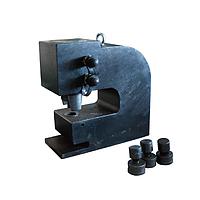
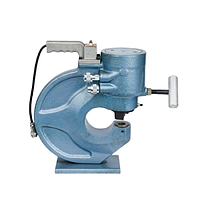
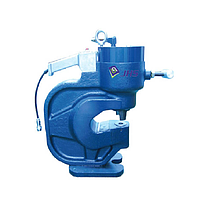
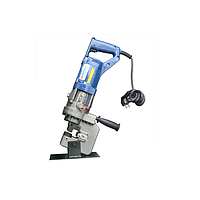
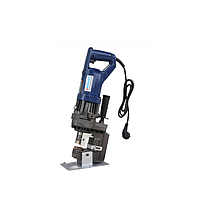
Punching Machine
Fast, clean hole making is a common requirement in metal fabrication, panel work, structural steel preparation, and on-site installation. When conventional drilling creates too much burr, takes too long, or struggles with thicker material, a punching machine becomes a practical alternative for producing consistent holes in steel and stainless steel.
This category brings together hydraulic and portable punching solutions for workshop and field use, along with punch and die accessories used to match the required hole size. Whether you need a compact battery-powered unit for mobility or a higher-capacity electric hydraulic model for repetitive work, the right setup can improve productivity, reduce finishing work, and help maintain cleaner hole geometry.
Where punching machines are typically used
These machines are commonly selected for punching round or oval holes in metal plates, flat bars, busbars, control panels, brackets, and structural components. In many applications, punching is preferred because it can be faster than drilling and may leave a more uniform result, especially when repetitive hole work is required.
For site work, portability matters. A cordless option such as the MAKITA DPP200ZK is suitable for users who need mobility around job sites, steel assembly points, or electrical installation areas. In workshop environments, electric hydraulic models from Unifast are often more appropriate when continuous operation and larger hole ranges are the priority.
Main types available in this category
The products in this range generally fall into two groups: hydraulic punching machines and punch-and-die accessories. The machine itself provides the force needed to punch through the workpiece, while the tooling set determines the final hole diameter and shape. This distinction is important because machine selection is only one part of the process; matching accessories to the required job is equally critical.
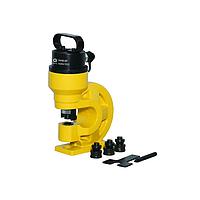
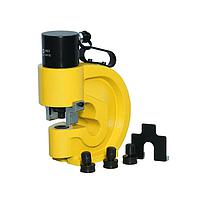
Portable hydraulic models such as the Unifast WNP-20, MHP-20, MHP-25, NMHP-25, and NMHP-32 cover different capacities, throat dimensions, and working depths. Alongside them, accessory items such as the MAKITA SB-16mm, SB-18mm, SB-20mm punch dies and SC05340140, SC05340150, SC05340160 round punches support specific hole sizes for compatible punching systems.
How to choose the right punching machine
A good starting point is the required hole diameter and material thickness. If the job involves thicker steel or larger holes, capacity becomes the first filter. For example, some models in this category are designed for hole diameters up to around 20 mm, while others extend beyond 25 mm or even 30 mm, making them better suited for heavier-duty fabrication tasks.
Next, consider throat depth and machine form factor. Throat depth affects how far from the edge of the workpiece the machine can punch. For field installation, overall weight and portability may be more important than maximum size range. The MAKITA DPP200ZK is relevant where battery-powered convenience is needed, while models such as the Unifast NMHP-25 or NMHP-32 are more aligned with fixed-location or repeated production work.
Power supply is another practical factor. Cordless equipment supports mobility and reduces cable management, while 220V single-phase hydraulic machines are often chosen for steady workshop operation. If your process also involves conventional hole making in other materials or mixed operations, it may be useful to compare with a drill machine or, for steel fabrication tasks that require magnetic mounting, an electromagnetic drill.
Understanding punches, dies, and compatible tooling
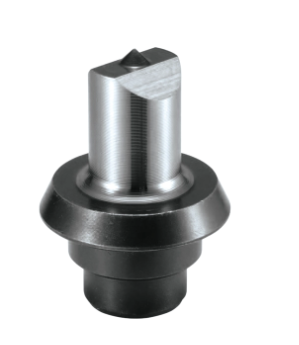
The performance of a punching system depends not only on the machine but also on the condition and size of the tooling. A punch and die set must match the required hole specification and be compatible with the machine design. Worn tooling can affect edge quality, increase force demand, and shorten overall tool life.
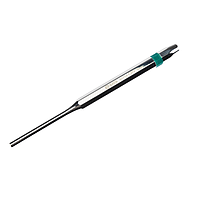
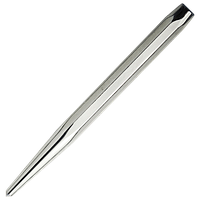
In this category, tooling examples include MAKITA SB-series punch dies in 16 mm, 18 mm, and 20 mm sizes, as well as MAKITA round punches such as SC05340140, SC05340150, and SC05340160. These parts are not stand-alone production tools by themselves; they function as essential consumable or replacement components within a complete punching setup. For buyers managing maintenance or spare tooling inventory, selecting the correct accessory is just as important as choosing the machine.
Representative products in the range
For mobile punching tasks, the MAKITA DPP200ZK stands out as a battery-powered hydraulic solution designed for steel and stainless steel applications within its stated capacity. Its compact format makes it relevant for installers and contractors who need to move between work areas without relying on a fixed power source.
On the hydraulic electric side, Unifast offers several capacity levels. The WNP-20 and MHP-20 serve lighter-duty applications, while the MHP-25 and NMHP-25 extend the working range for larger holes and thicker materials. The NMHP-32 is suitable for users who need a broader punching diameter range and greater depth capability for more demanding fabrication work. If you are standardizing tools by supplier, the broader Unifast range can also help when evaluating related workshop equipment.
When punching is a better choice than drilling
Punching is often selected when speed, repeatability, and cleaner edges are more important than general-purpose flexibility. In repetitive production or installation work, it can reduce processing time per hole and minimize secondary deburring compared with some drilling operations. This is particularly useful when working with plates, electrical cabinets, mounting brackets, and steel members that require consistent hole locations.
That said, drilling still has advantages in many tasks, especially when material types vary or when a broader variety of diameters is needed without dedicated tooling. For sheet or plate cutouts beyond standard punched holes, users may also consider a hole saw for certain applications. The best choice depends on material thickness, finish requirements, hole volume, and whether portability or production speed matters more.
What to consider before ordering
Before selecting a model, confirm the target material, required hole size range, maximum thickness, and the distance from the hole center to the workpiece edge. These factors determine whether a compact portable model or a heavier-duty hydraulic machine is the better fit. It is also worth checking whether your order should include the machine only or the matching punch and die accessories needed for immediate use.
For B2B buyers, consistency across teams and sites matters. Standardizing on one manufacturer or on a defined tooling range can simplify spare parts management, operator training, and maintenance planning. This category includes solutions from well-known names such as MAKITA and Unifast, covering both portable and workshop-oriented punching requirements.
Find a punching setup that matches your workflow
Choosing the right punching equipment is less about buying the largest machine and more about matching capacity, portability, tooling, and application type. A field technician, switchboard fabricator, and steel workshop may all need punched holes, but the best machine for each case can be very different.
Browse this category to compare machine formats and accessory options based on your working environment and hole requirements. With the right combination of machine and tooling, punching can become a faster, cleaner, and more controlled part of your metalworking process.
Get exclusive volume discounts, bulk pricing updates, and new product alerts delivered directly to your inbox.
By subscribing, you agree to our Terms of Service and Privacy Policy.
Direct access to our certified experts