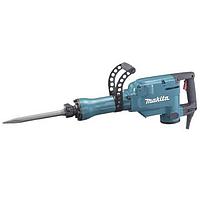
Demolition hammer
Breaking concrete, masonry, or compacted material efficiently requires more than raw power. In construction, renovation, utility work, and workshop maintenance, the right demolition hammer helps improve removal speed, reduce operator fatigue, and match impact performance to the material being worked on.
This category brings together electric and pneumatic demolition tools used for chiseling, surface removal, and concrete breaking. Whether the job involves light interior demolition or heavier outdoor work, selecting the correct tool format, shank type, and impact class is essential for both productivity and tool life.

Where demolition hammers are commonly used
Demolition hammers are designed for tasks where rotary drilling is not the main goal and repeated impact is the priority. Typical applications include removing concrete edges, opening channels in masonry, breaking floor sections, stripping tiles, and correcting casting defects on construction sites.
They are also used in maintenance environments for dismantling old structures, loosening stubborn material, or preparing surfaces before repair. In practical terms, the choice often depends on whether the user needs a compact handheld tool for controlled chiseling or a larger breaker for deeper and faster material removal.
Electric demolition hammers and pneumatic concrete breakers
One useful way to understand this category is by separating electric demolition hammers from air-powered concrete breakers. Electric models are widely used where portability and easy setup matter. They are suitable for indoor work, renovation projects, and service tasks where a power outlet is easier to access than a compressed air system.
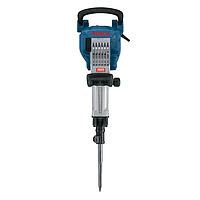
Pneumatic breakers are commonly chosen for demanding site conditions and repetitive heavy-duty work. Models such as the KAWASAKI CB-10 Concrete Breaker, CB-20, and CB-30 illustrate the typical progression from lighter to heavier breaking capacity, with differences in piston size, weight, and blow rate affecting how aggressively the tool attacks concrete.
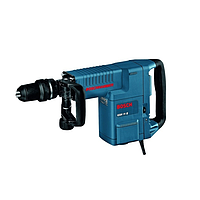
For corded electric options, examples in this category include the BOSCH GSH 11 VC Demolition Hammer, BOSCH GSH 5, BOSCH GSH 3E, and BOSCH GSH 500 GEN II. These models fit different use cases, from more compact chiseling work to stronger demolition applications that require higher impact energy and more robust toolholding systems.
How to choose the right tool for the job
The first selection factor is the material and removal depth. Lighter tools are often easier to control on plaster, tile, render, or thin concrete sections. Heavier machines are more suitable when the work involves reinforced concrete, dense slabs, or extended breaking time. A larger tool is not always better if the application requires precision in tight spaces.
The second factor is the tool interface. SDS-plus, SDS-max, and hex shanks support different classes of chisels and operating loads. If your work frequently overlaps with drilling operations, it may also be useful to review the broader range of drill machine options available for masonry and installation work.
Power source and jobsite conditions also matter. Electric tools simplify use in building interiors, while pneumatic breakers are often preferred on open sites where air systems are already in place. Weight, overall length, and vibration behavior should be considered together, especially for operators who work for long periods or on vertical surfaces.
Representative products in this category
Several products in this range help illustrate how demolition hammers are positioned by application. The BOSCH GSH 3E is a more compact option for lighter chiseling tasks, while the BOSCH GSH 5 and GSH 500 GEN II move into a stronger mid-range suitable for more regular concrete removal. For heavier-duty electric demolition work, the BOSCH GSH 11 VC is aimed at users who need greater impact output for tougher materials.
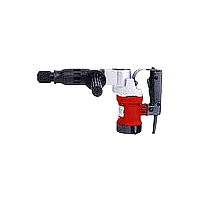
BOSCH is one of the key brands represented in this category, alongside other recognized tool manufacturers. HITACHI KOKI also appears with models such as H41SD and PH65A, which reflect the brand’s presence in concrete chiseling and demolition applications. On the pneumatic side, KAWASAKI concrete breakers provide an alternative for users operating with compressed air infrastructure.
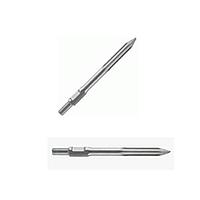
Accessories remain important in the overall system. The BOSCH 2608684884 pointed chisel, for example, is not a standalone demolition tool, but it plays a direct role in concentrating impact force for breaking and chiseling work. Matching the accessory to the shank type and intended application is just as important as choosing the hammer itself.
Key performance factors buyers should compare
When evaluating products in this category, buyers typically compare impact rate, impact energy, input power or air consumption, weight, and toolholder format. These factors influence not only breaking performance but also handling comfort, maintenance requirements, and compatibility with existing accessories.
Impact energy gives a broad indication of how much force is delivered per blow, while blow rate affects how quickly the tool works through certain materials. Weight can improve breaking force on floors, but it may reduce comfort in overhead or wall applications. For pneumatic models, air demand and inlet size should be checked carefully to ensure the compressor system can support stable operation.
If the application also involves making holes before chipping or section removal, compatible drill bits and drilling accessories may be relevant to the workflow. Looking at the complete tool chain often leads to better purchasing decisions than comparing demolition hammers in isolation.
Brands and application fit
This category includes products associated with well-known manufacturers such as BOSCH, HITACHI KOKI, KAWASAKI, and FEG. Each brand may appeal to a different buying profile, depending on whether the priority is compact handling, heavier demolition capability, pneumatic operation, or general-purpose site use.
Application fit should take priority over brand familiarity alone. A lighter electric hammer can be the better choice for finishing crews, renovation contractors, or maintenance teams, while larger breakers are more appropriate for structural removal. The best selection usually comes from balancing operating environment, accessory compatibility, and expected duty cycle.
Practical buying considerations for B2B users
For contractors, factories, and procurement teams, the decision often extends beyond a single tool specification. It is important to consider operator frequency, replacement chisel availability, service planning, and whether the tool will be shared across crews with different job types. A model used occasionally for maintenance may not need the same capacity as one assigned to daily demolition work.
It is also helpful to standardize around a toolholding system where possible. That simplifies accessory stocking and reduces downtime caused by compatibility issues. For applications that require cutting openings after demolition prep, related tooling such as hole saw products may also support the wider task sequence on site.
Choosing a demolition hammer with the right balance of power and control
A good demolition hammer setup is not defined by maximum output alone. The right tool should match the hardness of the material, the working position, the expected operating duration, and the accessories already used in your workflow. That is why this category includes a mix of lighter electric hammers, more powerful demolition models, and pneumatic concrete breakers for heavier impact tasks.
By comparing tool class, shank system, operating weight, and jobsite conditions, buyers can narrow down the most suitable option with fewer compromises. If you are selecting equipment for concrete breaking, masonry removal, or general chiseling work, this category provides a practical starting point for identifying the right solution.
Get exclusive volume discounts, bulk pricing updates, and new product alerts delivered directly to your inbox.
By subscribing, you agree to our Terms of Service and Privacy Policy.
Direct access to our certified experts