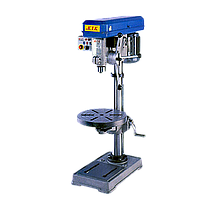
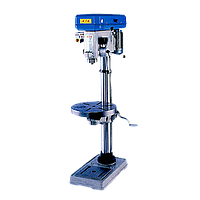
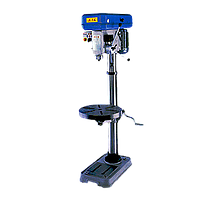
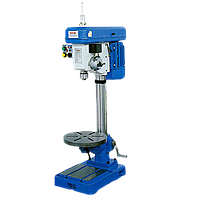
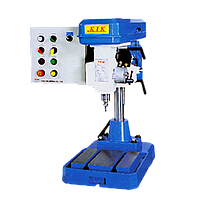
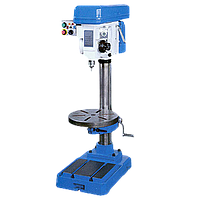
Tapping machine
Accurate thread creation depends on more than simply rotating a tap into metal. In production workshops, maintenance departments, and fabrication lines, stable spindle guidance, suitable speed, and repeatable feed all make a noticeable difference to thread quality. When the process is inconsistent, the result is often shallow threads, damaged edges, broken taps, or poor bolt engagement.
Tapping machines are designed to improve this process by keeping the tap aligned and the cutting action more controlled than typical hand tapping methods. For users working with steel, cast iron, or repetitive hole patterns, this category supports more reliable internal threading and better consistency across parts.
Why thread quality often fails in manual work
Loose or uneven threads usually appear when the tap does not enter the hole on center, the cutting speed is unsuitable for the material, or the workpiece is not held firmly. Even a small amount of vibration can cause the tap to bite unevenly, leading to partial threads or distorted pitch. These problems become more visible in harder materials and in jobs that require repeated threading across many workpieces.
Another common issue is poor perpendicularity at the start of the cut. If the tap begins at a slight angle, the thread can drift immediately, making final assembly difficult. A dedicated machine helps reduce these variables by supporting spindle alignment, steadier rotation, and more controlled entry into the workpiece.
Where tapping machines fit in a workshop
This category is suitable for operations that need repeatable internal threads in components, fixtures, plates, and fabricated metal parts. Compared with hand tapping, a machine-based approach is better suited to batch work, routine maintenance, and applications where uniform thread depth matters.
In many workshops, tapping equipment is used alongside a drill machine for hole preparation and finishing tasks. When users handle both drilling and threading in the same workflow, choosing the right machine setup helps reduce rework, tool damage, and assembly problems later in production.
Typical machine types and example models
The range in this category covers compact and larger-format machines for different thread capacities. For lighter threading work, models such as the KTK T-50, Automatic taro machine T-50A, and Automatic taro machine T-50B are relevant where smaller thread sizes and more compact machine footprints are preferred. These can suit bench or light production environments that still require more consistency than manual tapping.
For medium-duty needs, the Automatic taro machine T-80, T-80A, and T-80B provide options where larger tapping capacity is required. For heavier work, the Automatic taro machine T-120 extends the range further, making it more suitable for applications involving larger thread sizes and more robust setups. Users comparing machines from KTK often focus on capacity, available workspace, spindle arrangement, and how the machine integrates into existing metalworking operations.
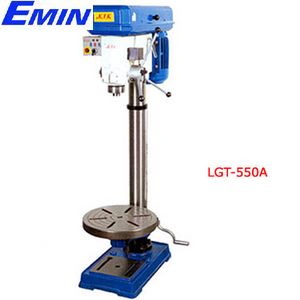
Some users also need a combined drilling-and-tapping approach rather than a dedicated tapping-only setup. In those cases, the Hồng Ký HKT340 Taro Table Drill can be relevant as part of a broader workshop solution, particularly when both hole making and thread cutting are required on the same station.
What to consider when choosing a tapping machine
The first point is thread size capacity. A machine selected for M8 work is not automatically appropriate for larger threads or tougher materials. Capacity should be matched to the actual production requirement, including the largest tap size used, the type of metal being machined, and how often the operation is repeated.
The second point is machine structure and working envelope. Spindle travel, distance from spindle to table or base, and table dimensions all affect whether a machine can handle the part size comfortably. This becomes important when the workpiece is large, when fixtures are used, or when operators need enough clearance for repetitive loading and unloading.
Speed range and motor power also matter because threading performance depends on matching cutting conditions to material and tap diameter. A machine with suitable speed options gives users more flexibility across different jobs, while stable power delivery helps reduce chatter and incomplete thread formation.
Supporting tools and thread repair accessories
Not every threading job starts from scratch. In maintenance and repair work, damaged internal threads may need to be restored rather than newly created. A product such as the TOPTUL JGEW2403 Professional Threaded Coil-Insert Repair Kit is useful in this context because it supports thread repair for worn or stripped holes instead of replacing the entire part.
For manual threading, fitting, and general workshop service tasks, tap and die sets also remain relevant. Examples in this category include the WESTWARD 1PZ38 Tap and Die Set and TTPusa 240-000040 Tap Sets. These tools do not replace a tapping machine in repetitive production, but they complement the overall threading workflow for repair, adjustment, and lower-volume jobs. Where hole preparation is part of the same process, suitable drill bits also play an important role in thread accuracy.
How machine tapping helps reduce errors
A key advantage of machine tapping is process consistency. When the tap enters the workpiece with better alignment and steadier rotation, the resulting thread form is generally more uniform from part to part. This helps reduce cross-threading, poor fit during assembly, and the risk of scrapping components because of unusable internal threads.
Automatic or semi-automatic tapping setups can also improve cycle repeatability in workshops that handle recurring part programs. In practice, this means less dependence on operator feel alone and a more controlled result, especially when thread depth, straightness, and repeated output are important quality criteria.
Choosing between production tapping and repair-oriented tools
If the requirement is high-volume or repeated internal threading, a dedicated machine is usually the better direction because it supports throughput and repeatability. Machines such as the KTK T-series are more appropriate when the goal is stable production and cleaner process control. They are particularly useful when multiple identical parts must be tapped with similar quality across the batch.
If the requirement is maintenance, occasional workshop service, or thread restoration, a repair kit or tap-and-die set may be more practical. The decision depends on whether the job is primarily about creating new threads in production or restoring damaged ones in existing components. In some facilities, both machine tapping and repair tooling are necessary to cover daily operations effectively.
Practical FAQ
When should I use a tapping machine instead of a hand tap?
A tapping machine is usually the better option when you need repeatable thread quality, higher productivity, or improved alignment on metal parts. Hand tapping may still be suitable for occasional or low-volume work.
Can this category support both new threads and thread repair?
Yes, but the tools are used differently. Tapping machines are mainly for creating internal threads, while kits such as coil-insert repair sets are more suitable for restoring damaged threaded holes.
What else should be considered besides tap size?
Users should also check part dimensions, working clearance, spindle travel, material type, and the overall workflow for drilling and threading.
For workshops that need cleaner, more repeatable internal threads, this category offers practical options ranging from compact tapping machines to repair and support tools. The right choice depends on thread size, production volume, material, and whether the priority is new thread creation or restoring damaged holes. A well-matched setup helps improve consistency, reduce thread defects, and make downstream assembly more reliable.
Get exclusive volume discounts, bulk pricing updates, and new product alerts delivered directly to your inbox.
By subscribing, you agree to our Terms of Service and Privacy Policy.
Direct access to our certified experts