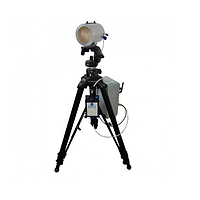
Doppler Radar
When accurate non-contact speed measurement is critical, radar-based sensing is often the practical choice. In test ranges, ballistics work, field measurement, and selected motion analysis tasks, Doppler Radar systems help capture velocity data without interfering with the object under test, making them suitable for applications where contact sensors are not possible or safe.
This category focuses on Doppler radar equipment used for motion and velocity measurement. It is especially relevant for users who need dependable readings over distance, fast target response, and a measurement method that can support demanding environments and dynamic test scenarios.
Where Doppler radar fits in motion and velocity measurement
Doppler radar measures speed by analyzing the frequency shift of a reflected signal from a moving object. In practical terms, this makes it useful wherever an object moves too quickly, too far away, or too unpredictably for conventional contact-based measurement methods.
Compared with some other motion measurement approaches, radar offers a non-contact measurement principle that can reduce setup constraints and mechanical wear. For users comparing technologies, this category naturally sits alongside solutions such as speed sensors, but radar is often preferred when stand-off distance and target tracking matter more than direct installation on a machine or vehicle.
Typical applications for Doppler radar systems
Doppler radar is widely associated with velocity measurement in field and laboratory environments where fast-moving targets must be evaluated with precision. Common use cases include ballistic testing, projectile speed verification, range instrumentation, and other controlled measurement tasks involving launched or moving objects.
Depending on the setup, these systems may also support broader motion studies where speed data is part of a larger test program. In this context, users sometimes review related technologies such as velocity of detonation meters when the measurement objective extends beyond general motion tracking into highly specialized explosive-event analysis.
Key selection factors when choosing a Doppler radar
For technical buyers, choosing the right system starts with the actual target profile. Important considerations include the expected velocity range, target size or calibre, measurement distance, environmental conditions, and how data must be transferred into the wider test or monitoring workflow.
It is also important to review radar frequency, reading resolution, accuracy expectations, ingress protection, and operating temperature range. In many projects, the communication interface is just as important as the sensing performance, especially when the radar must integrate with Ethernet-based networks, wireless data collection, or remote test-site operation.
Representative system in this category
A relevant example in this category is the PROTOTYPA DRS-1 Radar System, designed for velocity measurement across a wide operating range. Based on the available product context, it supports measurements from 50 to 2000 m/s, offers fine velocity resolution, and is built for use in demanding environments with an IP63 protection rating.
The PROTOTYPA DRS-1 Radar System (24.15 GHz, 50 – 2000 m/s) also illustrates the type of configuration many users look for in this segment: radar-based speed measurement, network communication via Ethernet and Wi-Fi, and suitability for tracking different projectile classes at varying distances. Rather than treating every Doppler radar as interchangeable, buyers should match the system to the specific target type, range geometry, and required data quality.
Why communication and deployment features matter
In modern test environments, radar performance is only part of the evaluation. Teams often need data to move quickly from the measurement point to operator stations, logging systems, or analysis software. That is why interfaces such as Ethernet and Wi-Fi can be highly relevant in Doppler radar deployments, especially in temporary field setups or distributed measurement sites.
Physical robustness also matters. Outdoor and range-based use may involve dust, changing temperatures, and handling constraints that are very different from a controlled indoor lab. A radar system that combines suitable protection, stable communication, and clear measurement capability can simplify deployment and reduce interruptions during test campaigns.
Doppler radar compared with related measurement categories
Although this category is focused on radar-based velocity measurement, users often evaluate neighboring technologies depending on the project goal. Some applications may be better served by direct-contact or machine-mounted sensing, while others benefit from broader survey and measurement ecosystems.
For example, organizations working across field instrumentation may also explore hydrography and oceanography survey equipment for environmental or positioning-related tasks. The right choice depends on whether the main requirement is object velocity, positional survey work, or a larger integrated measurement setup.
What technical buyers should review before ordering
Before selecting a Doppler radar, it helps to define the use case in operational terms: what object is being measured, at what distance, under what environmental conditions, and with what reporting requirement. This avoids choosing a system solely on headline figures without confirming whether the radar can reliably detect the intended target in the real test scenario.
Buyers should also confirm installation constraints, power and connectivity needs, operator workflow, and whether the system will be used as a standalone instrument or as part of a broader measurement chain. In B2B procurement, these details often have as much impact on project success as the nominal accuracy specification.
Choosing the right Doppler radar category solution
This category is intended for users who need reliable radar-based speed measurement in professional testing and motion analysis environments. Whether the requirement is projectile velocity measurement, range instrumentation, or a non-contact approach to high-speed target evaluation, the right system should align with the target type, deployment conditions, and data integration needs.
By comparing measurement range, communication options, environmental suitability, and application fit, buyers can narrow the selection more effectively. If your project depends on accurate velocity data at a distance, Doppler radar remains a practical and highly relevant technology within the wider motion measurement landscape.
Get exclusive volume discounts, bulk pricing updates, and new product alerts delivered directly to your inbox.
By subscribing, you agree to our Terms of Service and Privacy Policy.
Direct access to our certified experts