Food machinery
Efficient food production depends on equipment that can keep pace with daily throughput while maintaining consistent processing quality. In commercial kitchens, bakeries, and food preparation lines, the right machine setup helps reduce manual handling, shorten prep time, and improve repeatability across batches. This is why many buyers look for a practical range of food machinery rather than a single standalone machine.
This category brings together processing and bakery equipment suited to routine production tasks such as peeling, cutting, dividing, rounding, sheeting, and slicing. Whether the priority is vegetable preparation or dough handling, the selection is built around common food-service and light industrial workflows where reliability, cleaning access, and output capacity matter.
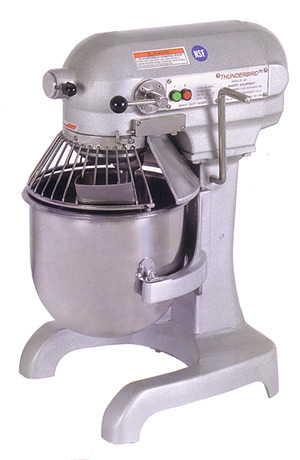
Built for everyday food preparation and bakery operations
Food processing environments often require machines that can handle repetitive tasks quickly without sacrificing product uniformity. In this category, that includes potato peelers for raw ingredient prep, food processors for slicing and shredding, and bakery machines designed to portion or shape dough with more consistent results than manual methods.
For buyers comparing broader equipment ecosystems, some operations also evaluate utility support equipment such as industrial water chillers when process temperature control or equipment cooling becomes part of the production setup. While not every site needs that combination, it can be relevant in larger processing environments.
Potato peelers and vegetable preparation equipment
Ingredient preparation is one of the most time-sensitive stages in food service. Machines such as the Thunderbird TBM-10, TBM-15, and TBM-30 potato peelers are useful examples of how different capacity levels support different production volumes, from smaller prep stations to higher-throughput kitchens handling larger batches of raw potatoes.
These units illustrate key buying considerations: batch size, power requirements, available floor space, and cycle time. A compact model may be enough for steady daily prep, while a larger peeler becomes more practical when the goal is to process more product in fewer cycles and reduce labor at the washing and peeling stage.
Where prep requirements extend beyond peeling, the Thunderbird TBR-580 food processor shows the value of a more flexible vegetable processing approach. Equipment in this class is often selected when kitchens need multiple cutting styles such as slicing, dicing, shredding, or julienne preparation within one workflow.
Dough dividing and rounding for consistent portion control
In bakeries and dough production lines, portion accuracy directly affects baking consistency, proofing behavior, and final product appearance. That is why many buyers focus on dough divider/rounder equipment when scaling beyond manual portioning. Machines in this category are intended to help standardize dough ball size while improving output per hour.
Representative models include the Thunderbird TDR-1380, TDR-2380, TDR-36, and TDR-36A. Although each machine serves the same general purpose, selection usually depends on the target dough weight range, required output, electrical supply, and whether the operation prefers a more compact footprint or a higher-capacity production format.
For operations evaluating suppliers by brand, the Thunderbird range is relevant across several bakery and food prep machine types in this category. That can be helpful for buyers who want a more unified equipment shortlist instead of sourcing each processing step from a different manufacturer.
Dough sheeters for bakery workflow efficiency
When dough thickness and sheet uniformity affect product quality, a sheeter can become a central part of the line. Reversible dough sheeters such as the Thunderbird TBD-500, TBD-500T, and TBD-600 are examples of equipment used to flatten dough more evenly and with less operator fatigue than manual rolling methods.
The right choice typically depends on working length, installation space, and electrical configuration. A tabletop format may suit limited production areas, while a larger floor-standing machine is often better aligned with continuous bakery output or applications where operators need more working area for repeated batches.
In some facilities, process planning may also involve downstream packaging steps. If that applies to your setup, related equipment such as a heat shrinking machine may be worth reviewing separately as part of the wider production and packing workflow.
Bread slicing and finishing equipment
Once baking is complete, consistent finishing is just as important as preparation. The Thunderbird TBS-618 bread slicer represents the type of machine used to improve slice uniformity and speed in bakery and pastry operations. For businesses handling mixed loaf styles, machine selection often depends on loaf type, target slice thickness, and expected hourly throughput.
A dedicated bread slicer can also support cleaner presentation and more repeatable packaging preparation. This is particularly useful for retail bakery counters, wholesale bakery supply, and operations that need to move from oven output to finished saleable product with less manual variation.
How to choose the right food machinery for your application
A practical buying decision starts with the production task, not just the machine name. Some users need a single-purpose machine to solve one bottleneck, while others are planning a broader processing line. In either case, the most useful comparison points are usually throughput, batch size, power supply, footprint, cleaning access, and the level of automation required.
It is also important to match equipment to the product itself. Dough handling machines should be evaluated based on portion range and production rhythm, while vegetable prep equipment should be matched to cut type, volume, and prep frequency. Looking at these factors early helps avoid oversizing, undercapacity, or unnecessary process complexity.
- Throughput: match machine capacity to peak production periods, not only average daily volume.
- Electrical compatibility: confirm voltage and phase requirements before final selection.
- Footprint and mobility: check whether the machine fits the available work area and operator flow.
- Cleaning and maintenance: prioritize designs that support regular sanitation and accessible service points.
- Process fit: choose equipment based on the actual food product and production method.
Where this category fits in a wider machinery setup
Food machinery rarely operates in isolation. Many sites combine preparation, forming, baking, slicing, and packaging equipment into one coordinated process. This category is therefore useful not only for replacing an individual machine, but also for identifying compatible equipment types across ingredient prep and bakery production stages.
For buyers comparing manufacturers beyond the featured range, MOHR is also available as a related manufacturer page within the broader machinery portfolio. Depending on the application, reviewing multiple brands can help clarify preferred machine style, build format, and procurement options.
Find a machine that matches your production volume
Choosing food machinery is ultimately about balancing output, consistency, and operational practicality. From compact potato peelers to dough dividers, dough sheeters, food processors, and bread slicers, the equipment in this category supports common processing needs across commercial food and bakery environments.
If you are narrowing down options, start with the task that consumes the most labor or creates the biggest production bottleneck. That approach usually makes it easier to identify the machine type, capacity level, and brand range that best fit your workflow.
Get exclusive volume discounts, bulk pricing updates, and new product alerts delivered directly to your inbox.
By subscribing, you agree to our Terms of Service and Privacy Policy.
Direct access to our certified experts