Air Sander
In workshops where surface preparation affects the final quality of paint, coating, bonding, or assembly, tool choice matters more than it may seem at first glance. A Air Sander is often selected for repeatable finishing work because it combines compact handling with the stable output of compressed air, making it practical for sanding, smoothing, deburring, and fine surface correction across many industrial tasks.
Compared with general-purpose electric tools, pneumatic sanding tools are especially relevant in production environments that already use compressed air systems. They are commonly found in woodworking, furniture production, metalworking, automotive refinishing, and maintenance operations where operators need continuous use, good control, and a tool format that stays manageable over long shifts.
How air sanders work in daily industrial use
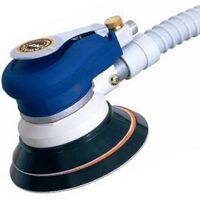
An air sander uses compressed air to drive its internal motor, which then produces either rotational, orbital, or belt-driven sanding movement depending on the tool type. This simple operating principle is one reason pneumatic sanders remain widely used in production settings where reliability and straightforward maintenance are important.
Because the tool is powered by an air line rather than an electric motor at the point of use, it is often a sensible option in work areas where dust, coatings, or solvent-related processes are present. In practice, users often value the combination of lighter body design, fast response at the trigger, and suitability for repetitive finishing tasks.
Common air sander types in this category
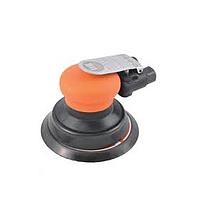
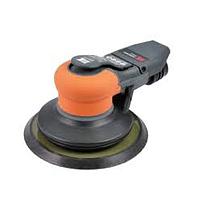
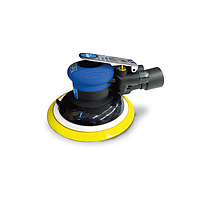
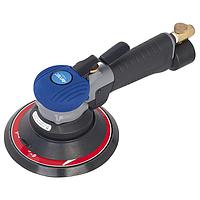
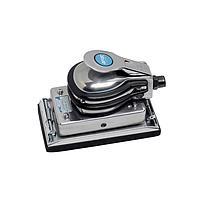
This category covers several sanding formats designed for different finishing stages rather than one single all-purpose tool. Random orbital sanders are widely used for general surface finishing because the combined orbital and rotational action helps produce a more uniform result, while reducing visible sanding patterns in many applications.
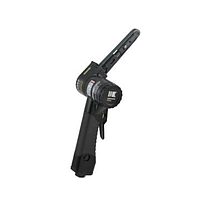
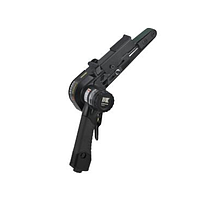
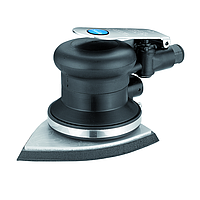
For more specific jobs, other tool styles can be more suitable. An orbital block sander is useful on flatter surfaces, a palm sander supports controlled hand-guided work in tighter areas, a nib removal sander is intended for detail correction, and a belt sander is better aligned with fast material removal or linear finishing. If your process also includes edge preparation or material removal before sanding, it may be useful to review an air grinder range as part of the same pneumatic workflow.
Representative models and practical positioning
Several products in this category illustrate how pneumatic sanders are matched to different workshop needs. Within the AIRTEC range, models such as the AIRTEC 534 Random orbital sander and AIRTEC 533 L Dust free random orbital sander are oriented toward finishing work where pad size, orbit, and handling consistency play an important role. The AIRTEC 533/10 B Dust free random orbital sander offers a larger orbit, which may be preferred when a faster sanding effect is needed on suitable surfaces.
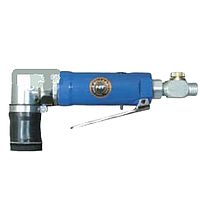
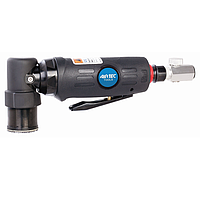
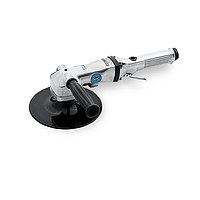
For more specialized tasks, the AIRTEC 474/1 Orbital block sander, AIRTEC 537 Palm Sander, and AIRTEC 531 Nib removal sander represent different approaches to flat-area sanding, compact hand use, and detail correction. The AIRTEC 420 Angle Sander, with its elongated pad format, is more relevant where geometry or access differs from standard round-pad sanding.
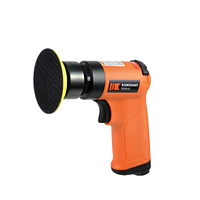
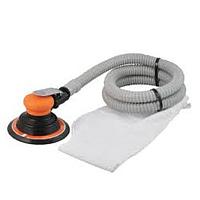
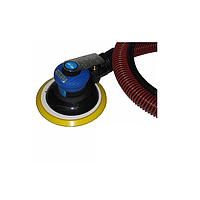
Other manufacturers also expand the application range. The KAWASAKI KPT-1320F-6MP and KPT-1320F-5MP sanders fit general orbital sanding requirements, while the KAWASAKI KPT-1105DS D/A SANDER supports smaller-area finishing. For belt-based work, the KAWASAKI KPT-7320 Belt Sander is positioned differently from orbital tools because it is intended for more directional sanding action. In dust-managed finishing processes, the SATA 02525 5" Central Vacuum Pneumatic Sander is a relevant example of a central vacuum configuration.
What to consider before choosing an air sander
The first point is the sanding task itself. Surface leveling, intermediate finishing, paint preparation, spot correction, and fine defect removal do not place the same demands on the tool. Pad size, orbit diameter, body shape, and tool weight all influence how well the sander fits the job, especially when operators work for extended periods or on shaped parts.
The second point is your air supply. Pneumatic tools depend on stable pressure, correct hose sizing, and sufficient airflow from the compressor system. Inconsistent air delivery can affect usable speed and sanding performance, so the tool should always be considered as part of the wider compressed-air setup rather than as an isolated purchase.
Dust handling may also be an important requirement. In some applications, dust-free or vacuum-assisted sanding is useful for keeping the work area cleaner and supporting better finish quality between sanding steps. Where fastening and assembly are handled in the same line, some users also compare related pneumatic tools such as air screwdrivers to build a more complete workstation around existing air infrastructure.
Why pneumatic sanding tools remain relevant in production environments
One of the main reasons companies continue to use pneumatic sanders is their suitability for repetitive industrial work. They are often chosen where operators need responsive control, relatively low tool weight, and a format that can keep pace with workshop throughput. This is especially true in facilities where compressed air is already a standard utility.
Another advantage is process compatibility. Pneumatic tools fit naturally into production cells that already rely on other air-powered equipment, from tightening to drilling and finishing. In these environments, adding an air sander is less about changing the whole system and more about selecting the right tool head and motion for the finishing stage. If your application includes hole preparation or related assembly tasks, an air drill solution may also be relevant in the same tool ecosystem.
Typical application areas
Air sanders are commonly used in woodworking and furniture manufacturing for surface preparation before coating or assembly. They are also relevant in metal fabrication for deburring and finishing, and in automotive body or refinishing work where controlled sanding quality affects later polishing or painting steps.
Maintenance teams may also use them for localized repair work, especially where compact size and maneuverability are important. The best tool type depends on whether the operator is handling broad surfaces, contour areas, corners, small defects, or linear stock removal.
FAQ
Is a random orbital sander the right choice for every sanding job?
Not always. Random orbital models are versatile for many finishing tasks, but palm, block, angle, nib removal, or belt sanders can be more suitable depending on the material, shape, and finish requirement.
Do pneumatic sanders require a specific compressor setup?
They require an air system that can provide the needed pressure and airflow consistently. Hose diameter, air inlet compatibility, and overall compressor capacity should be checked before selecting a tool.
When is dust-free or central-vacuum sanding useful?
It is especially useful in finishing processes where dust control supports surface quality, cleaner working conditions, or better visibility during sanding.
Choosing the right air sander for your process
A good selection starts with the actual finishing task, not just the tool name. Whether you need a compact sander for detail work, a random orbital model for general surface preparation, or a belt sander for faster stock removal, the right choice depends on surface type, working time, air supply, and expected finish quality.
This category brings together pneumatic sanding options from brands such as KAWASAKI, AIRTEC, and SATA to support different workshop requirements. Reviewing tool motion, pad format, dust management, and air system compatibility will make it easier to narrow down the most appropriate model for stable day-to-day use.
Get exclusive volume discounts, bulk pricing updates, and new product alerts delivered directly to your inbox.
By subscribing, you agree to our Terms of Service and Privacy Policy.
Direct access to our certified experts