Wind speed calibrator
Reliable airflow measurement depends on more than a good sensor. In laboratories, HVAC verification, product testing, and instrument maintenance, a controlled air source is often essential for checking whether an anemometer, air velocity probe, or airflow instrument is still reading correctly across the intended range. That is where a Wind speed calibrator becomes especially useful.
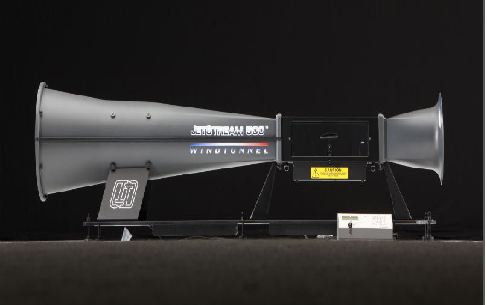
This category brings together equipment designed to create stable, repeatable air velocity conditions for calibration, verification, and performance evaluation. Depending on the application, that may mean a compact benchtop unit for routine checks, a larger tunnel for multi-point testing, or accessories that help adapt probes to practical field workflows.
Why controlled wind speed calibration matters
Air velocity sensors are used in many environments where small reading errors can affect process quality, energy performance, or compliance documentation. A controlled calibration setup helps compare the instrument response against a known airflow condition, reducing uncertainty that can appear when testing in open rooms or unstable ambient conditions.
For technicians and engineers, the practical value is consistency. A dedicated wind speed calibration setup supports repeatable test points, better traceability, and a more dependable basis for deciding whether a field instrument should remain in service, be adjusted, or be replaced. In broader calibration workflows, this category is often used alongside tools such as multifunction calibrators or pressure calibrators when several measurement parameters need to be checked in the same program.
Typical equipment found in this category
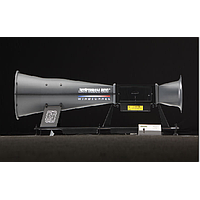
Most products in this range are based on a wind tunnel approach. These systems generate a controlled airstream through a defined test section so that probes, transmitters, and air velocity instruments can be exposed to known flow conditions. Open loop and closed loop designs are both relevant, with the right choice depending on the required stability, speed range, temperature considerations, and available installation space.
For example, OMEGA appears prominently in this category with several benchtop and larger-format wind tunnel solutions. Models such as the OMEGA WT-2000 support low-speed airflow work in a benchtop format, while the OMEGA WT-3100 and WT-3200 are suited to applications requiring broader test sections and uniform flow conditions. For higher airspeed needs, the OMEGA WTM-1000 and WT4401-S illustrate options used for more demanding verification tasks.
Open loop and closed loop wind tunnel options
An open loop wind tunnel draws in ambient air and drives it through the test section. This design is often selected for general airflow calibration, sensor comparison, and laboratory testing where a straightforward setup and easy access to the test area are important. Products such as the OMEGA WT-3104, WT-3106, WT-3107, and WT-2000 fit this general type of use, covering different speed ranges and tunnel sizes.
A closed loop wind tunnel recirculates air within the system, which can help improve control and repeatability in certain test conditions. The OMEGA WT-3067 and WT-3115 are examples in this category that may be relevant where temperature capability, tighter environmental control, or more specialized sensor evaluation is needed. Choosing between open and closed loop designs usually comes down to the required airflow range, uniformity, test environment, and the physical size of the sensor under test.
Accessories and complementary items for airflow testing
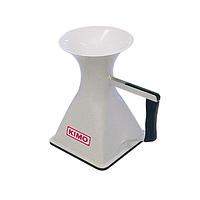
Not every application requires a full wind tunnel. In some workflows, accessories play an important supporting role in obtaining meaningful airflow measurements. The Sauermann K150 Air Flow Cones, for instance, are designed to work with compatible hotwire probes and help capture airflow more effectively at grilles, diffusers, and ventilation outlets.
While airflow cones are not a replacement for a dedicated calibration tunnel, they are useful within the broader ecosystem of air measurement and verification. They can help improve measurement repeatability in HVAC balancing and commissioning tasks, especially when technicians need a practical interface between the probe and the air outlet. Users working across several environmental parameters may also review related tools such as temperature calibrators when sensor maintenance programs include both airflow and temperature channels.
How to choose the right wind speed calibrator
The first step is to match the calibrator to the required air velocity range. Low-speed applications for room airflow, duct checks, or comfort monitoring usually need different equipment than sensor testing for higher-velocity process air or research work. The test section size also matters, especially if the probe head, sensor housing, or fixture occupies significant space and could disturb the airflow.
It is also important to consider flow uniformity, available sensor ports, power requirements, and whether the setup will be used on a bench or in a dedicated lab area. A compact unit like the OMEGA WTM-1000 may suit routine point checks, while larger systems such as the WT-3100 or WT-3200 are better aligned with more structured calibration procedures. If the test program includes thermal effects, closed loop options with elevated temperature capability may be more appropriate.
Applications across HVAC, laboratories, and product testing
Wind speed calibrators are commonly used in HVAC service organizations, calibration laboratories, R&D environments, and quality departments that need to verify air velocity sensors before deployment. They support the testing of handheld anemometers, vane probes, hotwire probes, airflow transmitters, and similar devices used to measure ventilation or process air movement.
They are also relevant in product development, where engineers may need a repeatable airflow source to compare sensor behavior or validate response under controlled conditions. In these cases, the value of the equipment is not just the ability to generate air movement, but the ability to do so in a way that supports repeatable comparison from one test cycle to the next.
Manufacturer focus in this category
Within the products shown here, OMEGA is a key reference point because the range spans compact benchtop systems through to larger wind tunnel formats with different airflow capacities and test section dimensions. That breadth makes it easier to align equipment selection with the actual calibration task rather than forcing one setup to serve every requirement.
Sauermann is also relevant where practical airflow measurement accessories are needed around the calibration workflow, particularly for HVAC-related measurement tasks. Other listed manufacturers may support adjacent measurement and instrumentation needs, but the most visible examples in this category are centered on OMEGA wind tunnels and Sauermann airflow accessories.
Choosing with the full calibration workflow in mind
Selecting a wind speed calibrator is usually not just about maximum velocity. The more useful question is how the equipment fits into the overall testing process: the sensor type being checked, the number of points to be verified, the need for documentation, and the environmental conditions required during the test. A system that fits the workflow well will usually provide better long-term value than one chosen only for headline range.
If your application involves recurring verification of air velocity instruments, this category provides a practical starting point for comparing benchtop and larger tunnel-based solutions. By focusing on airflow range, tunnel format, test section geometry, and the type of instruments being evaluated, it becomes much easier to identify a setup that supports accurate, repeatable, and efficient calibration work.
Get exclusive volume discounts, bulk pricing updates, and new product alerts delivered directly to your inbox.
By subscribing, you agree to our Terms of Service and Privacy Policy.
Direct access to our certified experts