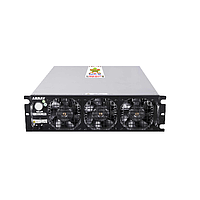
UPS module
Reliable power protection becomes more important as IT rooms, control cabinets, telecom nodes, and industrial systems scale up. In these environments, a modular architecture is often preferred because it supports phased expansion, easier service access, and better continuity planning. That is where UPS module solutions fit: they help businesses build power backup systems that are more flexible than fixed-capacity designs.
For B2B buyers, this category is especially relevant when uptime, maintainability, and future load growth need to be considered together. Instead of choosing a single oversized unit from the start, a modular approach can make it easier to align investment with actual demand while keeping the power infrastructure organized and serviceable.
Why modular UPS systems are widely used
A modular UPS system is designed around replaceable power modules that work as part of a larger UPS platform. This approach is commonly used in server rooms, data centers, automation systems, security infrastructure, and other applications where a stable AC power supply is essential and downtime can create operational risk.
One of the main advantages is scalability. As the protected load increases, additional modules can typically be added within the supported system architecture, reducing the need for a complete replacement. This is particularly useful for projects that begin with a moderate load but are expected to grow over time.
Key benefits for industrial and commercial applications
Compared with more conventional single-block systems, modular UPS designs are often selected for their serviceability and redundancy strategy. If the application requires high availability, the ability to organize capacity into multiple modules can support maintenance planning and help reduce disruption during servicing.
Another practical benefit is space and deployment efficiency. In many technical environments, engineers must balance cabinet layout, thermal management, battery configuration, and access for maintenance. A modular solution can simplify this planning by making the power backup system easier to adapt to site conditions and future expansion stages.
How to evaluate a UPS module for your project
Selection should start with the actual load profile rather than the nominal system label alone. Consider the type of equipment being protected, expected runtime strategy, expansion plans, installation footprint, and how critical the application is. In industrial and infrastructure projects, buyers should also look at maintainability, parts replacement workflow, and how the UPS architecture fits into the broader electrical design.
Topology is another important factor. Many modular systems are chosen for applications that need stable output and stronger protection against utility disturbances. If you are comparing different architectures, it can be helpful to review broader online UPS solutions alongside modular options, especially when power quality and continuous conversion are key requirements.
Example from the Santak portfolio
Within this category, Santak is one of the relevant manufacturers for buyers looking at modular backup power systems. A representative example is the Santak UPM 25KW Online Module UPS, which uses double conversion online technology and three-level bridge IGBT PWM control. These characteristics indicate a solution aimed at applications where output stability and power conditioning are important parts of the design requirement.
When reviewing a product like this, it is useful to look beyond headline capacity and focus on how the module fits into the complete installation plan. Dimensions, weight, cabinet integration, ventilation clearance, and service access can all affect whether a given module is suitable for a control room, IT rack area, or centralized power protection system.
UPS module vs other UPS categories
Not every project needs a modular structure. For smaller or simpler installations, other UPS categories may be more appropriate depending on load sensitivity, budget, and deployment complexity. Buyers comparing architectures may want to explore the broader offline UPS range for less demanding backup scenarios, where the protection level and operating principle differ from modular online systems.
The choice usually depends on how much flexibility, redundancy, and future scalability the site requires. Modular systems are often a stronger fit for environments where load growth is expected, service continuity matters, and power infrastructure needs to remain adaptable over a longer lifecycle.
Typical application scenarios
UPS modules are commonly used in facilities that cannot tolerate unstable power or unplanned shutdowns. This includes data processing environments, communication systems, security platforms, building management systems, and industrial automation networks. In these settings, backup power is not only about keeping devices on; it also helps maintain process integrity, communication continuity, and controlled shutdown procedures when needed.
They are also relevant in projects where staged deployment is part of the investment plan. A business may initially install only the capacity required for current operations, then expand the system as more racks, controllers, network hardware, or production support equipment are added.
Choosing with lifecycle needs in mind
For technical procurement teams, the best decision is usually the one that balances present requirements with realistic future changes. A well-matched power protection strategy should consider not only current load demand, but also maintenance access, redundancy goals, installation constraints, and long-term service planning.
This UPS module category is therefore most valuable for buyers who need a more adaptable backup power architecture rather than a fixed one-time solution. By comparing module-based systems carefully and reviewing suitable products from manufacturers such as Santak, businesses can build a UPS configuration that supports both operational reliability and practical expansion over time.
Get exclusive volume discounts, bulk pricing updates, and new product alerts delivered directly to your inbox.
By subscribing, you agree to our Terms of Service and Privacy Policy.
Direct access to our certified experts