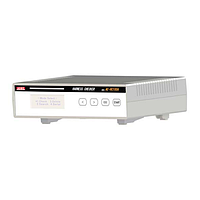
Cable, Connector Tester
Reliable cable and connector verification is essential in electronics manufacturing, wire harness assembly, maintenance, and incoming quality control. When continuity, insulation, pin mapping, or high-voltage withstand needs to be checked quickly and consistently, a dedicated Cable, Connector Tester helps reduce rework, prevent wiring errors, and improve traceability across the production flow.
This category brings together test equipment used for cable assemblies, harnesses, connectors, and related interconnection checks. Depending on the application, users may need simple harness verification, multi-point cable testing, 2-wire or 4-wire measurement, hipot and insulation testing, or support accessories for calibration and system upkeep.
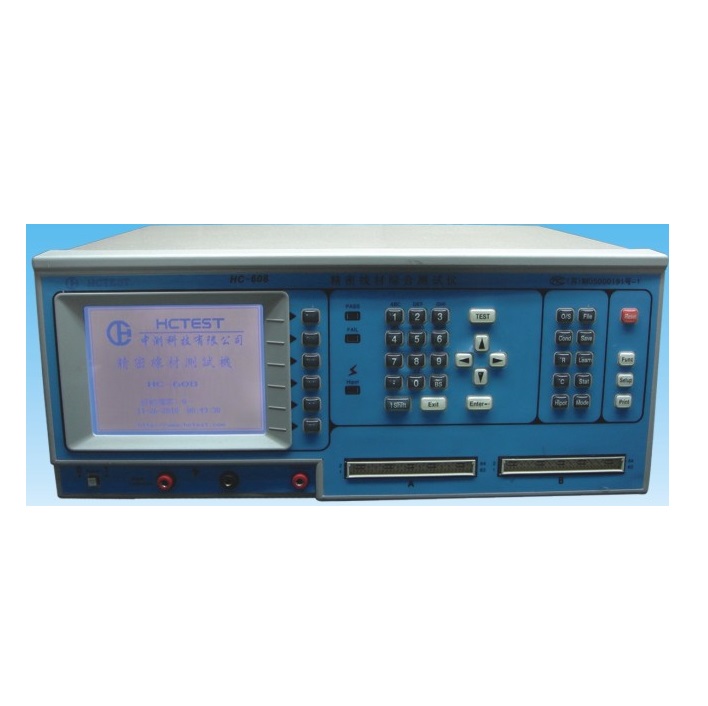
Where cable and connector testers are used
These instruments are commonly used wherever electrical interconnections must be validated before installation or shipment. Typical environments include cable assembly lines, connector manufacturing, automotive and industrial harness production, electronics service centers, and quality inspection labs handling batch verification.
In these workflows, the goal is not only to detect open and short circuits. Many users also need to confirm pin-to-pin accuracy, insulation resistance, leakage behavior, and withstand capability under AC or DC test conditions. For troubleshooting broader electrical issues outside harness inspection, related tools such as an industrial multimeter or an earth resistance tester may also be relevant, but dedicated cable testers are better suited to repetitive production checks and higher channel counts.
Main test functions buyers usually look for
A practical selection process starts with the type of faults you need to catch. For many cable and connector applications, the baseline requirement is continuity and open/short detection. In more demanding assemblies, buyers may also require resistance, capacitance, diode checks, intermittent fault screening, or insulation and hipot capability for safety-related products.
Several featured models in this category reflect that range. For example, MICROTEST systems such as the 8740NA, 8740N-128P, 8761FA, 8761NAC, and CT-8681 are suited to users who need multi-point testing with functions that go beyond simple continuity. This makes them relevant for production environments where electrical safety verification and repeatable documentation matter as much as pass/fail indication.
2-wire and 4-wire testing: choosing the right approach
One of the most important distinctions in this category is whether a 2-wire or 4-wire architecture is more appropriate. A 2-wire cable tester is often sufficient for general harness verification, open/short detection, and standard production checks where speed and straightforward operation are the priority.
A 4-wire precision tester is generally preferred when low-resistance accuracy is more important or when more demanding cable and harness evaluations are required. Instruments such as the MICROTEST 8761FA and 8761NAC illustrate this higher-precision segment, while models like the MICROTEST 8740NA and 8740N-128P address many routine cable test tasks efficiently. If your process includes fine resistance evaluation or stricter quality thresholds, 4-wire measurement can provide a more dependable basis for acceptance.
Examples of equipment in this category
The product range here includes both core testers and supporting components. The MICROTEST 8740 Cable/Harness Tester family covers applications requiring multiple test points, fast measurement cycles, and combined low-voltage and high-voltage checks. For users handling more advanced harness verification, the MICROTEST 8761 series adds precision-oriented options and compatible accessories such as the MICROTEST KB-8750K1 Calibration Kit For 8761 Series.
Not every item in the category is a standalone benchtop tester. The MICROTEST 8740NA-128P-PCB CPU board use for 8740NA-128P is an example of a service or replacement component that supports installed test systems. The Tinsley 5941 Cable Termination Unit fits a different role within a cable-related test setup, while the AE-MIC AE-HC100A Harness checker is aimed at practical harness inspection tasks. For repetitive mechanical cycling, the JFM DEC-003 CORD ON/OFF TESTER supports a distinct type of cord evaluation related to switching or durability workflows.
How to evaluate channel count, test points, and workflow fit
In cable and connector inspection, the number of test points matters because it affects fixture design, throughput, and the range of assemblies that can be handled on one platform. Some applications involve relatively simple connectors, while others require 128, 256, or more points for larger harnesses and denser assemblies.
When comparing options, consider not only the maximum point count but also how the instrument will be used day to day. Fast scan time, manual or automatic triggering, memory for test programs, and communication interfaces can all influence operator efficiency. A tester that matches the actual product mix will usually deliver better long-term value than selecting only by maximum voltage or highest channel count.
Manufacturers commonly chosen for cable and harness testing
MICROTEST is the most visible brand in this category context, with a broad range of cable and harness testing solutions covering routine continuity checks through to higher-voltage and precision-oriented applications. This makes it a strong fit for users standardizing test procedures across multiple product types or scaling from bench verification to production-line inspection.
Other relevant names in the category include Tinsley for cable termination-related equipment, AE-MIC for harness checking, and JFM for dedicated cord test equipment. Each serves a slightly different need, so manufacturer choice should follow the actual test objective, fixture method, and required level of automation rather than brand familiarity alone.
Selection tips for B2B procurement teams
For engineering, quality, and purchasing teams, a good starting point is to define the fault modes that matter most: continuity failures, miswiring, insulation breakdown, leakage, intermittent connections, or low-resistance variation. From there, align the tester with the cable type, connector complexity, number of circuits, expected throughput, and whether the process requires stored test files or external control integration.
It is also worth planning for calibration, maintenance, and replacement parts early in the purchase cycle. Accessories and support items can be important in sustaining measurement confidence over time, especially in factories that rely on repeatable acceptance criteria. For applications extending into advanced electronic characterization, some users may also review adjacent solutions such as SMU semiconductor test equipment, although that serves a different measurement purpose from cable and connector inspection.
Choosing the right cable and connector test setup
The right solution depends on whether your priority is quick harness checking, multi-point production testing, high-voltage insulation verification, or precision resistance measurement. In practice, the best fit is usually the one that matches your actual assemblies, operator workflow, and quality criteria without adding unnecessary complexity.
This category is designed to help buyers compare equipment for cable, connector, and harness verification in a more structured way. If you are building or upgrading a test station, focus on the required test methods, point count, and maintenance ecosystem first, then narrow the shortlist by model family and manufacturer support.
Get exclusive volume discounts, bulk pricing updates, and new product alerts delivered directly to your inbox.
By subscribing, you agree to our Terms of Service and Privacy Policy.
Direct access to our certified experts