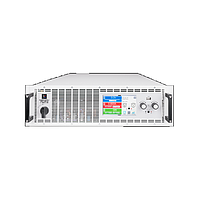
Regenerative DC electronic load
Power test setups often need more than simple energy dissipation. In battery, EV, power conversion, and renewable energy validation, engineers frequently want to absorb DC power while reducing wasted heat and improving overall bench efficiency. That is where regenerative DC electronic load solutions become especially useful, combining dynamic loading capability with the ability to return energy back to the grid instead of converting it entirely into heat.
On this page, you can explore regenerative load options for a range of voltage, current, and power requirements. These systems are relevant for R&D labs, production test, and validation environments where stable control, accurate measurement, and practical energy handling all matter during repeated or long-duration testing.
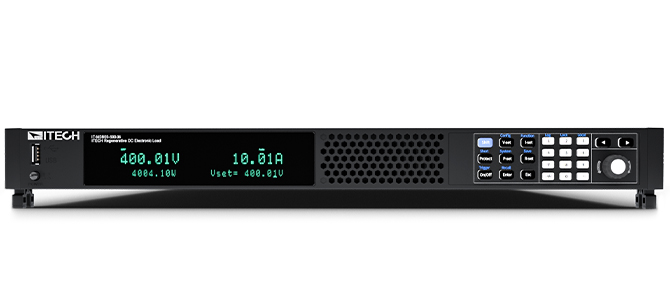
Why regenerative load technology matters
A conventional electronic load absorbs power from the device under test and dissipates it as heat. In many applications that approach is sufficient, but at higher power levels it increases HVAC demand, rack heat density, and operating cost. A regenerative load addresses this by feeding a significant portion of absorbed energy back to the facility AC line.
This makes regenerative systems attractive for repetitive discharge testing, power supply evaluation, fuel cell testing, battery pack validation, and DC source characterization. For teams comparing product types, it can also be helpful to review the broader DC electronic load range alongside regenerative models, especially when deciding between cost, thermal management, and energy recovery priorities.
Typical applications in engineering and industrial test
Regenerative DC loads are commonly selected when the DUT can deliver substantial energy over time. Examples include battery modules, DC fast-charging subsystems, onboard power electronics, solar storage components, industrial DC supplies, and high-power converters. In these cases, the load must respond quickly and remain stable across changing operating points.
They are also well suited to automated test environments where engineers need repeatable modes such as constant current, constant voltage, constant resistance, and constant power. If your test scope also includes mixed AC and DC scenarios, it may be worth reviewing AC/DC electronic load platforms for a wider system-level comparison.
How to choose the right regenerative DC electronic load
The most important starting point is the operating envelope of the device under test. Voltage range, maximum discharge current, and continuous power determine whether a compact 2 kW unit is sufficient or whether a 6 kW or 12 kW platform is more appropriate. Selection should also consider transient behavior, control resolution, and how precisely the load must regulate under changing DUT conditions.
For lower-voltage, higher-current applications, an 80 V class model may be a better fit. For higher-voltage converter, battery stack, or supply testing, 500 V and 800 V classes are often more suitable. Engineers should also look at protection behavior, readback accuracy, and how the instrument integrates into the wider test system, particularly when the load will be part of long automated sequences.
Examples across 80 V, 500 V, and 800 V ranges
The product range shown in this category illustrates how regenerative loads are typically positioned by voltage and power class. For example, the KEYSIGHT EL4913A provides a 2 kW solution in the 80 V range, while the KEYSIGHT EL4923A moves to 4 kW and the KEYSIGHT EL4943A reaches 12 kW for applications requiring much higher current at lower DC voltage.
For medium- and high-voltage testing, models such as the KEYSIGHT EL4915A and KEYSIGHT EL4925A cover 500 V applications at 2 kW and 4 kW, while the KEYSIGHT EL4945A extends that range to 12 kW. In higher-voltage environments, the KEYSIGHT EL4916A, KEYSIGHT EL4926A, KEYSIGHT EL4936A, and KEYSIGHT EL4946A support 800 V test requirements across multiple power levels. This spread helps engineering teams match the load to the DUT rather than oversizing the test bench unnecessarily.
Manufacturer options and ecosystem considerations
KEYSIGHT is one of the key brands represented in this category, with models covering 2 kW, 4 kW, 6 kW, and 12 kW classes across several DC voltage ranges. That makes it easier to standardize on a common test approach while still matching different projects, from lower-voltage power modules to higher-voltage battery and converter validation.
Depending on system preference and procurement strategy, buyers may also compare options from EA Elektro-Automatik and KIKUSUI. In many labs, the choice is influenced not only by headline ratings but also by control behavior, interface compatibility, energy handling strategy, and how well the load aligns with existing DC sources, automation software, and safety procedures.
Key technical factors beyond headline power
Power rating is only one part of the decision. In practical test environments, programming accuracy, readback accuracy, regulation performance, and resolution affect the quality of the measurement result. When validating converters, batteries, or DC supplies, these details influence how confidently engineers can characterize efficiency, response, and operating margins.
Slew rate is also important when the test plan includes dynamic loading or transient simulation. Some applications mainly require stable steady-state discharge, while others need faster current changes to emulate realistic operating behavior. Protection thresholds for overvoltage, overcurrent, and overpower should also be reviewed carefully, since they shape both DUT safety and instrument survivability during abnormal conditions.
When a regenerative model is the better fit
A regenerative load is especially attractive when testing is frequent, power levels are high, or thermal load in the lab is already a concern. Returning energy to the grid can help reduce wasted power and ease cooling requirements compared with traditional dissipative designs. That does not automatically make regenerative models the right choice in every case, but it often makes them the more practical option for sustained high-power workflows.
For simpler or lower-energy tasks, a standard load may still be appropriate. For larger validation benches or facilities with recurring battery and power electronics testing, however, energy recovery and lower heat dissipation can become important operational advantages over time.
Finding the right model for your test bench
The best selection depends on the DUT profile, test duration, automation needs, and facility power environment. An 80 V model may suit high-current battery or DC rail work, while 500 V and 800 V models are better aligned with higher-voltage converters, packs, and industrial power systems. Power classes from 2 kW to 12 kW allow teams to scale from compact bench testing to more demanding validation tasks.
If you are comparing platforms, start by narrowing the required voltage window, continuous power, and maximum current, then review accuracy, protection behavior, and transient performance. A well-matched regenerative DC electronic load helps create a safer, more efficient, and more repeatable test environment, particularly where high-energy DC testing is part of daily engineering work.
Get exclusive volume discounts, bulk pricing updates, and new product alerts delivered directly to your inbox.
By subscribing, you agree to our Terms of Service and Privacy Policy.
Direct access to our certified experts