IC Programmer, Tester
Choosing the right equipment for device programming, verification, and fault isolation can make a major difference in electronics repair, embedded development, and production throughput. For teams working with memory devices, microcontrollers, logic ICs, or programmable components, IC Programmer, Tester tools help reduce setup time, improve consistency, and support more reliable handling of devices across the bench or the line.
This category brings together handheld IC testers, universal programmers, gang programmers, and related socket adapters used in laboratory, service, and manufacturing environments. Whether the priority is quick screening of common linear and digital ICs, stand-alone field operation, or higher-volume programming of flash and controller devices, the selection here is intended to support different workflows without forcing a one-size-fits-all setup.
Where IC programmers and testers are typically used
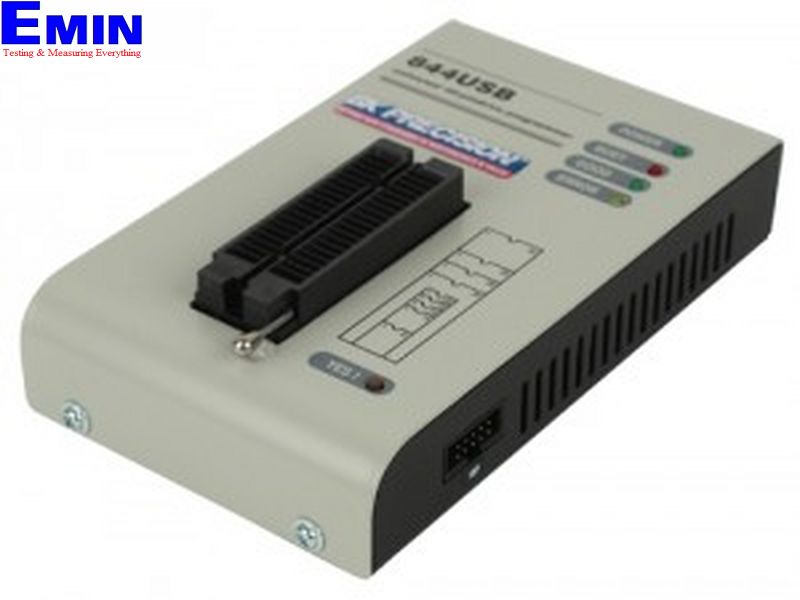
In practical use, these tools are common in electronics repair centers, R&D labs, firmware preparation stations, and production lines. A compact tester can help quickly identify whether a logic or linear IC is functioning as expected before deeper troubleshooting begins, while a universal programmer is more suitable when devices need to be written, verified, or duplicated with controlled file handling.
They also fit naturally into a broader electronic measurement workflow. For example, engineers who diagnose board-level issues may combine IC verification with tools from semiconductor test equipment or routine electrical checks using a multimeter, depending on whether the problem is functional, parametric, or power-related.
Different product types in this category
Not every application needs the same class of device. A handheld tester such as the LEAPTRONIX LEAPER-2 Handy Linear IC Tester is more aligned with quick validation of operational amplifiers, optocouplers, comparators, regulators, and similar linear components. For digital logic work, the Puton ICT-1 Handy Digital IC Tester is an example of a portable, stand-alone approach focused on digital IC checking without requiring a PC during operation.
At the other end of the spectrum are universal programmers and gang programmers. Models such as the Leaptronix SU-320, SU-3280, LP-456, and SU-56A are designed for programming supported memory and programmable devices with broader file-format handling and more structured workflows. Higher-throughput options such as the Texas Instruments C-GANG or Xeltek SuperPro 7500N and 7504N are more relevant where multiple targets must be programmed efficiently in repetitive or production-oriented tasks.
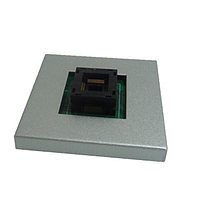
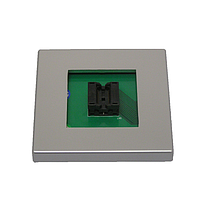
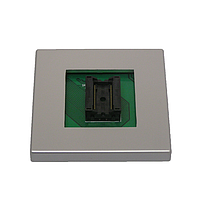
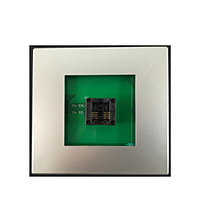
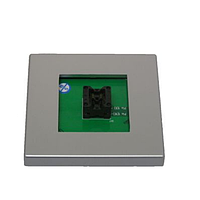
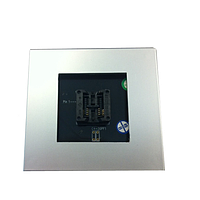
This category also includes supporting hardware such as the Xeltek DX1045 socket adapter. Accessories like this are important because package compatibility often determines whether a programmer can be used effectively with a specific device family or package style.
What to consider when selecting the right device
The first point is device compatibility. In B2B environments, it is rarely enough to choose a programmer based only on one current part number. Buyers usually need to consider the classes of devices involved, such as NOR FLASH, SPI EPROM, EEPROM, MCU, MPU, CPLD, or related programmable components, and whether package support can be extended through adapters.
The second point is operating mode. Some users need a simple bench tool with stand-alone operation and a compact display, while others require USB-based PC control, stored jobs, or multi-site programming. If the process includes repetitive image loading, verification, and pass/fail handling, a stand-alone or gang platform may be a better fit than a basic single-device programmer.
Another practical factor is voltage and signal flexibility. Many modern devices operate across different logic levels, so the programmer or tester should align with the supported range required by the target devices. For service and maintenance tasks, ease of use matters just as much: a clear LCD, straightforward button layout, and stable software environment often save more time than headline speed figures alone.
Examples from leading manufacturers
Several established names appear in this category, each relevant to different use cases. LEAPTRONIX is strongly represented with handheld testers and stand-alone universal or gang programmers suited to service, development, and production scenarios. Xeltek is also widely recognized in device programming environments, particularly where adapter ecosystems and production-focused platforms are important.
Texas Instruments appears here with the C-GANG Standalone Gang Programmer, which is particularly relevant for workflows that involve programming multiple targets simultaneously and integrating programming steps into a more structured embedded manufacturing process. Meanwhile, Segger is represented by the J-Link PRO, which serves a different but related role in embedded development through high-speed debugging and target communication rather than conventional universal device programming.
Puton and LP add useful options for buyers seeking more focused portable testers or pocket-style programmers. The right brand choice usually depends less on name recognition alone and more on whether the tool matches the target device family, software workflow, and expected production volume.
Why adapters and package support matter
When evaluating an IC programming setup, the main unit is only part of the picture. Many real-world projects involve devices in SOP, TSOP, QFP, BGA, QFN, or other package formats, and this is where socket adapters become essential. A compatible adapter can extend the practical value of a programmer significantly, especially when the engineering team works across multiple board revisions or memory package types.
The Xeltek DX1045 Socket Adapter is a good example of how accessories support the broader programming ecosystem rather than acting as standalone tools. For purchasing teams, this means the total solution should be reviewed as a combination of programmer capability, package support, fixture needs, and future expansion requirements.
Bench testing versus production programming
A repair technician or development engineer often values portability, quick startup, and simple pass/fail feedback. In those cases, a handheld model like the LEAPER-2 or ICT-1 can be more appropriate than a larger production platform. These tools help shorten diagnosis time when checking whether a removed IC is behaving correctly before replacing surrounding components.
Production environments have a different priority: repeatability, throughput, and multi-device handling. Systems such as the Leaptronix LP-456, SU-3280, or Xeltek SuperPro 7500N are better aligned with these demands because they support broader programming tasks and multi-site operation. The difference is not just capacity, but also how well the device fits controlled workflows for image loading, verification, and operator consistency.
How to narrow down the best fit for your application
A useful way to decide is to start from the actual job: testing logic ICs, checking analog or linear devices, programming memory parts, preparing MCU images, or running repeated production batches. Once that is clear, the shortlist becomes easier to define based on supported device classes, package handling, stand-alone versus PC-connected use, and the need for accessories.
It is also worth considering whether the tool will remain a bench-only asset or become part of a broader quality and diagnostic process. In some environments, IC programming is closely tied to other verification stages, and readers who work on board reliability may also benefit from reviewing related measurement tools such as earth resistance and resistivity testers for facility-level electrical checks, even though they serve a different measurement purpose.
Final considerations
A well-chosen IC programmer or tester should support the devices you use today while leaving room for package adapters, workflow changes, and future production demands. Portable testers are valuable for quick diagnostics, while universal and gang programmers are more suitable when programming speed, repeatability, and broader device support become critical.
By comparing operating mode, supported device families, package compatibility, and expansion options, buyers can select equipment that fits real engineering tasks rather than generic specifications. This category is designed to help that process by bringing together practical options for electronics service, development, and manufacturing in one place.
Get exclusive volume discounts, bulk pricing updates, and new product alerts delivered directly to your inbox.
By subscribing, you agree to our Terms of Service and Privacy Policy.
Direct access to our certified experts