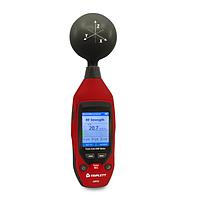
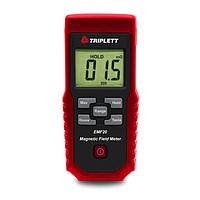
Magnetic field measuring device
When magnetic flux density, electromagnetic exposure, or stray fields need to be checked in production, maintenance, or laboratory work, choosing the right instrument matters as much as taking the measurement itself. This category brings together magnetic field measuring device solutions used for detecting, verifying, and documenting magnetic or electromagnetic conditions in practical industrial environments.
Depending on the task, users may need a simple non-contact detector for quick presence checks, a gauss meter for quantified DC or AC readings, or a broader EMF instrument that also covers electric field and high-frequency sources. The selection below is suited to technicians, quality teams, service engineers, and test personnel who need clear measurement data rather than guesswork.
Where magnetic field instruments are typically used
Magnetic field measurement is relevant in many technical settings: checking permanent magnets, verifying coils and solenoids, evaluating motors and transformers, inspecting magnetic fixtures, and monitoring electromagnetic conditions around equipment. In maintenance work, these instruments can help confirm whether a magnetic source is present and whether the field level is within the expected operating range.
They are also useful in electronics and test environments where repeatable readings are important for troubleshooting and documentation. For broader electrical diagnostics, users often complement these tools with a multimeter to verify voltage, current, and continuity alongside magnetic or EMF behavior.
Different device types within this category
Not every application requires the same kind of meter. A compact detector such as the EXTECH MD10 is designed for fast non-contact indication of magnetic field presence. It is a practical choice when the main goal is to identify whether AC, DC, or permanent magnetic fields are present, rather than to log a numerical measurement.
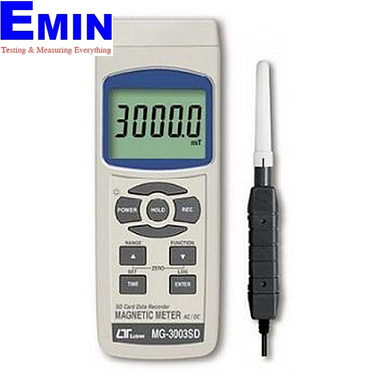
For quantified readings, gauss meters and tesla meters are more appropriate. Instruments such as the PCE MFM 3000, PCE MFM 4000, and KANETEC TM-901EXP are better suited to applications where users need values in mT or G, need to distinguish AC and DC fields, or need probe-based measurement around components, assemblies, and test setups.
There are also broader EMF meters in this category, such as the PCE EMF 20 and PCE-EMF 30, which extend beyond conventional gauss measurement to cover electric field or wider electromagnetic exposure checks. These are often selected when the application includes general environment screening, service inspection, or quick field assessment around electronic equipment.
How to choose the right magnetic field measuring device
The first decision is whether you need field presence detection or an actual numerical measurement. If a technician only needs a rapid yes/no indication, a non-contact detector can be enough. If the task involves acceptance testing, troubleshooting, calibration workflows, or comparison against process targets, a gauss meter with defined resolution and accuracy is usually the better fit.
The second factor is the field type. Some applications focus on static DC magnetic fields, such as permanent magnets and magnetic chucks, while others involve AC magnetic fields generated by energized equipment. Several PCE models in this category support both DC and AC measurement ranges, which is helpful when one instrument must cover mixed maintenance or test tasks.
Probe style also matters. Axial and transverse Hall sensors are suited to different measurement directions and geometries, so the physical layout of the measurement point should guide device selection. In production and quality control, data hold, min/max capture, memory, or calibration certificate options may also be important if results need to be recorded and reviewed later.
Representative products in this range
The EXTECH MD10 is a straightforward example of a portable detector for quick magnetic field checks. Its non-contact operation and compact form factor make it useful for service work, spot inspection, and rapid confirmation tasks where convenience and speed matter more than full numerical analysis.
For gauss and tesla measurements, the PCE MFM 3000 and PCE MFM 4000 cover applications that require measurable AC/DC magnetic field values with external sensors. The PCE MFM 4000 variants are especially relevant when users need broader functionality such as memory-oriented workflows or certificate-supported measurement documentation.
The KANETEC TM-901EXP is aligned with users who need dedicated Tesla-Gauss measurement, including polarity-related evaluation in DC magnetic flux density applications. For wider electromagnetic assessment, the PCE EMF 20 and PCE-EMF 30 provide a different approach by combining magnetic and electric field monitoring in a compact handheld format.
Key parameters that influence measurement quality
A magnetic field meter should be selected with attention to range, resolution, and the expected strength of the field being measured. A device optimized for low-level precision work may not be ideal for stronger fields, while a high-range instrument may not offer the same sensitivity at the low end. This is why product selection should match the real operating window of the application.
Another important point is measurement direction and sensor positioning. Hall-effect based instruments depend on proper orientation to the field source, so the geometry of the probe and the accessibility of the test point can significantly affect usability. In practice, the right sensor style often improves repeatability more than choosing a meter with a broader specification alone.
Users working in service or fault-finding may also value alarm functions, backlit displays, auto shutoff, and portable battery-powered operation. Where electrical safety or site condition checks are part of the workflow, related instruments such as an earth resistance tester or a ground fault locator may support a more complete diagnostic process.
Typical buyers and purchasing considerations
This category is relevant for maintenance departments, machine builders, electrical service contractors, laboratories, and QA teams. Buyers often compare products based on whether they need spot checks or traceable measurements, whether AC and DC coverage is required, and whether the instrument must be compact for field use or more feature-rich for regular inspection routines.
Another common purchasing criterion is documentation. Some versions in this range include ISO calibration certificate options, which can be important for controlled testing environments or internal quality procedures. In other cases, portability and ease of use are the priority, especially for technicians who need a fast handheld tool during inspections across multiple sites.
Why this category covers more than one measurement scenario
Although the category centers on magnetic field measurement, real-world needs often overlap with broader electromagnetic testing. That is why the range can include simple detectors, gauss meters, tesla meters, and EMF-oriented instruments. The right choice depends on whether the goal is confirmation, quantitative analysis, environmental screening, or process verification.
Users evaluating RF-related sources or broader electromagnetic activity may also look at neighboring test equipment categories depending on the signal type and application. The key is to define the source, expected frequency behavior, required unit of measurement, and reporting needs before narrowing down the product list.
Find the right instrument for your application
A suitable magnetic field instrument should fit the measurement task, not just the budget or form factor. For quick presence checks, compact non-contact detectors are often enough; for production control, troubleshooting, or documented verification, gauss and EMF meters with the right probe type, range, and data functions are usually the safer choice.
By comparing application type, field strength, AC/DC requirements, and documentation needs, it becomes easier to select a practical magnetic field measuring device for daily technical work. If your process also involves broader electrical diagnostics, complementary test tools can be selected alongside the magnetic measurement instrument to build a more complete inspection workflow.
Get exclusive volume discounts, bulk pricing updates, and new product alerts delivered directly to your inbox.
By subscribing, you agree to our Terms of Service and Privacy Policy.
Direct access to our certified experts