Motor and generator tester
Reliable electric motors and generators depend on more than a simple continuity check. In production, maintenance, and repair environments, users often need to verify winding resistance, insulation quality, hipot performance, short-circuit behavior, and sometimes dynamic operating condition as part of a complete test workflow. This is where the Motor and generator tester category becomes especially relevant for quality control teams, motor shops, and industrial maintenance engineers.
On this page, you can explore instruments used for testing stators, rotors, complete motors, generators, and related assemblies. The range includes benchtop systems for manufacturing inspection as well as analyzers intended for field diagnostics, helping users match the test method to the actual failure mode they need to detect.
Where motor and generator testers are used
These instruments are commonly selected for incoming inspection, end-of-line testing, rewind verification, preventive maintenance, and troubleshooting after an unexpected failure. In motor production, repeatable pass/fail criteria are important for identifying winding imbalance, insulation weakness, or assembly defects before a unit leaves the line.
In maintenance settings, the priority is often different. Teams may need to compare resistance between phases, confirm insulation resistance after storage or repair, or analyze energized equipment without extended downtime. For broader electrical troubleshooting around machines and panels, users may also combine these systems with a multimeter for basic voltage, current, and continuity checks.
What these systems typically evaluate
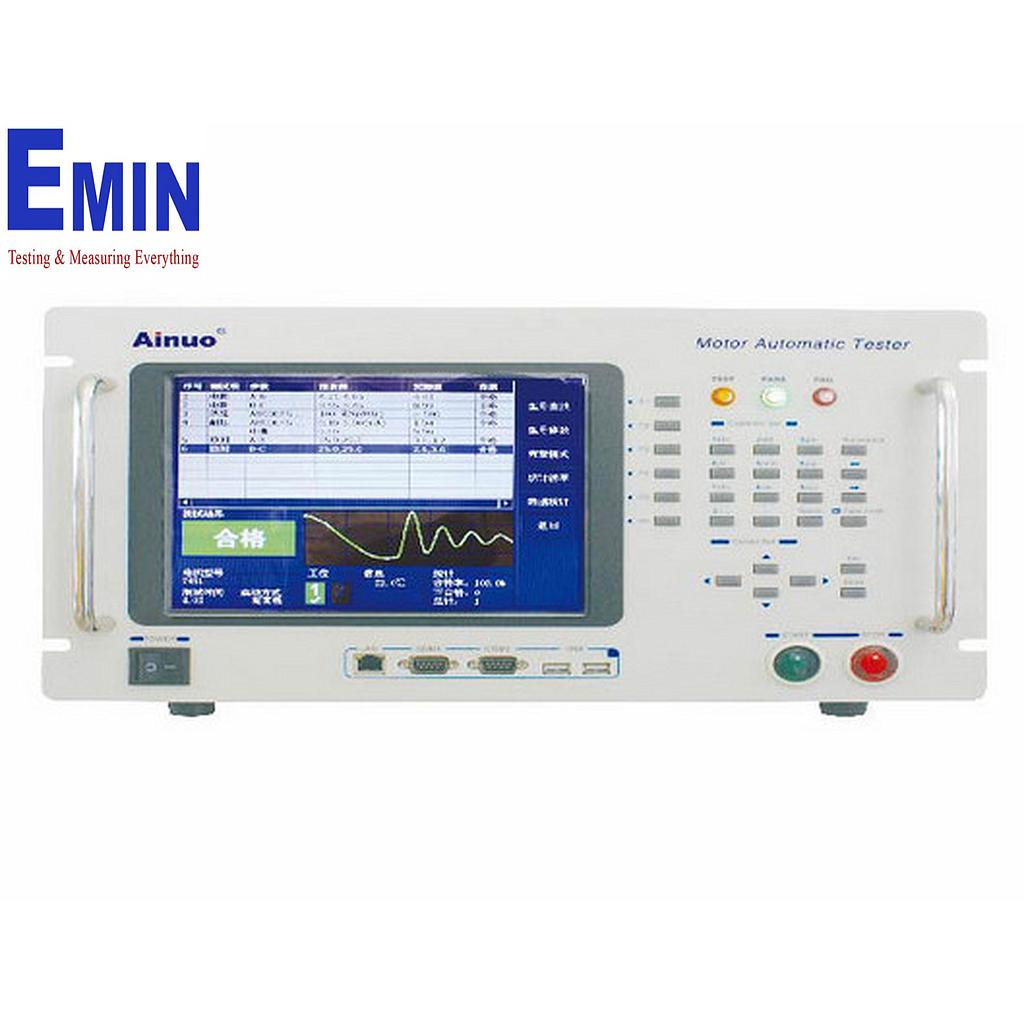
A practical motor test process usually combines several measurements rather than relying on one result. Common checks include 4-wire low resistance measurement for winding comparison, insulation resistance testing to evaluate dielectric condition, and hipot testing to assess leakage behavior under higher voltage stress.
Some systems in this category also support surge or short-circuit related evaluation, helping detect turn-to-turn weaknesses that may not appear in a basic resistance test. Depending on the application, users may additionally look at inductance-related behavior, test sequencing, memory storage, communication interfaces, and pass/fail indication for streamlined production use.
Representative solutions in this category
MICROTEST is strongly represented in this category with dedicated systems for stator and rotor inspection. Models such as the MICROTEST 6913 Motor Stator Testing DCR System, MICROTEST 6917 DCR Motor Stator Testing DCR System, and MICROTEST 6920 Motor Rotor Testing System illustrate a workflow built around resistance measurement, insulation checks, hipot capability, and structured pass/fail evaluation. These are particularly relevant where repeatability and fixture-based testing are important.
For users working on broader motor performance validation, the JFM DEG-012 MOTOR TESTER adds another perspective by covering parameters such as torque load, RPM, insulation resistance, current, and voltage. That makes it useful in applications where the relationship between electrical condition and operating behavior matters, not just static winding checks.
When energized analysis is required, ALL-TEST Pro offers a different approach. The All Test Pro OLII Complete Electrical Signature Analysis (ESA) is positioned for on-line evaluation, combining motor analysis and power quality functions so users can assess incoming power, control conditions, motor behavior, and driven load trends while equipment remains in service.
How to choose the right motor or generator test method
The right selection depends first on whether the asset is tested offline or energized. Offline systems are generally preferred for manufacturing, repair verification, and controlled bench inspection because they support repeatable measurement sequences. Energized analyzers are more suitable when shutdown time is limited and the goal is condition monitoring or predictive maintenance.
Next, consider the type of component under test. A stator test station may be optimized for multiple channels, fixture integration, and winding comparison, while a rotor-oriented solution may focus on the characteristics most relevant to rotor assembly verification. If you are evaluating generators or large rotating equipment in operation, the ability to trend electrical signature data may be more useful than a single standalone reading.
Finally, review the required test range and workflow. Some applications demand very low resistance measurement in the milliohm region, while others require higher insulation resistance ranges, higher hipot voltage, or data storage for repeat jobs. Communication options such as RS-232 and stored test programs can also be important in production environments where traceability matters.
Why multi-function testing matters in production and maintenance
A motor may pass a basic resistance check and still have insulation or surge-related issues that later cause failure in service. Using a more complete test sequence helps reveal defects earlier, especially in winding systems where subtle imbalance or weak dielectric condition can remain hidden during simple manual inspection.
This is one reason many users prefer integrated testers instead of separate instruments for each step. A single platform can reduce setup time, simplify operator training, and create more consistent decision criteria across shifts or sites. For applications that also involve insulation path verification to ground or plant grounding issues, related tools such as an earth resistance tester may support a more complete electrical maintenance program.
Examples of test coverage across the available range
Within the MICROTEST lineup, systems such as the 6910, 6910L, 6913L, and 6917L DCR platforms show how users can choose between different channel configurations, resistance ranges, and associated test functions depending on the winding structure and fixture requirement. This is especially useful for manufacturers handling more than one motor design on the same line.
The MICROTEST 980 EV Charing Connector Testing System, while not a motor tester in the narrowest sense, demonstrates how similar electrical safety and component validation principles are applied in adjacent electromechanical assemblies. It highlights the importance of matching voltage range, leakage current thresholds, and insulation checks to the actual device under test.
For maintenance teams that need to move beyond static checks, the ALL-TEST Pro approach supports electrical signature analysis and power quality review in one workflow. That can help distinguish whether a problem originates in the motor, the supply, the control side, or the driven load.
Selection considerations for B2B buyers
For OEMs and contract manufacturers, fixture compatibility, repeatability, operator guidance, and result storage are often top priorities. In these environments, benchtop systems with defined pass/fail logic can improve consistency and reduce interpretation differences between operators.
For service providers and plant maintenance teams, portability, safe test distance, and diagnostic depth may carry more weight. A field team may need to compare motors quickly, document trends, and correlate electrical findings with machine condition. In some advanced electronics environments, engineers may also work alongside instruments from categories such as SMU semiconductor test when validation extends into power electronics or control circuitry.
Choosing with confidence
A suitable motor or generator tester should match the actual stage of your workflow: manufacturing inspection, repair validation, incoming QC, or energized predictive maintenance. The most effective choice is usually the one that aligns test functions, safety requirements, and throughput expectations with the type of rotating equipment you handle every day.
By comparing stator, rotor, and on-line analysis solutions from brands such as MICROTEST, JFM, and ALL-TEST Pro, buyers can narrow the selection to instruments that support meaningful diagnostics rather than isolated measurements. If you are building a more complete electrical test setup, this category is a practical starting point for improving reliability, traceability, and maintenance decision-making.
Get exclusive volume discounts, bulk pricing updates, and new product alerts delivered directly to your inbox.
By subscribing, you agree to our Terms of Service and Privacy Policy.
Direct access to our certified experts