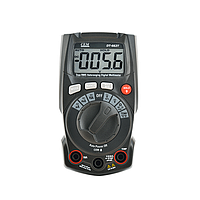
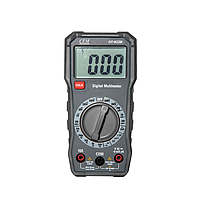
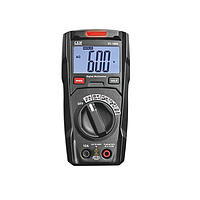
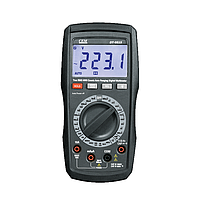
Handheld Multimeter
When measurements need to happen directly on the machine, inside a panel, or out in the field, a benchtop instrument is often not practical. That is where handheld multimeters become essential: they combine portability, broad measurement capability, and safety-focused design for daily electrical troubleshooting, maintenance, and commissioning work.
On this page, you can explore handheld models suited to different working styles, from general-purpose voltage and resistance checks to more advanced true RMS measurement, temperature input, frequency testing, and rugged industrial use. The category is especially relevant for technicians, maintenance teams, panel builders, utilities, and service engineers who need reliable readings in real operating conditions.
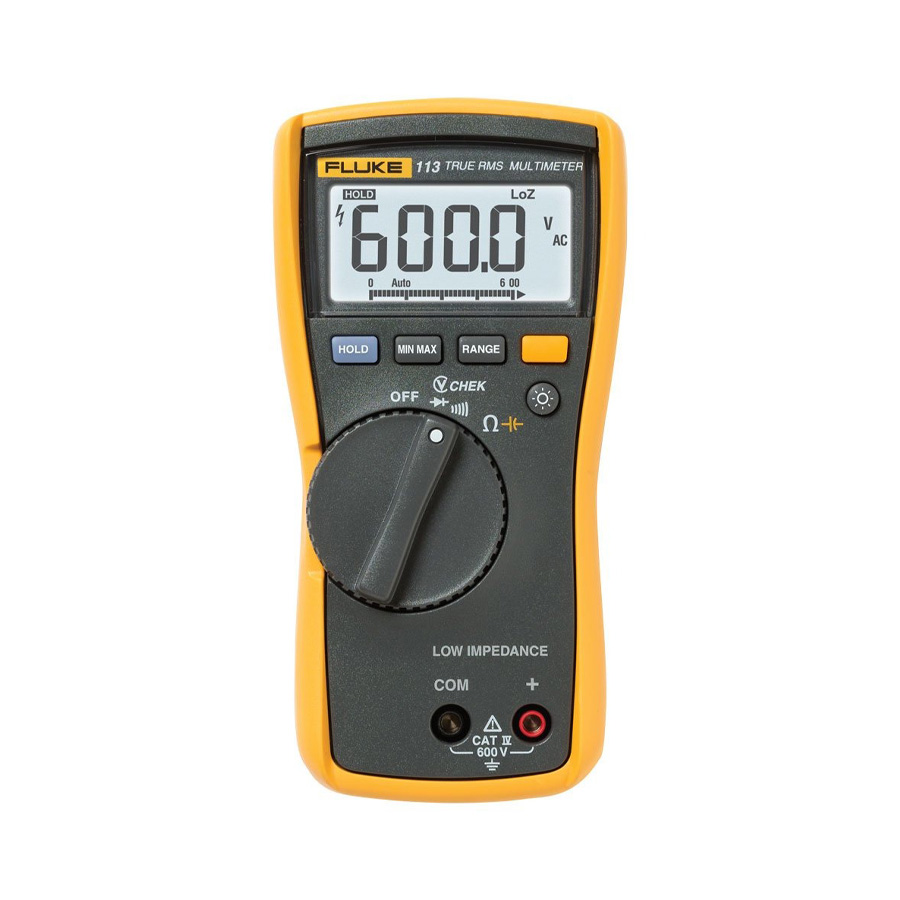
Why handheld multimeters remain a core tool in electrical work
A handheld meter is designed for mobility without giving up the core functions needed for everyday diagnostics. In many environments, users need to verify AC/DC voltage, current, resistance, continuity, capacitance, diode behavior, or frequency while moving between cabinets, motors, drives, control circuits, and power distribution points.
Compared with a desktop multimeter, a portable unit is easier to carry to the point of measurement and is often better suited to field service, maintenance rounds, and fast fault isolation. For quick go/no-go checks in tight areas, some users may also consider a pen multimeter, but handheld models usually provide a wider measurement range and more complete diagnostic functions.
Common applications across industry and maintenance
Handheld multimeters are widely used in low-voltage electrical systems, building services, industrial automation, HVAC service, process maintenance, and general electronics work. Typical tasks include confirming supply voltage, checking continuity in wiring, validating sensor output, measuring current draw, and identifying unstable signals during commissioning or repair.
In more demanding environments, users often need features such as low-impedance voltage mode, non-contact voltage detection, min/max capture, or temperature measurement. These functions help technicians work more efficiently when diagnosing variable frequency drives, intermittent faults, control loops, or temperature-related issues in equipment and process systems.
Key selection criteria for a handheld multimeter
The right choice depends less on brand alone and more on the measurement scenario. Start with the electrical range you need: some jobs focus on basic maintenance measurements up to 600 V, while others require higher-category instruments for industrial distribution systems, motor control centers, or exposed power circuits.
Another important point is safety category. For field and industrial work, CAT III or CAT IV rated instruments are commonly preferred because they are designed for higher transient environments than basic electronic testing. Users should also evaluate whether they need true RMS capability for non-sinusoidal signals, especially around drives, switching loads, and modern power electronics.
Display readability, ruggedness, ingress protection, and battery life also matter. In real work conditions, a backlit display, bar graph, hold function, and robust housing can make a noticeable difference. If your work is mostly mobile and general-purpose, this category is usually the best fit; if measurements are performed mainly at a workstation, you may want to compare with a bench-style multimeter category.
Examples of instruments and accessories in this category
Several well-known manufacturers are represented here, including FLUKE, FLIR, HIOKI, Chauvin Arnoux, and KEYSIGHT. Their handheld multimeters address different priorities such as rugged field operation, compact portability, advanced accuracy, or broader diagnostic functionality.
For example, the FLUKE FLUKE-87V-MAX Digital Multimeter is a strong reference point for users who need a durable industrial digital multimeter with true RMS measurement, wide function coverage, and a design intended for harsh environments. The FLIR DM64 TRMS Digital Multimeters fits users looking for a handheld unit with practical service functions such as temperature measurement and common field diagnostics. HIOKI DT4256 and HIOKI DT4282 illustrate two different levels of performance, from general portable measurement to higher-accuracy work.
This category can also include ecosystem components rather than only the meter itself. The KEYSIGHT 34172B Calibration Short for Digital Multimeters is a good example of an accessory used in calibration and verification workflows, showing that handheld measurement often sits within a broader maintenance and quality process rather than as a standalone tool.
Digital, analog, and specialized handheld options
Most buyers today are looking for digital handheld multimeters because they offer easier reading, broader functions, and features such as autoranging, data hold, and true RMS measurement. Models such as the Chauvin Arnoux C.A 5233 Compact TRMS Digital Multimeter and Chauvin Arnoux C.A 5231 Compact TRMS digital multimeter reflect this compact digital approach for portable daily use.
There are still cases where an analog instrument remains relevant. The Chauvin Arnoux C.A 5003 Analog multimeter may be considered by users who prefer needle movement for observing signal trends or who work in specific educational, legacy maintenance, or conventional diagnostic contexts. The best option depends on whether your priority is trend visibility, accuracy, response behavior, or function breadth.
Specialized environments may require more than a standard portable tester. For hazardous locations, the FLUKE FLUKE-28IIEX Digital Multimeter is an example of an intrinsically safe handheld meter intended for work where ignition risk must be considered. This is a different buying logic from general maintenance and should be evaluated against the actual site safety requirement.
Choosing by work environment instead of specifications alone
Many product pages list extensive technical details, but for practical selection it helps to group needs by use case. For plant maintenance, priority often goes to durability, CAT rating, clear display, and reliable current and voltage measurement. For controls and instrumentation work, users may place more value on low-level resolution, frequency, capacitance, and stable readings.
Service teams working across multiple sites may prefer a meter that balances portability with broad function coverage, while calibration and lab-adjacent users may compare handheld tools with products from KEYSIGHT or other precision-oriented manufacturers when verification workflow is important. In contrast, users who mainly need fast field checks on power circuits often lean toward proven portable lines from FLUKE, HIOKI, FLIR, or Chauvin Arnoux.
What to review before ordering
Before purchasing, confirm the measurement types you actually use most often: AC/DC voltage, current range, resistance, continuity, capacitance, frequency, temperature, or non-contact voltage detection. It is also worth checking whether the meter will be used with accessories such as test leads, clips, thermocouples, or current clamps, since that affects day-to-day usability.
For industrial buyers, documentation and consistency are just as important as features. Look at the safety category, environmental suitability, and included accessories in the product listing. If your team is standardizing tools across maintenance staff, choosing models with a familiar interface and shared operating logic can reduce training time and improve measurement consistency in the field.
Find a handheld multimeter that matches your real application
A good handheld multimeter should support the way your team actually works, not just offer an impressive specification sheet. Whether you need a compact meter for service calls, a rugged unit for industrial troubleshooting, or a specialized model for higher-risk environments, this category brings together portable options from recognized manufacturers and related accessories that support accurate electrical measurement.
Use the product listings to compare function sets, portability, safety level, and intended use. With the right handheld meter, routine checks become faster, fault finding becomes more confident, and field measurement becomes much more practical.
Get exclusive volume discounts, bulk pricing updates, and new product alerts delivered directly to your inbox.
By subscribing, you agree to our Terms of Service and Privacy Policy.
Direct access to our certified experts