Voltage
Precise voltage generation and measurement sit at the center of many automated test, control, and validation tasks. Whether the goal is capturing low-level analog signals, driving actuators, or building a larger DAQ architecture, the right voltage hardware helps maintain signal integrity, repeatability, and system scalability.
This Voltage category brings together voltage input and output devices used in data acquisition and control environments. The range includes PXI and PCI/PCIe hardware, remote I/O modules, FieldDAQ devices, and specialized benchtop control equipment for applications that require reliable analog interfacing in lab and industrial settings.
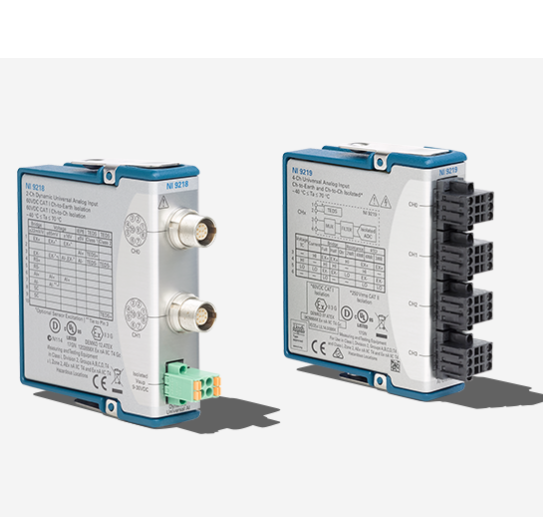
Voltage hardware for measurement, output, and control
Voltage-related DAQ products are typically selected based on how a system interacts with real-world signals. Some applications focus on voltage input for monitoring sensors, process values, or electrical behavior, while others require analog output to generate control signals, stimulus waveforms, or setpoints for external devices.
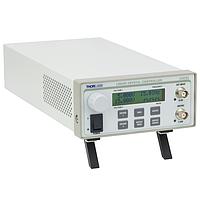
Within this category, users can find both sides of that workflow. Examples include voltage input modules such as the NI FD-11603 and NI FD-11605 for FieldDAQ, as well as analog output platforms like the NI PXIe-6738, NI PXIe-6739, and NI PCIe-6738. For more specialized bench applications, the THORLABS LCC25 adds a focused voltage control solution for liquid crystal devices.
Typical application scenarios
In automated test systems, voltage input modules are commonly used to monitor analog channels from transducers, conditioned outputs, and electrical subsystems. Devices with simultaneous sampling and high resolution are especially useful when signal timing across channels matters, such as in dynamic measurement, system validation, or distributed monitoring.
On the output side, analog voltage modules help drive external equipment with controlled signals. Multi-channel output devices are often chosen for simulation, closed-loop control, calibration rigs, and production test benches where multiple voltage points must be updated with consistent timing.
For applications that combine signal acquisition with broader control logic, it may also be useful to review related multifunction I/O platforms, especially when a single device must handle mixed analog and digital tasks.
Examples across the category
NI is the main manufacturer represented here, with products spanning several integration levels. The NI REM-11100 provides 4-channel voltage input for remote I/O, while the NI REM-11115 supports analog output in either voltage or current form for distributed control architectures. These module-level options are relevant when the installation environment is more decentralized than a traditional rack-based system.
For higher channel density and PXI-based test platforms, the NI PXIe-6738 and NI PXIe-6739 offer 32-channel and 64-channel analog output respectively, both with 16-bit resolution and high update capability. In PCIe form factor, the NI PCIe-6738 serves similar needs where a computer-based DAQ system is preferred over PXI.
The category also includes specialized measurement hardware such as the NI RM-26999 power measurements conditioner, which supports voltage and current signal conditioning in multi-channel power analysis setups. Alongside NI products, THORLABS contributes a benchtop voltage controller suited to optical and photonics-related lab environments.
How to choose the right voltage device
Selection starts with the signal role: input, output, or both. If the task is measurement, key considerations usually include voltage range, resolution, channel count, sampling behavior, isolation, and whether the device will be installed in the field, on a bench, or inside a PXI or PC-based platform. If the task is signal generation, the focus shifts toward output range, update rate, channel density, and whether voltage-only or voltage/current output is required.
Architecture also matters. A PXIe module such as the NI PXIe-4322 can fit into modular automated test systems, while a remote I/O module such as the NI REM-11115 may be more appropriate for distributed control panels. Field-deployed measurement points may benefit from ruggedized voltage input devices like the NI FD-11601, NI FD-11603, or NI FD-11605, particularly where isolation and synchronized acquisition are important.
If your project also involves related signal types, browsing dedicated current measurement and output products can help define the full analog interface more clearly.
Key technical factors that affect performance
Resolution influences how finely a device can represent or generate analog values. In many industrial and test applications, 16-bit output hardware offers a practical balance of control fidelity and system cost, while 24-bit input devices are often selected for higher precision measurement and improved sensitivity to small signal changes.
Sampling and update behavior are just as important as nominal range. Some systems require static outputs, while others need fast update rates for waveform generation or dynamic control. For measurement tasks, simultaneous sampling can be critical when comparing multiple channels in time-sensitive analyses.
Isolation and protection become increasingly important in real installations. Galvanic isolation, overload protection, and transient protection can help improve system robustness and reduce the impact of electrical noise or ground potential differences. In applications involving broader signal integration, it may also be helpful to consider nearby categories such as digital I/O hardware for status, triggering, and discrete control.
Voltage products in larger DAQ and control systems
Voltage modules rarely operate in isolation. In a complete test or automation setup, analog input, analog output, digital signals, communications, and signal conditioning often work together as one measurement chain. Choosing a voltage device therefore involves not only signal specifications, but also integration with the surrounding platform and software workflow.
For example, a system may use FieldDAQ voltage input hardware for acquisition near the source, PXI analog output modules for stimulus generation, and remote I/O modules for panel-level interfacing. Communication requirements may also influence system design, especially when distributed devices need to exchange data with controllers, gateways, or supervisory systems.
When a benchtop voltage controller makes sense
Not every voltage application requires a modular DAQ chassis or industrial I/O node. In laboratory environments, a standalone controller can be the better fit when the task centers on a specific device or experiment. The THORLABS LCC25 Benchtop Voltage Controller for Liquid Crystal Devices is a good example of this approach, offering dedicated control features for a defined optical application rather than acting as a general-purpose DAQ module.
This distinction is useful during selection: some users need flexible platform-based analog I/O, while others need focused instrumentation designed around a single control objective. Understanding that difference helps narrow the category more efficiently and reduces overengineering.
Find voltage hardware that matches your system design
This category supports a wide range of B2B use cases, from compact remote I/O installations to high-channel-count PXI systems and specialized lab control. By comparing signal direction, channel requirements, resolution, installation environment, and system architecture, it becomes easier to identify the most suitable voltage device for the task.
If you are building or expanding a measurement and control platform, this section is a practical starting point for voltage-focused hardware. It brings together input, output, and application-specific options that can support test benches, industrial monitoring, validation systems, and precision laboratory workflows.
Get exclusive volume discounts, bulk pricing updates, and new product alerts delivered directly to your inbox.
By subscribing, you agree to our Terms of Service and Privacy Policy.
Direct access to our certified experts