
RF & Microwave Generators
When your application depends on stable high-frequency energy, the signal source becomes a critical part of the workflow rather than a simple lab accessory. In RF testing, microwave measurement, plasma processing, and industrial heating, engineers typically need a source that is not only wide in frequency coverage, but also predictable in output behavior, control, and integration.
RF & Microwave Generators in this category support those requirements across both measurement and process environments. The range shown here includes precision RF and microwave signal generators for electronic test work, along with microwave magnetron heads and RF plasma generators used in industrial systems where high-frequency power is part of the process itself.
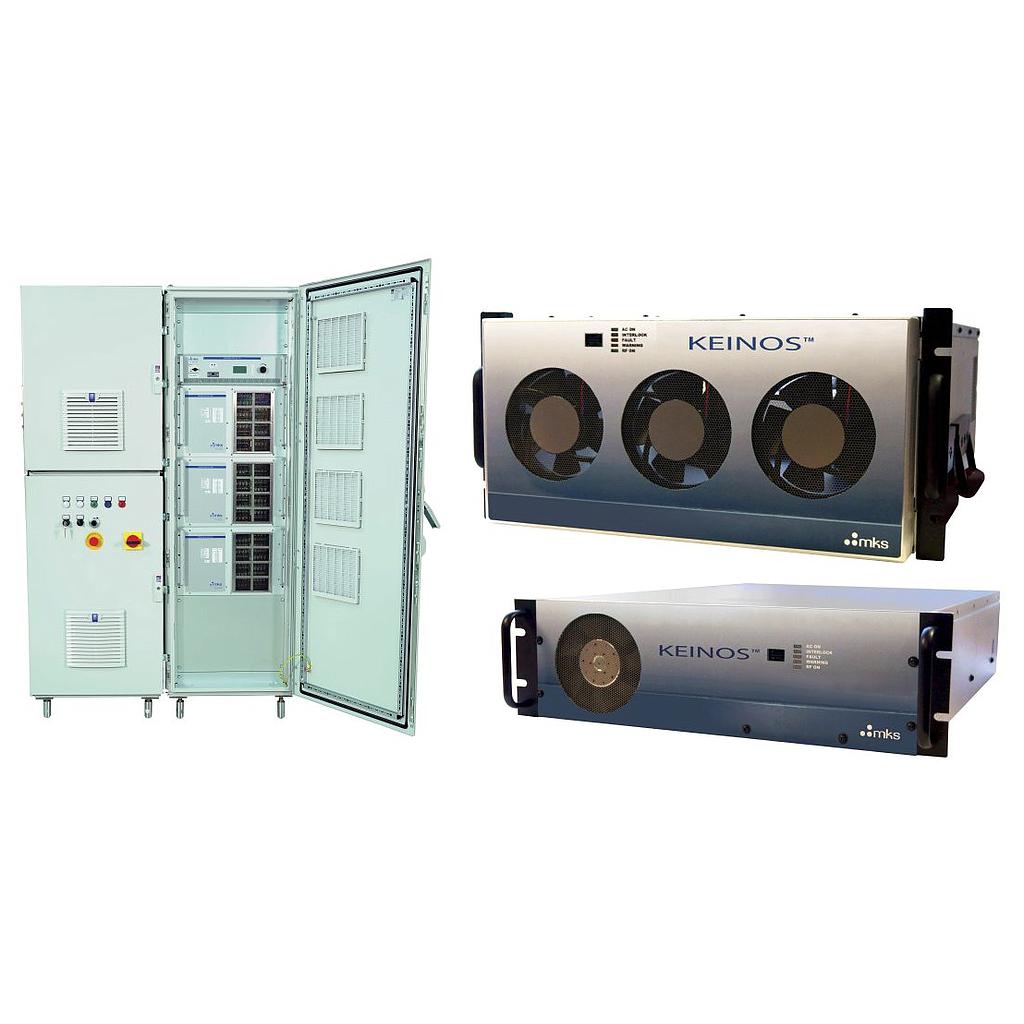
Where RF and microwave generators are used
Although these products share the theme of high-frequency generation, their roles can differ significantly. In laboratories, R&D teams, and production test setups, an RF or microwave source is often used to stimulate a device under test, verify receiver behavior, characterize components, or evaluate system response across a defined frequency range.
In industrial equipment, high-frequency generators are also used as process power sources. Examples include plasma generation in vacuum systems and microwave energy delivery for heating or material treatment. That is why buyers comparing this category may also want to review related options such as RF signal generator solutions when the requirement is focused purely on test instrumentation.
Representative product types in this category
For precision measurement and signal creation, Rohde & Schwarz is represented by models such as the SMB100B and SMA100B. These instruments cover broad RF to microwave ranges starting from 8 kHz and extending into the tens of gigahertz, making them suitable for communications, component validation, and general-purpose high-frequency bench work. Key selection factors in this class typically include phase noise, output power, sweep capability, modulation support, and interface options.
For process-oriented systems, MKS appears in this category with both microwave magnetron heads and RF plasma generators. Products such as the ALTER-TM0, ALTER-TM5810, and ALTER-TX0 are aligned with microwave power delivery at 2450 MHz or 5800 MHz, while the ELITE series supports 13.56 MHz plasma applications with different interface variants including analog control, DeviceNet, and Profibus.
Choosing between test generators and process power sources
A practical first step is to define whether you need a measurement source or a process power source. Precision signal generators are designed to produce controlled RF or microwave signals with fine frequency resolution, low phase noise, and repeatable level settings. They are commonly selected for verification, simulation, calibration support, and automated test sequences.
By contrast, microwave magnetron heads and RF plasma generators are tied more directly to energy transfer in an industrial process. Their value lies in delivering usable power at a fixed operating frequency range appropriate to the machine or chamber design. If your task is materials processing, coating, plasma ignition, or microwave energy delivery, the decision criteria usually shift toward output power, cooling method, system compatibility, and control interface rather than ultra-low noise performance.
Important technical considerations before you buy
For test and measurement use, buyers often pay close attention to frequency range, phase noise, amplitude accuracy, sweep behavior, and available modulation types. For example, the Rohde & Schwarz SMA100B is presented with support for AM, FM, PM, and pulse modulation, as well as remote interfaces such as USB, LAN, and GPIB. These details matter when the source has to integrate into automated validation systems or more demanding RF benches.
For process equipment, the priority list usually changes. In the MKS magnetron and plasma product lines shown here, relevant factors include cooling style, nominal power level, operating frequency, and communication interface. An RF plasma generator with Profibus or DeviceNet may fit better into an existing control architecture, while water-cooled microwave heads may be necessary for installations that operate at higher continuous power levels.
Application notes for plasma and vacuum process systems
In vacuum and plasma environments, stable RF delivery is closely related to process consistency. The MKS ELITE series in this category operates at 13.56 MHz and is available in several 600 W and 750 W variants, which can help users match generator capability to chamber size, recipe demands, and control scheme. In these systems, output stability and communication options are often just as important as nominal power.
Engineers working with plasma processes also need to consider reflected power, impedance matching, and arc behavior in the chamber. A well-matched system helps reduce unnecessary stress on the source and improves repeatability during coating or treatment cycles. If your broader evaluation includes other waveform creation tools for bench development, it may also be useful to compare function and arbitrary waveform generators for lower-frequency or mixed-signal generation tasks.
Examples from the current range
The Rohde & Schwarz SMB100B is a good example of a compact RF and microwave signal generator aimed at applications where clean spectral performance and strong output are important. The SMA100B extends that positioning with wide coverage options and very fine frequency resolution, making it relevant for demanding RF characterization and automated environments.
On the industrial side, the MKS ALTER-TM0 closed-frame microwave magnetron heads cover 2450 MHz with multiple power options, while the ALTER-TM5810 supports 5800 MHz operation in a water-cooled format. For plasma power delivery, the MKS ELITE-750FP-01, ELITE-750FD-01, ELITE-600HP-01, and related variants illustrate how similar RF power platforms can be offered with different fieldbus and control configurations to suit machine integration requirements.
How to select the right model for your system
A good selection process starts with the operating environment. Ask whether the generator will be used on a bench, inside an automated rack, or as part of a production machine. Then narrow the shortlist according to required frequency, power level, control interface, cooling arrangement, and any constraints around system integration or available utilities.
It is also useful to think in terms of total system behavior rather than isolated device specifications. A low-noise signal source may be the right choice for receiver testing, while a plasma generator or magnetron head must be evaluated together with matching, chamber design, cooling, and control hardware. Taking that broader view usually leads to a more reliable purchase decision and better long-term performance.
Conclusion
This category brings together equipment for two closely related but distinct needs: precise RF/microwave signal generation for test work, and high-frequency power generation for industrial processes. By comparing frequency range, power characteristics, interfaces, and application fit, buyers can identify whether a platform like the Rohde & Schwarz SMB100B or SMA100B, or an MKS magnetron or ELITE plasma generator, is the more appropriate choice.
If you are defining a new setup or replacing an existing source, focus first on the job the generator needs to perform inside the full system. That approach makes it easier to choose a model with the right balance of control, stability, and integration for your RF or microwave application.
Get exclusive volume discounts, bulk pricing updates, and new product alerts delivered directly to your inbox.
By subscribing, you agree to our Terms of Service and Privacy Policy.
Direct access to our certified experts
