
Coupler
When RF power has to be sampled, monitored, injected, or separated without heavily disturbing the main signal path, the right coupling device becomes a practical requirement rather than an accessory. In telecom test setups, EMC measurement benches, and microwave signal chains, Coupler products help engineers route energy with predictable loss, stable impedance, and repeatable measurement conditions.
This category brings together couplers used in different technical contexts, from directional couplers for RF and microwave systems to coupling/decoupling networks used in conducted emission and immunity work. While these devices serve different purposes, they share the same core role: controlling how signal energy is transferred between ports so measurements and system behavior remain reliable.
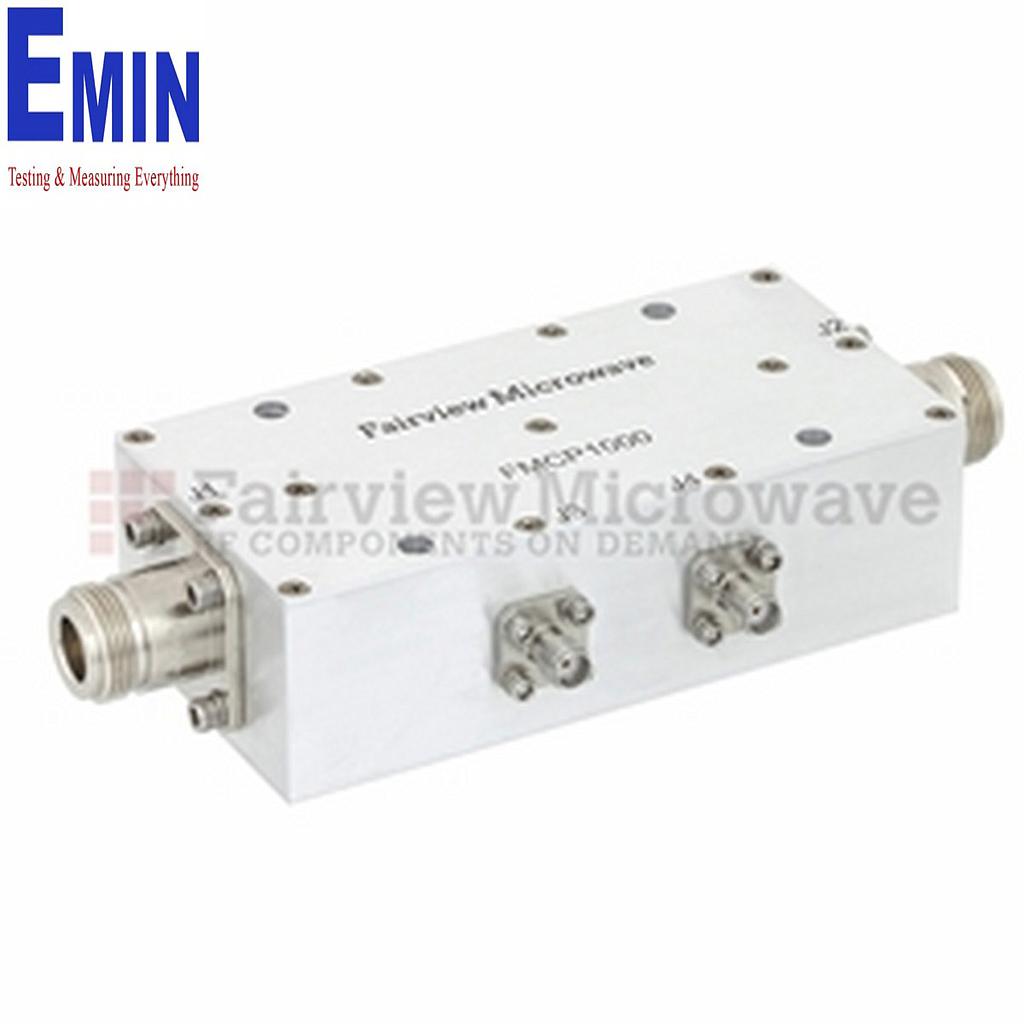
Where couplers are used in telecom and measurement environments
Couplers appear across a wide range of B2B applications, including RF labs, antenna test systems, production test fixtures, conducted EMC setups, and communication component integration. In some cases, the goal is to extract a known fraction of forward or reflected power for analysis. In others, the coupler forms part of a standardized measurement path between equipment under test and auxiliary equipment.
That is why this category includes both broadband RF models and specialized coupling/decoupling networks. If your application also involves signal distribution or branch routing, related components such as a power divider may also be relevant in the same signal chain.
Directional couplers for RF and microwave signal sampling
A directional coupler is typically selected when you need to monitor a signal path while preserving the main transmission line as much as possible. Common use cases include power monitoring, transmitter testing, amplifier characterization, and reflected-power observation in RF systems.
For higher-frequency work, the KRYTAR 1211 Directional Coupler covers 1.0 to 12.4 GHz with a 10 dB nominal coupling value, making it suitable for microwave lab environments where frequency range and directivity matter. In lower-frequency communication ranges, Fairview solutions such as the SMC4037-20 and SMC4037-30 provide fixed coupling options across 700 MHz to 2.7 GHz with N female connectors, which can fit many telecom and wireless test assemblies.
Selection in this part of the category often depends on coupling value, frequency band, connector style, insertion loss, power handling, and system matching. If the setup also requires passive protection against reverse interaction between stages, an isolator may be considered alongside the coupler.
Coupling and decoupling networks for EMC conducted measurements
Not every coupler in this category is intended for conventional RF line monitoring. Several products here are coupling decoupling networks designed for EMC test work, especially in conducted emission or immunity-related setups. These devices create a controlled interface between the equipment under test and the supporting network while maintaining the impedance and decoupling behavior required by applicable test methods.
Examples include Tekbox models such as TBCDN-M1, TBCDN-M2, TBCDN-M3, and TBCDN-M4, which are used in measurement environments where current rating, voltage capability, and defined common-mode behavior are important. For CISPR 15 / EN 55015 related applications in the 30 MHz to 300 MHz range, products like the Tekbox TBCDNE-M2, Tekbox TBCDNE-M3, and Schwarzbeck CDNE M2 or CDNE M3 are representative solutions for repeatable conducted emission testing.
These products are less about splitting signal power in a telecom line and more about ensuring standardized test conditions. In practical workflows, they often work together with accessories or matching components such as balun devices or measurement adapters, depending on the calibration and verification method being used.
How to choose the right coupler
The first step is to identify the operating context. If you are working in RF transmission, base station subassemblies, microwave lab development, or general telecom measurement, a directional coupler is usually the appropriate starting point. If you are building a conducted EMC test arrangement for lighting or mains-connected equipment, a CDNE-style solution is often the more relevant choice.
From there, review the main technical factors: operating frequency range, desired coupling value or voltage division behavior, connector type, maximum power or current, and the degree of isolation or decoupling needed between ports. Mechanical format can also matter in production or bench environments where mounting space, connector access, and repeatability affect daily use.
It is also worth considering the rest of the signal path. In many installations, couplers are used with impedance-matching hardware, calibration accessories, or port-conversion components. For that reason, nearby categories such as adapters can be useful when connector formats or reference impedances need to be aligned.
Typical product examples in this category
This category includes representative products from manufacturers active in RF, microwave, and EMC measurement. Tekbox is especially visible in coupling/decoupling network solutions, including the TBCDN and TBCDNE series, as well as accessories like the TBCDN-50-150 adapter for impedance-related measurement tasks.
Schwarzbeck appears in the category with CDNE variants designed for conducted measurements aligned with CISPR 15 / EN 55015 applications. In directional RF coupling, KRYTAR and Fairviewmicrowave illustrate two different usage ranges: microwave broadband sampling on one side and practical telecom-band couplers with fixed coupling levels on the other.
Because application requirements vary widely, comparing products only by name is rarely enough. It is more useful to match each device to the intended test method, line type, connector ecosystem, and required signal handling conditions.
Understanding accessories and supporting components
Some products listed in this category are not standalone primary instruments but supporting parts within a broader coupling solution. The Tekbox TBCDN-50-150, for example, is an accessory adapter that helps with impedance-related measurement or calibration tasks rather than replacing the main coupling network itself.
This distinction is important when planning procurement for a lab or production environment. A complete setup may need the core coupler, appropriate adapters, grounding provisions, and in some cases additional switching or routing hardware. Defining the full measurement chain in advance helps avoid delays caused by missing interface components.
Choosing by manufacturer and application style
Different manufacturers in this category align with different engineering priorities. Tekbox and Schwarzbeck are especially relevant when the requirement is structured EMC measurement hardware with defined compliance-oriented behavior. KRYTAR and Fairviewmicrowave are more likely to fit RF and microwave signal-monitoring tasks where coupling value, directivity, and broadband frequency performance drive selection.
If your team is standardizing around a known vendor ecosystem, it can be useful to compare couplers by testing workflow rather than by headline specification alone. Connector standardization, accessory availability, and ease of integration into existing benches can be just as important as nominal coupling figures.
Final considerations before ordering
A coupler is often a small part of the bill of materials, but it can have a large effect on measurement accuracy, repeatability, and system integration. The best fit depends on whether you need RF sampling, directional monitoring, or a controlled coupling/decoupling interface for EMC work.
Review the application first, then narrow the shortlist by frequency range, interface, signal or power level, and test method. With that approach, this category can help you identify the right coupler solution for telecom components, RF development, and standardized measurement environments without overcomplicating the selection process.
Get exclusive volume discounts, bulk pricing updates, and new product alerts delivered directly to your inbox.
By subscribing, you agree to our Terms of Service and Privacy Policy.
Direct access to our certified experts


