
Ceramic Capacitors
Stable capacitance, compact package options, and broad application coverage make Ceramic Capacitors a practical choice for many electronic designs. They are widely used for decoupling, filtering, timing, resonance, and high-voltage support across industrial equipment, embedded control boards, power electronics, and communication hardware.
Within this category, buyers typically compare not only capacitance value, voltage rating, and tolerance, but also dielectric behavior, package style, temperature performance, and application environment. This page helps clarify those selection factors so it is easier to identify parts that fit both circuit requirements and sourcing priorities.
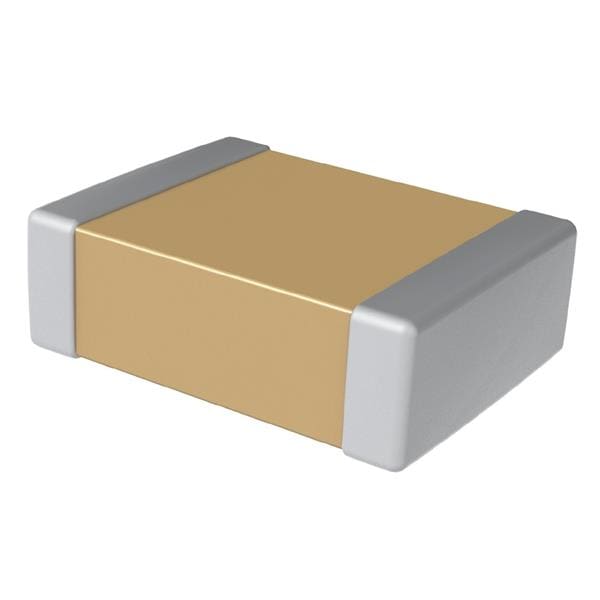
Why ceramic capacitors are used so widely
Ceramic capacitors are valued because they can support a wide range of capacitance values in relatively small form factors while remaining suitable for automated assembly. In many PCB designs, they appear close to IC power pins for noise suppression, in signal paths for frequency shaping, or in high-voltage sections where compact insulation performance matters.
Another advantage is the availability of different dielectric classes. Some are chosen for high stability and low loss, while others are selected for higher capacitance density in limited board space. That flexibility makes ceramic technology relevant in everything from precision circuits to general-purpose industrial electronics.
Key selection criteria for engineering and purchasing teams
When evaluating ceramic capacitors, capacitance and rated voltage are only the starting point. Buyers should also consider tolerance, dielectric type, operating temperature range, package dimensions, and whether the part is intended for general-purpose, high-voltage, or automotive-related environments.
For example, C0G/NP0 types are typically preferred where capacitance stability is important, while X7R or X8R materials are often used where a higher capacitance value in a compact package is more important than tight electrical stability. If your application includes demanding thermal cycles or stricter quality expectations, parts intended for those conditions should be reviewed carefully before approval.
Understanding dielectric behavior in practical use
A useful way to approach this category is to separate parts by electrical behavior rather than by package alone. C0G/NP0 dielectrics are commonly associated with stable capacitance over temperature and are often used in RF, timing, and precision filtering circuits. In contrast, X7R and X8R families are more often selected for bypassing, decoupling, and bulk ceramic capacitance where value density is important.
This distinction becomes important during design validation. A capacitor that works well for supply decoupling may not be the right choice for a frequency-sensitive network, and a high-voltage ceramic capacitor may be physically larger or optimized differently than a low-voltage multilayer device used on dense control boards.
Examples from this category
The available range in this category reflects those different use cases. For compact, stable low-capacitance applications, the KEMET C0201C220J8GACTU is an example of a multilayer ceramic capacitor with C0G/NP0 characteristics and a very small footprint, which may suit precision or space-constrained designs.
For applications needing higher capacitance in standard SMD formats, parts such as KEMET C1210C473M1RAC7800 and KEMET C1206X563M4HAC7800 illustrate how X7R and X8R options can support decoupling and general-purpose filtering. In higher-voltage design work, KYOCERA AVX 1210CA101MAT1A and KYOCERA AVX 1812SC102KAT1AJ show how ceramic capacitors can also address elevated DC voltage requirements in larger package sizes.
Manufacturer options and sourcing context
This category includes parts from established electronic component manufacturers such as KEMET and KYOCERA AVX. These brands are often considered when engineers need coverage across common multilayer ceramic capacitor requirements, including compact SMD formats, stable dielectric options, and high-voltage product lines.
From a procurement perspective, it is often helpful to review manufacturer offerings alongside package, dielectric, and voltage needs rather than focusing on brand alone. That approach supports better substitution planning, more consistent qualification, and easier alignment between design intent and purchasing decisions.
When to compare ceramic capacitors with other capacitor types
Ceramic capacitors solve many common design problems, but they are not the only option within a capacitor portfolio. Depending on ripple current, capacitance level, ESR expectations, or mechanical design constraints, engineers may also evaluate alternatives such as aluminum electrolytic capacitors or aluminum polymer capacitors.
In many assemblies, these technologies are not direct replacements but complementary parts. A ceramic capacitor may handle high-frequency decoupling near active devices, while other capacitor types support bulk energy storage or smoothing elsewhere in the system. Looking at the full capacitor strategy often improves both electrical performance and BOM efficiency.
How to choose the right part for your application
Start with the actual circuit role of the capacitor: decoupling, filtering, timing, resonance, coupling, or high-voltage suppression. Then narrow the selection by capacitance, rated voltage, dielectric, tolerance, package size, and operating temperature. If the application is exposed to harsher environments, check whether the part aligns with the mechanical and reliability expectations of that use case.
It is also worth reviewing assembly constraints early. Small packages can help save PCB area, but they may not always be ideal for every voltage level or handling requirement. In the same way, a part chosen for dielectric stability may differ from one optimized for capacitance density. Matching the capacitor to both electrical and manufacturing needs usually leads to a more reliable result.
Conclusion
Choosing from a broad ceramic capacitor range is easier when the selection is guided by application function, dielectric behavior, voltage requirement, and package constraints rather than capacitance value alone. Whether the need is for compact multilayer parts, stable C0G/NP0 characteristics, or higher-voltage ceramic solutions, this category supports a wide range of industrial and electronic design tasks.
For efficient sourcing, compare the intended circuit role first, then review suitable product families and manufacturer options. That process helps narrow the shortlist to ceramic capacitors that are technically appropriate, easier to qualify, and more practical for long-term supply planning.
Get exclusive volume discounts, bulk pricing updates, and new product alerts delivered directly to your inbox.
By subscribing, you agree to our Terms of Service and Privacy Policy.
Direct access to our certified experts
