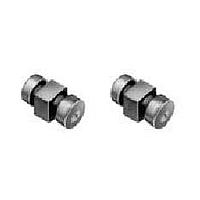
Feed Through Capacitors
Controlling conducted noise is a recurring challenge in power entry, signal interfaces, and compact electronic assemblies. When designers need a component that can shunt high-frequency interference to ground while allowing the desired DC or low-frequency signal to pass, Feed Through Capacitors are often a practical choice for improving EMI performance at the board or panel level.
In this category, you will find parts used in filtering and suppression applications where layout, insertion loss, current handling, and mounting style all matter. These components are especially relevant in industrial electronics, power conversion, communication equipment, and other systems where unwanted noise can affect stability, compliance, or measurement accuracy.

Where feed through capacitors fit in an EMI control strategy
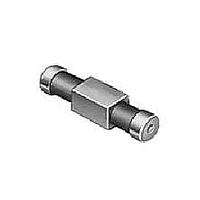
A feed through capacitor is typically used at the point where a conductor passes through a shield, housing, or filtering stage. Its structure helps create a low-impedance path for high-frequency noise to ground, which makes it useful for reducing conducted emissions and limiting interference from entering sensitive circuits.
Compared with general-purpose capacitors, these parts are selected more deliberately for EMI suppression and line filtering. In many designs, they are used alongside other filtering elements rather than as a standalone solution. For broader capacitor selection in power and signal conditioning, it can also be useful to review related options such as ceramic capacitors when comparing construction and application fit.
Common product types in this category
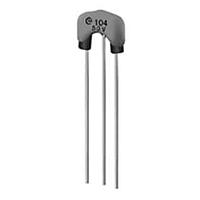
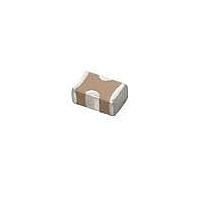
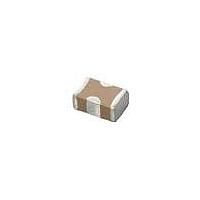
This category includes both classic feed through styles and related filtering parts such as three-terminal capacitors and LC-based EMI filter components. Three-terminal designs are widely used because they improve high-frequency performance by reducing parasitic inductance compared with standard two-terminal capacitors, which can be important in noise-sensitive equipment.
Some representative parts in the range include Murata DSS310-55D223S50ATL1222, Murata DSS6NB32A271T41B, and Murata DSS306-55FZ103N100Z. The category also includes LC-circuit EMI filter options such as Murata DSS6NC52A102Q91A and Murata DSS6NZ82A103T41B, which are suited to applications where both capacitance and filtering structure are part of the design requirement.
Key selection criteria for engineers and buyers
Choosing the right part usually starts with the electrical conditions of the line being filtered. Rated voltage, current capacity, capacitance value, number of circuits, and expected noise spectrum all influence selection. In the listed examples, many devices are rated at 100VDC and 6A, but capacitance values vary significantly, from low-pF ranges up to nF-level parts, which changes their filtering behavior.
Mechanical constraints are equally important. Package dimensions, lead style, and assembly method affect whether the component is suitable for through-hole mounting, panel feedthrough, or integration into compact boards. Engineers should also consider grounding quality, placement near the interference source or entry point, and how the part interacts with the rest of the filter network.
Manufacturer coverage and sourcing context
This category is strongly associated with established passive component suppliers for EMI and signal integrity applications. Murata is particularly visible in the current product mix, with multiple three-terminal and LC-circuit filter variants that illustrate the range of capacitance and filtering approaches available for conducted noise control.
Depending on project requirements, buyers may also evaluate offerings from suppliers such as KYOCERA AVX, YAGEO, ROHM Semiconductor, CTS Electronic Components, Johanson Dielectrics, Pulse Electronics, Spectrum Control, and Vishay Draloric. Brand choice often depends on footprint preference, approval flow, continuity of supply, and how closely a part matches the target filtering topology.
Typical applications in industrial and electronic systems
Feed through capacitors are commonly used where noise needs to be controlled at an interface boundary. Examples include DC power inputs, controller I/O lines, communication ports, motor drive electronics, instrumentation assemblies, and shielded enclosures. In these settings, the goal is not simply adding capacitance, but improving high-frequency attenuation without disrupting normal circuit operation.
They are also useful in designs that must protect sensitive analog or digital sections from switching noise generated elsewhere in the system. In practice, proper placement and grounding are often just as important as the nominal capacitance value. That is why these components are frequently reviewed together with other capacitor families, including other capacitor types used in supporting filter and decoupling roles.
How to read the product range more effectively
When browsing this category, it helps to separate parts by functional role rather than by part number alone. Some devices are straightforward three-terminal capacitors intended for compact EMI suppression on a single line. Others are described as EMI filters with an LC-circuit structure, which may be more suitable where stronger conducted noise reduction is required.
For example, lower capacitance options such as Murata DSS1ZB32A330Q55B or Murata DSS1ZB32A470Q55B may be relevant where signal integrity and frequency response are sensitive, while higher capacitance parts like Murata DSS1ZB32A153Q55B or Murata DSS1ZB32A223Q55B can support more aggressive noise shunting in the right circuit context. Selection should always be aligned with the actual line characteristics, grounding method, and compliance target.
Related considerations for procurement and design teams
For B2B purchasing, the best fit is rarely determined by capacitance alone. Teams often need to balance lifecycle availability, mounting compatibility, assembly process, and consistency across multiple revisions of a product. This is especially true in industrial programs where redesign cost is higher than the price difference between similar passive components.
If the application also involves energy storage, ripple handling, or bulk smoothing, adjacent categories such as aluminum electrolytic capacitors may be relevant for other stages of the design. Feed through capacitors, however, remain a more specialized choice when the priority is line-level filtering and suppression of unwanted high-frequency noise.
Finding the right feed through capacitor for your application
A good selection process begins with the electrical line to be filtered, then narrows by mounting style, capacitance range, voltage rating, and the type of interference being addressed. Looking at representative products such as Murata DSS6NC52A102Q91A, Murata DSS6NZ82A103T41B, or Murata DSS6NB32A271T41B can help clarify whether the application calls for a three-terminal device or a more integrated filtering structure.
For engineers, buyers, and maintenance teams working on noise-sensitive electronics, this category provides a focused starting point for conducted EMI filtering. Reviewing the available range with both electrical and mechanical requirements in mind will make it easier to shortlist components that support reliable long-term performance in real operating environments.
Get exclusive volume discounts, bulk pricing updates, and new product alerts delivered directly to your inbox.
By subscribing, you agree to our Terms of Service and Privacy Policy.
Direct access to our certified experts