
Safety Capacitors
In mains-powered electronics, capacitor selection is not only about capacitance and package size. Components connected across the line or from line to earth must also be chosen with attention to safety class, operating conditions, and long-term reliability. That is why Safety Capacitors are a distinct category for power supplies, EMI filtering stages, industrial controls, home appliances, and many other AC-connected designs.
On this page, you can explore parts intended for interference suppression and line-related capacitor applications, including through-hole and surface-mount options across common X and Y classes. The range covers practical choices for engineers, buyers, and maintenance teams who need components that fit both electrical requirements and installation constraints.
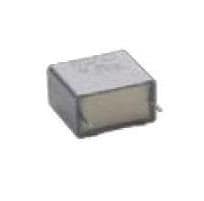
Where safety capacitors are used
These capacitors are commonly found in circuits exposed to AC mains, where they help reduce conducted noise and support electromagnetic interference suppression. Typical use cases include input filters in switching power supplies, motor drives, white goods, HVAC controls, chargers, lighting equipment, and industrial electronics.
Unlike general-purpose parts, X and Y safety capacitors are selected according to how they are connected in the circuit. X-class devices are generally used across the line, while Y-class devices are used where line-to-earth isolation and controlled failure behavior are important. This makes category-level selection especially important during design, repair, and replacement.
Understanding X and Y classes in practice
A practical way to read this category is by application class. X-class capacitors, such as X1 or X2, are typically chosen for across-the-line suppression. Y-class parts, including Y1, Y2, and Y3 examples in this range, are more relevant when the capacitor is tied to earth or accessible conductive parts and leakage behavior must be considered carefully.
You will also find combined classes such as X1/Y2 or X1/Y1, which are useful in designs that require compliance with more than one installation scenario. For example, parts like the KEMET 413F12200000M and Vishay WYO102MCMBF0KR illustrate compact suppression solutions, while larger radial box styles support more conventional through-hole mains filter layouts.
Available technologies and package styles
This category includes several common constructions used in mains suppression design. Metallized polypropylene parts are widely used for many X and Y applications because they are well suited to AC filtering duties. Ceramic suppression capacitors are also represented, including disc and multilayer styles for designs where footprint, mechanical format, or specific circuit behavior matters.
Package choice can be just as important as electrical class. Through-hole radial box capacitors remain common in power entry and industrial boards, while some surface-mount options support compact assemblies and automated production. If your design work also involves broader dielectric or form-factor comparisons, related ranges such as ceramic capacitors can help provide additional context.
Examples from leading manufacturers
The assortment highlights established manufacturers used across industrial and electronic design workflows. Vishay appears in multiple styles here, including ceramic suppression parts and metallized film safety capacitors for X2, Y2, and combined class applications. TDK is also represented with options such as the B32026A3105M000 and B81123C1472M000, covering use cases from higher capacitance Y2 designs to Y1-rated suppression positions.
KEMET contributes practical through-hole safety capacitor options like the 46KI3470CKN0M and 413F12200000M, while Murata adds ceramic suppression solutions in compact SMD formats. This variety is useful when a project requires balancing mounting style, capacitance range, temperature capability, and application class without moving outside a recognized supplier base.
How to choose the right part
The most important starting point is the circuit position. Before comparing capacitance values, confirm whether the design calls for an X-class, Y-class, or combination-rated capacitor. From there, review rated AC voltage, mounting style, capacitance tolerance, lead spacing if applicable, and operating temperature range so the selected part aligns with both the schematic and the PCB or assembly process.
It is also worth checking material type and pulse or dv/dt capability where relevant, especially in noisy power environments. A compact ceramic part may suit one design, while a metallized film radial box capacitor may be preferable in another. For engineers comparing technologies across wider power or energy-storage functions, categories such as aluminum electrolytic capacitors may be relevant elsewhere in the system, even though they serve a different role from safety-rated suppression components.
Typical selection scenarios
For an appliance input filter, an X2 through-hole capacitor such as the Vishay F1772-310-2000 or KEMET 46KI3470CKN0M may be suitable when across-line suppression is required in a standard radial form factor. If the design instead needs line-to-earth placement, a Y2 or Y1 part such as the Vishay F1710-322-1000 or TDK B81123C1472M000 may be more appropriate depending on the insulation and voltage requirements of the equipment.
Compact boards may lean toward ceramic suppression parts, including Murata devices in SMD packages, while legacy or service-oriented hardware often favors clearly spaced through-hole parts for ease of handling and replacement. In mixed-technology assemblies, designers sometimes review adjacent capacitor families such as aluminum polymer capacitors for other sections of the power stage, although those are not substitutes for safety-rated line suppression components.
Points to verify before ordering or replacing
When sourcing a replacement, avoid matching only the capacitance value. The suppression class, AC voltage rating, package style, lead spacing, and temperature capability all affect suitability. In maintenance and retrofit work, a physically similar component may still be wrong if its X/Y classification or mounting format does not match the original design intent.
For production purchasing, it is also useful to standardize around preferred manufacturers and form factors to simplify approval and stock management. This category brings together parts from major brands used in industrial and commercial electronics, making it easier to compare line-filter capacitor options without losing sight of application-specific requirements.
Find safety capacitors that fit your design
Choosing the right safety capacitor means looking at the circuit function first, then narrowing the range by class, voltage, construction, and mounting style. Whether you need a compact ceramic suppression device, a radial metallized polypropylene part, or a specific X1, X2, Y1, or Y2 solution, this category is structured to help you compare relevant options efficiently.
Browse the available parts by manufacturer, package, and rating to identify components that align with your mains filtering and suppression requirements. A careful match here supports not only electrical performance, but also safer and more dependable long-term operation in AC-powered equipment.
Get exclusive volume discounts, bulk pricing updates, and new product alerts delivered directly to your inbox.
By subscribing, you agree to our Terms of Service and Privacy Policy.
Direct access to our certified experts
