Deal logger for Automation system
Reliable field data is the foundation of any automation strategy. Whether the goal is environmental monitoring, utility supervision, infrastructure diagnostics, or distributed equipment control, a well-chosen data logger for automation systems helps capture signals accurately, store data securely, and pass useful information to higher-level platforms for analysis and decision-making.
In industrial and technical B2B environments, data loggers are often expected to do more than simple recording. They may need to interface with multiple sensor types, support serial and Ethernet communication, handle remote deployment, and integrate with supervisory platforms. This category brings together devices and supporting modules used in those kinds of measurement and automation workflows.
Where data loggers fit in automation architecture
A data logger sits between the physical process and the software layer that turns raw signals into operational insight. It collects values from sensors and instruments, timestamps them, and makes the information available for local review or onward communication to control and monitoring systems.
In practice, this makes data loggers useful across applications such as meteorological stations, water flow and pollution monitoring, greenhouse systems, smart grid projects, structural observation, and industrial site diagnostics. When broader visualization or supervisory control is required, they are often deployed alongside SCADA components to support trending, alarms, and centralized access.
Typical signal handling and communication requirements
Automation projects rarely rely on a single input type. A capable logger should be able to work with voltage, current, resistance, frequency, and digital I/O, while also supporting counters and serial sensor communication where needed. This flexibility is especially important in mixed installations where one unit may need to read environmental probes, pulse outputs, and process transmitters at the same time.
Communication options are equally important. Ethernet, USB, and serial interfaces are commonly required for commissioning, maintenance, and integration. Support for industrial and field protocols such as Modbus or SDI-12 can also simplify deployment in monitoring networks, particularly where remote sensors and distributed measurement points are involved.
Representative solutions in this category
DataTaker is one of the key names in this category for multi-channel industrial logging. Models such as the DataTaker DT80M datalogger and DataTaker DT85M datalogger are designed for applications that need broad input capability, network communication, and dependable operation in demanding environments. For projects that require wireless access, variants such as the DT80W, DT85W, and DT85GW are relevant examples within the same ecosystem.
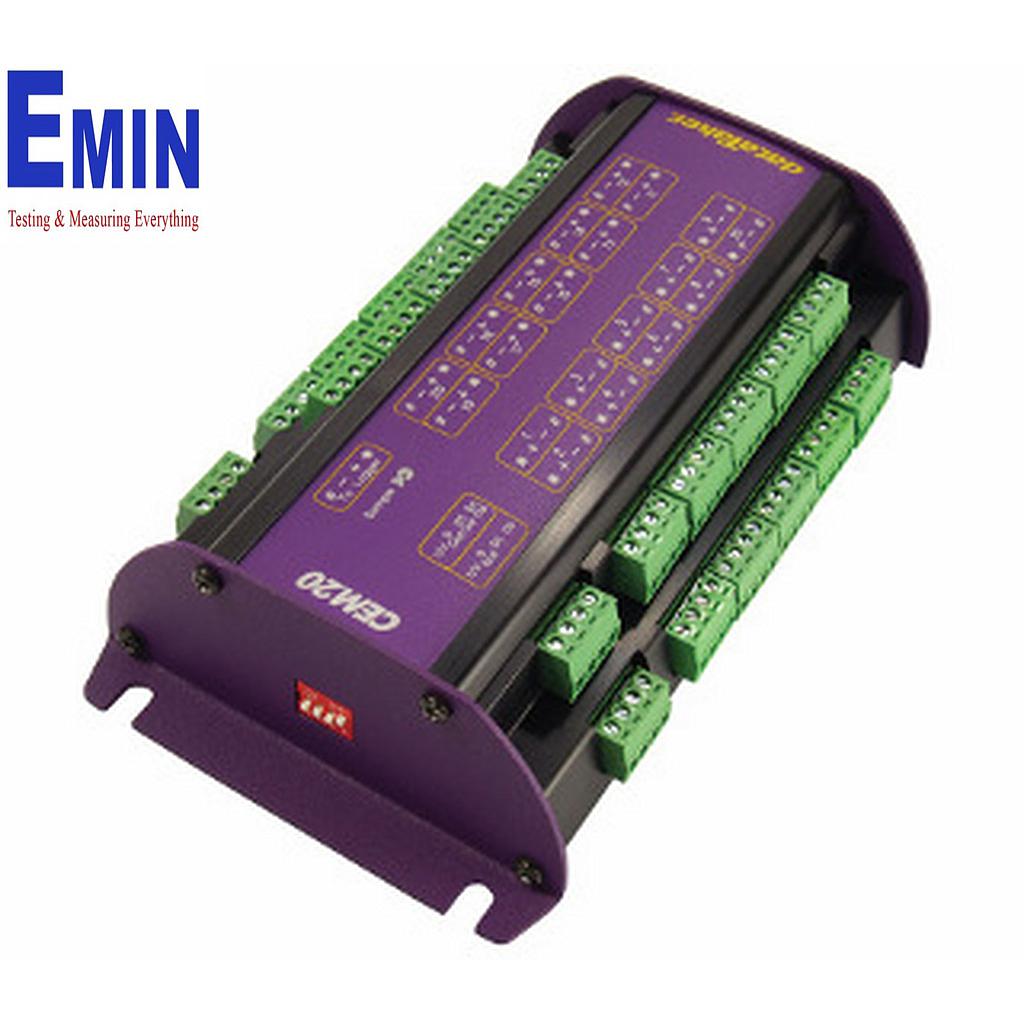
Channel scalability is another practical consideration. The DataTaker CEM20 Channel Expansion Modules illustrate how a logging platform can be extended when the number of measurement points grows over time. Instead of replacing the whole system, users can often expand capacity to match new sensors, additional test points, or wider site coverage.
Edge processing and embedded computing around the logger
Not every automation project stops at signal acquisition. In some cases, logged data must be filtered, analyzed, or transmitted by an edge computer close to the field device. That is where embedded platforms from Nvidia and Raspberry Pi can become part of the wider solution stack.
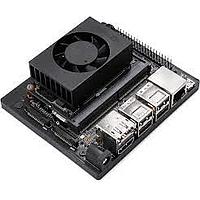
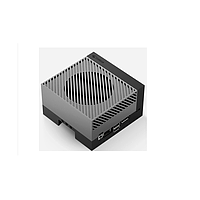
For example, the Nvidia Jetson AGX Orin 64GB Developer Kit, Jetson Xavier NX, and Jetson Nano Developer Kit are relevant when an application needs local computing for AI, vision, or advanced edge analytics near the measurement layer. On the more compact and accessible side, Raspberry Pi 4 Model B and the Raspberry Pi KIT 4 4GB can support gateway, protocol conversion, light data processing, or dashboard tasks in pilot systems and compact automation setups. These devices are not replacements for dedicated loggers in every scenario, but they can complement them effectively in modern IIoT architectures.
How to choose the right data logger for an automation project
The first step is to define the signal profile of the application. Count how many analog and digital channels are required today, then allow room for future growth. Also consider whether the system must read isolated inputs, pulse counters, serial sensors, or encoder signals, because those needs can affect model selection significantly.
The second step is to review the communication path. Some projects only need local USB or Ethernet access, while others require remote field operation, cellular connectivity, or Wi-Fi. If the logger will be part of a larger monitored network, compatibility with the rest of the automation environment should be verified early, especially when there is a plan to link the data into SCADA component infrastructure or plant reporting tools.
A third factor is the deployment environment. Outdoor and unmanned installations often need wide operating temperature tolerance, stable power handling, onboard storage, and support for unattended operation. This is particularly relevant for applications such as flood monitoring, renewable energy supervision, plantation monitoring, or tunnel and dam observation.
Application examples across industry and infrastructure
Environmental and utility monitoring is a common use case. DataTaker devices in this category are associated with meteorological station networks, air pollution measurement, river and water flow observation, forest fire detection, greenhouse monitoring, and wind or solar power monitoring. In these contexts, the logger works as a central acquisition node that gathers distributed sensor data and forwards it for reporting or operational control.
Infrastructure and geotechnical projects are another strong fit. The DataTaker DT85GW is associated with landslide prevention, tunnel monitoring, concrete curing, pipeline monitoring, and earthquake early detection. For specialized borehole investigation and waveform-based field work, the Samyon SY-0 Suspension Borehole Logging System is an example of a more application-specific solution within the broader logging and measurement landscape.
Scalability, maintenance, and system lifecycle considerations
Choosing a logger is not only about current specifications. In long-life automation systems, maintenance access, spare strategy, modular expansion, and integration simplicity all affect total cost of ownership. A platform with flexible I/O, established communication support, and expansion options can reduce redesign effort when a site adds sensors or changes reporting requirements.
It is also useful to think in terms of the full system rather than a single device. Many projects combine logging, edge computing, and supervisory software. Reviewing adjacent products in the automation data logging range can help identify whether the requirement is best served by a standalone logger, an expandable measurement platform, or a logger-plus-gateway architecture.
Short FAQ
What is the difference between a data logger and a PLC?
A data logger is primarily focused on measurement, recording, and communication of process data, while a PLC is mainly designed for real-time control logic. In many systems, both are used together.
Can a data logger be used in remote outdoor applications?
Yes, provided the model supports the required temperature range, power input, storage, and communication method. This is common in environmental, utility, and infrastructure monitoring projects.
When is an expansion module useful?
An expansion module is helpful when the original logger does not provide enough channels for all sensors, or when the site is expected to grow later. Solutions such as the DataTaker CEM20 are relevant in that type of scalable installation.
For B2B buyers, the right choice usually depends on three things: the number and type of signals, the communication method, and the operating environment. A well-matched data logger can improve traceability, simplify integration, and provide a stable measurement layer for larger automation systems over the long term.
Get exclusive volume discounts, bulk pricing updates, and new product alerts delivered directly to your inbox.
By subscribing, you agree to our Terms of Service and Privacy Policy.
Direct access to our certified experts