
Soft Starters
Starting a motor smoothly can make a significant difference in system reliability, especially in plants where pumps, fans, conveyors, and other high-inertia loads run every day. A Soft Starters solution helps reduce inrush current, limit mechanical shock, and support more controlled startup and stopping behavior across industrial motor applications.
For many operations, this makes soft starters a practical option when the goal is to protect both the motor and the electrical network without moving to a full variable speed control approach. In this category, buyers can review a range of models for different current and motor power requirements, including solutions from SCHNEIDER and SIEMENS.
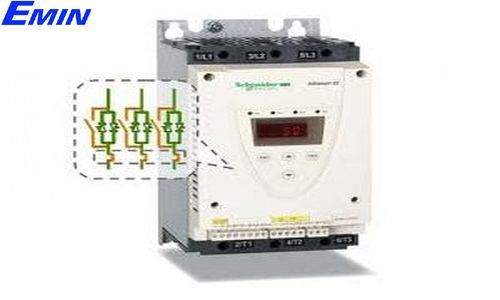
Why soft starters are widely used in industrial motor systems
When an induction motor starts direct-on-line, the current can rise several times above its normal running value. That sudden demand may cause voltage dips, increase stress on switching equipment, and place unnecessary strain on couplings, belts, gearboxes, and driven machines. A soft starter addresses this by ramping the motor voltage progressively during startup.
In practical terms, that smoother electrical and mechanical transition is useful in factories, utility systems, workshops, and processing lines where stable motor operation matters. It is particularly relevant when multiple large loads share the same supply, or when abrupt starts can affect product flow, piping, or mechanical life.
How a soft starter works
The operating principle is based on controlling the voltage applied to the motor during acceleration and, in many cases, deceleration. Soft starters typically use semiconductor switching elements to increase the effective motor voltage in a controlled way, which reduces starting current and allows the motor torque to build more gradually.
Because motor torque is closely related to applied voltage, this method helps manage startup behavior without the full speed control functions associated with an inverter. Once the motor reaches normal operating condition, many soft starters use a bypass arrangement to reduce heat losses inside the device and improve overall efficiency during steady-state operation.
Typical applications for soft starters
Soft starters are commonly selected for equipment that benefits from reduced shock at startup or a gentler stop profile. Pumps are a typical example because soft stopping can help reduce pressure surges and water hammer in piping systems. Fans and blowers also benefit from controlled acceleration, especially where belts, bearings, or duct systems are sensitive to abrupt starts.
They are also used in conveyors, compressors, mixers, and other machinery with noticeable inertia. In broader automation environments, soft starters often work alongside control and monitoring layers such as SCADA components, giving operators better visibility into motor status, alarms, and operating conditions.
What to consider when selecting a model
Choosing the right unit starts with the motor’s rated current, supply voltage, and application type. It is important to size the device for the actual load profile rather than selecting only by motor power in kW. Pump duty, fan duty, starting frequency, and the inertia of the driven equipment all influence the appropriate selection.
Control voltage and wiring style can also matter during panel integration. For example, the SIEMENS 3RW4036-1BB14 Sirius Soft Starter is listed with AC/DC 110-230 V control and a 45 A rating for applications around 22 kW at 400 V, making it relevant for compact motor control panels that require a defined control supply range.
For higher-power systems, the Schneider ATS48 series in this category covers a broader range of current and motor capacities. Examples include ATS48C14Q, ATS48C25Q, ATS48C41Q, ATS48C66Q, ATS48C79Q, and ATS48M10Q, which are suited to applications from medium-duty motors up to large industrial loads where controlled start and stop behavior is essential.
Examples available in this category
This category includes both compact and higher-capacity products for different installation needs. On the SIEMENS side, the 3RW4036-1BB14 Sirius model is a representative option for moderate motor ratings and standard industrial control schemes. It is typically considered when panel space, straightforward integration, and controlled starting are priorities.
On the Schneider side, the ATS48 range appears in multiple ratings, from models such as ATS48C17Q and ATS48C21Q up to larger units like ATS48C59Q, ATS48C66Q, ATS48C79Q, and ATS48M10Q. Based on the listed data, these products cover 3-phase input applications and support soft start and soft stop behavior for pumps, fans, and other loads with higher inertia.
When a soft starter is the right choice
A soft starter is generally a good fit when the main objective is to reduce startup current and mechanical impact, rather than continuously vary motor speed during operation. If the process runs mostly at fixed speed and only needs controlled acceleration and deceleration, this approach can be technically appropriate and cost-efficient.
It is also useful where the plant wants to improve electrical stability and reduce wear on equipment connected to the motor. In many motor control panels, soft starters are installed together with protection devices such as an air circuit breaker and coordinated control hardware to create a more robust power and automation architecture.
Integration within a wider automation system
In modern facilities, motor starting equipment is rarely evaluated in isolation. Buyers often need to consider how the soft starter will interact with operator interfaces, alarms, power distribution, and data collection. Where status feedback or event history is important, it may be useful to connect the motor control layer with a data logger for automation systems or supervisory platform.
This wider system view is especially important in plants that manage multiple motors across water treatment, HVAC, material handling, or process lines. A well-matched soft starter improves not only startup performance, but also maintainability, protection coordination, and visibility for operations teams.
Practical benefits for maintenance and operation
The most visible benefit of a soft starter is smoother motor starting, but the longer-term value is often seen in reduced maintenance stress. Lower shock loading can help extend the service life of couplings, belts, bearings, and mechanical transmission parts. It can also reduce nuisance trips and lessen disturbance on the electrical supply during startup events.
For pump applications, controlled stopping is another important advantage because it helps manage hydraulic shock. In systems where uptime matters, these operational improvements can support more predictable maintenance planning and more stable daily production.
Choosing the right soft starter for your application
Every motor application has its own starting profile, load behavior, and control requirements. That is why the right selection should take into account current rating, motor power, line voltage, application type, and the way the starter will be integrated into the panel and automation system.
This Soft Starters category brings together options from established industrial brands and includes models suitable for both moderate and high-power motor duties. If you are comparing units for pumps, fans, conveyors, or other fixed-speed motor systems, reviewing the available ratings and control characteristics here is a practical way to narrow down the most suitable solution.
Get exclusive volume discounts, bulk pricing updates, and new product alerts delivered directly to your inbox.
By subscribing, you agree to our Terms of Service and Privacy Policy.
Direct access to our certified experts
