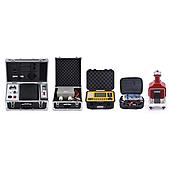
In electrical and electronic equipment manufacturing lines, electrical safety test equipment is typically installed at the final stage before products are released. Depending on the product requirements, the system can use a multifunction tester or a combination of dedicated test instruments.
In an automated production line, the test equipment no longer operates independently. It must communicate with the system controller, follow the specified test sequence, and transmit test results to the management software.
Commonly integrated tests include AC Hipot, DC Hipot, Ground Continuity, Ground Bond, and Insulation Resistance (IR). Depending on the product requirements, these tests can be performed using a multifunction tester or a combination of specialized instruments.
Selecting an Integrated Test Solution
- Identify the required tests, such as AC Hipot, DC Hipot, Ground Bond, or Insulation Resistance.
- Determine the requirements for control, data recording, and communication with the existing system.
- Check the available rack space, connection points, and equipment layout.
- Design the test area with appropriate warning and protective measures.
Prepare operating procedures and training for the system implementation and test station operators.
For a withstand voltage test, the test voltage is applied between conductive parts and the parts that need to remain electrically isolated for a specified period. The purpose is to detect insulation breakdown or leakage current exceeding the permitted limit.
Ground Continuity and Ground Bond testing focus on the protective path of the product. The resistance of this path must remain within the specified limit to ensure that fault current can be safely conducted to the protective grounding system.
Insulation Resistance testing evaluates the degree of electrical isolation between conductive parts. Combining multiple tests within the same test station allows different aspects of electrical safety to be evaluated rather than relying solely on withstand voltage testing.
When these tests are integrated into an automated production line, the test sequence must be defined in advance. The product is connected to the test equipment, the system verifies the test conditions, each measurement is performed according to the programmed sequence, and the final result is returned as PASS or FAIL.
Configuration Selection Based on Testing Requirements
The choice between a multifunction tester and a configuration consisting of several individual instruments depends on the number of required tests, the test sequence, and the architecture of the test station.
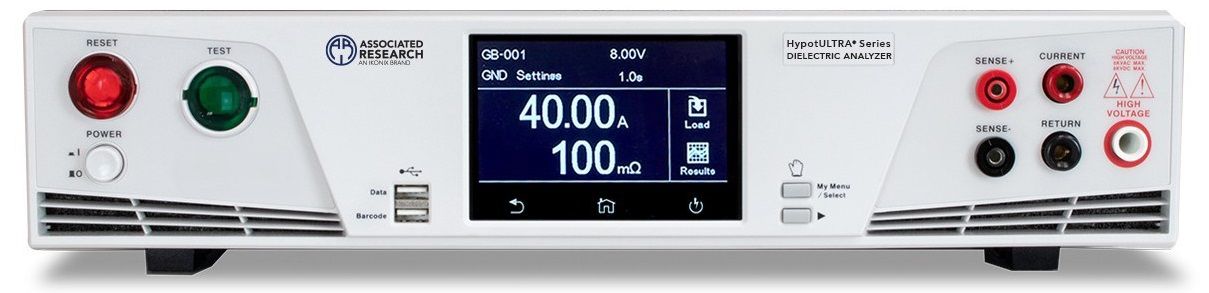
Multifunction Solution with HypotULTRA® 7804
The HypotULTRA® 7804 is introduced with WithStand® software for integrated 4-in-1 testing, including AC Hipot, DC Hipot, Ground Bond, and Insulation Resistance.
The instrument features a 2U rack-mount design, making it suitable for installation inside the equipment cabinet of an automated test station. Integrating multiple functions into a single instrument can reduce the number of devices required and simplify the overall wiring.
The HypotULTRA® 7804 also supports multiple communication interfaces, including USB, RS-232, GPIB, and Ethernet. These interfaces can be used to connect the test equipment to a computer or external control system.
For an automated test station, communication capability directly affects how the instrument receives commands, returns test results, and interacts with other stages of the production process. For example, after a product is placed in the test position, the control system can instruct the tester to execute a programmed test sequence and receive the PASS or FAIL result when the test is completed.
Basic Solution with Hypot® 3870 and HYAMP® 3240
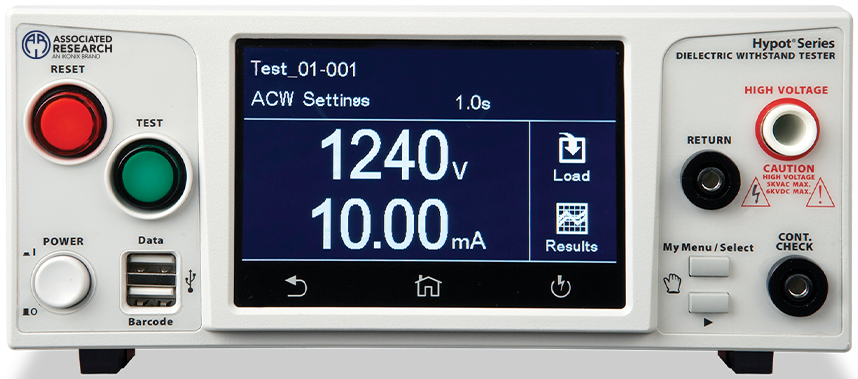
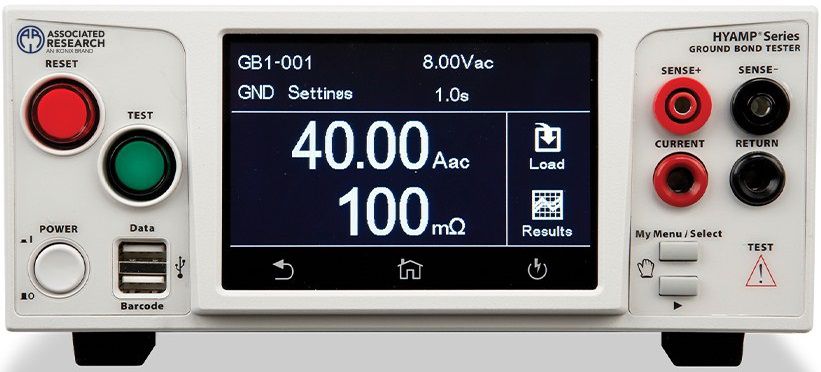
For test stations with basic testing requirements or applications where different tests need to be assigned to separate instruments, Hypot® 3870 can be combined with HYAMP® 3240.
The Hypot® 3870 performs AC Hipot, DC Hipot, and Insulation Resistance testing. The HYAMP® 3240 is used for Ground Bond testing and can be integrated with the Hypot® 3870 within the same system.
This configuration allows system integrators to select equipment based on the actual requirements of the product. If the number of required tests changes, each instrument can be evaluated independently in terms of specifications, installation position, and communication method. Associated Research positions the Hypot® 3870 and HYAMP® 3240 configuration for integrated systems with basic testing requirements.
Connecting the Test Equipment to the Control System
In an automated test station, measurement data is not only displayed on the tester. When required by the application, the data must also be transmitted to the control system.
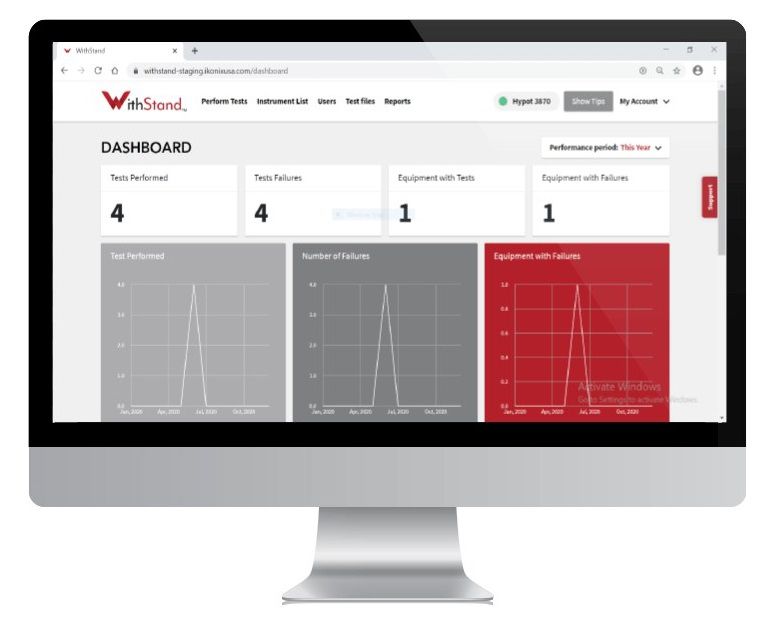
WithStand® software from Associated Research is used to control the testing process and record test data. When integrating the equipment into a production line, the system integrator needs to define how the tester exchanges data with the control system, how test results are identified, and which data should be stored for each product.
This is particularly important for production lines that require test traceability. After testing, each product can be associated with a product ID or test ID, allowing the results to be stored together with the corresponding production data rather than remaining only on the test instrument.
Designing an Electrical Safety Test Station
A well-organized and properly designed test station helps protect operators and maintain consistent operating procedures. In an automated system, the conditions required to start a test should be linked to the operation of the entire station. For example, if the protective door is not closed or the product is not correctly positioned, the system should not proceed to the high-voltage test stage.
The installation position of the electrical safety instrument should also be considered during the initial design. For a 2U instrument such as the HypotULTRA® 7804, cabinet height, high-voltage cable routing, signal cables, and maintenance clearance all affect the equipment layout inside the cabinet.
Additional equipment for the work area may include insulating mats, signal tower lights, E-Stop emergency stop switches, and warning signs. An insulating mat can help define the operator's working area, while warning signs identify the presence of high-voltage hazards. Signal tower lights provide a clear indication of the station's operating status.
A remote two-hand control switch may also be considered depending on the operating method and protection requirements of the application. The test station should be designed to minimize the possibility of operator contact with high-voltage points during testing.
EMIN is the exclusive distributor of Associated Research in Vietnam. Contact us for consultation on the appropriate solution, equipment setup, and operator training for your test system.