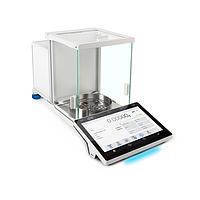
Analyzer Scale
Accurate mass measurement becomes critical when sample size is small, tolerance is tight, and every fraction of a milligram can affect the final result. In laboratory work, quality control, formulation, and material testing, choosing the right Analyzer Scale helps improve repeatability, reduce operator error, and support more reliable documentation.
This category focuses on analytical weighing instruments used for high-resolution measurement, along with selected accessories that support calibration, density determination, power flexibility, and controlled sample handling. Whether the requirement is routine laboratory weighing or more demanding micro-resolution work, the range here is intended for users who need stable performance and clear selection criteria.

Where analytical balances fit in the weighing workflow
An analytical balance is typically used when standard bench scales or general-purpose lab balances are not precise enough. These instruments are designed for measuring small masses with very fine readability, often with a draft shield to reduce the influence of airflow and with calibration functions to maintain consistent performance over time.
In practice, they are common in chemistry labs, pharmaceutical preparation, research environments, and inspection processes where material loss, sample evaporation, or environmental disturbance can affect results. If your application does not require sub-milligram resolution, a precision scale may be more suitable for routine weighing with higher capacity and simpler handling.
Typical product range in this category
The products highlighted in this category show several common levels of analytical weighing. For example, the KERN ACJ 200-4M Analytical Balance and the Shimadzu ATX-224R Analytical Balance are representative 0.1 mg models for laboratory use around the 220 g range, making them suitable for many standard analytical tasks.
For users who need even finer readability, models such as the KERN ABP 200-5AM and KERN ABP 200-5DAM provide 0.01 mg readability for applications that demand tighter control over small sample masses. Other options such as the KERN ABP 300-4AM extend the weighing capacity while still maintaining analytical-level resolution, which can be useful when sample size varies between workflows.
This category also includes related items that support the weighing process rather than replacing the balance itself. Examples include the KERN YDB-01 density determination set, the KERN ALJ-A02 evaporation trap, and the KERN GAB-A04 internal rechargeable battery pack.
How to choose the right analyzer scale
The first point to evaluate is readability and capacity. A balance with 0.1 mg readability may be appropriate for many laboratory procedures, while 0.01 mg models are better aligned with highly sensitive weighing tasks. Capacity should also match the heaviest expected sample, container, or tare combination without pushing the instrument too close to its maximum load in routine use.
Next, consider calibration method, environmental conditions, and connectivity. Built-in or internal calibration can simplify verification and help maintain confidence in results, while interfaces such as RS232C or USB can support data transfer to a computer or lab documentation workflow. If your work involves broader gravimetric processes such as moisture determination, it may also be worth reviewing the Moisture Analyzer category for instruments designed specifically for heating and moisture analysis.
Accessories and supporting components matter
Analytical weighing performance depends not only on the instrument itself but also on the surrounding setup. Accessories can improve consistency, make special measurements possible, or help protect sample integrity during weighing.
For example, the KERN YDB-01 set is relevant for users who need density determination of liquids and solids as part of the same weighing workflow. The KERN ALJ-A02 evaporation trap is useful when working with volatile or sensitive samples, where uncontrolled evaporation can introduce weighing error. Power accessories such as the KERN GAB-A04 rechargeable battery pack can be helpful in mobile or flexible lab setups where mains access is not always ideal. For a broader view of related components, trays, adapters, and other support items, see weighing accessories.
Common applications across laboratories and industry
Analytical balances are widely used wherever a small mass difference has practical importance. In chemical and pharmaceutical environments, they support reagent preparation, formulation, and sample portioning. In research settings, they are used for repeatable test preparation and measurement control. In quality systems, they help verify consistency between batches, incoming materials, or reference standards.
They can also be relevant in workflows involving fine powders, precious materials, or density-related measurement procedures. The actual suitability depends on balancing required resolution, sample behavior, operating temperature, humidity, and the need for controlled weighing space. Brands commonly associated with this segment include KERN and Shimadzu, both represented in the products listed here.
Good practice for stable weighing results
Even a high-specification balance can produce inconsistent readings if installation and operation are not controlled. The instrument should be placed on a stable, low-vibration surface, away from drafts, direct airflow, and frequent temperature fluctuation. Using the weighing chamber correctly is especially important when working at 0.1 mg or 0.01 mg resolution.
Operators should allow sufficient warm-up time, use suitable containers instead of placing chemicals directly on the pan, and avoid overloading the balance. Regular cleaning, routine calibration checks, and appropriate environmental control all contribute to better repeatability. For traceable processes, connection to a computer or data management system can also help reduce transcription error and improve documentation.
FAQ
What is the difference between an analytical balance and a precision balance?
An analytical balance is intended for finer resolution, typically with a draft shield and higher sensitivity for small samples. A precision balance usually offers lower readability but may provide higher capacity and easier routine operation.
When is 0.01 mg readability necessary?
It is generally considered when the sample mass is very small or when the process requires tighter control than a standard 0.1 mg balance can provide. Final selection should be based on the method, target uncertainty, and operating environment.
Do accessories really affect weighing performance?
Yes. Items such as density kits, evaporation traps, and power accessories can directly support measurement method, sample stability, and operational convenience within the weighing workflow.
Choosing with the application in mind
The right analyzer scale is not simply the model with the finest display increment. It should match the real weighing task, the sample type, the required documentation level, and the working conditions around the instrument. A balanced choice between resolution, capacity, calibration convenience, and accessory support will usually deliver better long-term value than selecting by specification alone.
By comparing practical laboratory needs with the analytical balances and related components available in this category, buyers can narrow the range more effectively and build a weighing setup that is accurate, stable, and easier to maintain in day-to-day use.
Get exclusive volume discounts, bulk pricing updates, and new product alerts delivered directly to your inbox.
By subscribing, you agree to our Terms of Service and Privacy Policy.
Direct access to our certified experts