
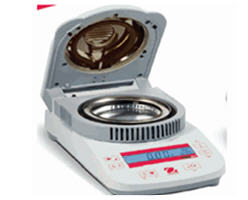
Moisture Analyzer
Accurate moisture determination plays a critical role in quality control, storage stability, formulation, and process consistency. In laboratories, production areas, and incoming material inspection, a Moisture Analyzer helps teams measure water content and dry matter quickly without relying on slower oven-based workflows for every routine check.
This category brings together instruments designed for gravimetric moisture testing, where a sample is heated and the change in mass is used to calculate moisture-related values. For users comparing drying methods, weighing capacity, readability, and interface options, the selection below is intended to support both routine analysis and more demanding industrial applications.
Why moisture analysis matters in industrial and laboratory work
Moisture content affects far more than product weight. It can influence shelf life, mechanical behavior, combustion characteristics, mixing performance, packaging results, and compliance with internal quality standards. That is why moisture testing is commonly used across food ingredients, powders, granules, chemicals, raw materials, and other production samples.
A dedicated analyzer combines controlled heating with precise weighing so operators can evaluate moisture loss in a structured and repeatable way. Compared with general weighing equipment, these instruments are built around drying programs, result calculation, and measurement modes that make routine testing faster and easier to standardize.
What to look for when selecting a moisture analyzer
The first consideration is usually sample size and weighing capacity. Some applications only require small routine samples, while others need a larger pan or a higher load range to handle bulkier materials. Readability also matters: many models in this category support fine mass resolution, which is important when small changes in sample weight must be detected reliably.
The second major factor is the heating system and temperature range. Different materials respond differently to heat, so users should match the analyzer to the sample type and drying method. For example, lower temperature ranges may suit standard moisture determination, while higher-temperature systems can be relevant for more specialized thermal loss measurements.
Data handling is another practical point. USB, RS232, stored methods, and display usability can all affect day-to-day operation, especially in labs that document results or integrate instruments into broader quality workflows. If your process also involves general weighing tasks, you may want to review related options in analyzer scale and precision scale categories.
Typical measurement approaches in this category
Most units here follow the loss-on-drying principle: a sample is weighed, heated, and then weighed continuously or at intervals until an end condition is reached. The instrument then calculates values such as percent moisture, dry matter, or residual weight. This method is widely used because it combines direct mass measurement with relatively simple sample preparation.
Depending on the model, users may have access to different stop criteria, temperature control strategies, and reporting formats. In practice, that means the same category can serve routine receiving inspection, process checks during production, and laboratory verification where repeatability and traceability are important.
Examples of instruments available
Several PCE models in this category illustrate the range of available configurations. The PCE UX 3011 and PCE UX 3011D are suited to users looking for fine 0.001 g readability with a 220 g weighing range, while the PCE UX 3081 and PCE UX 3081WQ extend capacity to 400 g for larger sample handling needs.
For applications that require higher heating ranges, models such as the PCE UX 3011Q and PCE UX 3011HQ series provide broader thermal capability. There are also specialized variants like the PCE UX 3011GQD, described as a moisture balance and incinerator, which may fit workflows where thermal residue or related loss measurements are part of the evaluation process.
This category also includes the Kett FD-720 infrared moisture analyzer, a solution designed around the evaporation weight loss method and multiple measurement modes. Its inclusion is useful for buyers comparing halogen or other heating concepts with infrared-based moisture testing from established manufacturers such as Kett.
Matching the instrument to your sample and workflow
Material behavior should guide selection. Powders, particles, liquids, and pastes do not always dry in the same way, so pan size, minimum sample load, heating profile, and program flexibility can all influence test stability. A unit that works well for dry powders may not be the best fit for volatile, sticky, or thermally sensitive materials.
Throughput is equally important. In busy labs or production settings, a responsive display, clear menu structure, and straightforward result export can save time over repeated test cycles. If your team frequently changes pans, handlers, or consumables, it may also be helpful to review weighing accessories that support daily operation and sample handling.
Manufacturer landscape and buying considerations
This category is relevant for buyers comparing widely used brands in laboratory and industrial weighing, including AND, Cole parmer, Mettler Toledo, Sartorius, Shimadzu, KERN, Kett, OHAUS, PCE, and RADWAG. Brand preference often depends on existing installed equipment, calibration practice, operator familiarity, and documentation requirements rather than on a single specification alone.
When comparing options, it is worth focusing on the practical balance between capacity, resolution, heating range, interface connectivity, and result modes. Some users need a straightforward routine instrument for moisture percentage checks, while others need a more flexible platform that can support dry content, residual weight, or more application-specific thermal measurement tasks.
When a dedicated moisture analyzer is the right choice
A specialized moisture analyzer is usually the better option when moisture testing is part of a regular control plan, not just an occasional lab task. Built-in heating, programmed measurement modes, and direct result calculation reduce manual steps and can improve consistency between operators.
For organizations that already use laboratory balances, a dedicated moisture system adds speed and workflow efficiency for sample drying applications. If you are specifically comparing instruments intended for this purpose, you can also browse the broader moisture analyzer range on this category page to narrow choices by capacity, temperature capability, and measurement method.
Choosing with confidence
The right instrument depends on what you test, how often you test it, and how results are used in your process. A smaller routine unit may be ideal for standard lab checks, while higher-capacity or higher-temperature models can be more suitable for demanding industrial samples and specialized workflows.
By comparing sample capacity, readability, heating performance, and data handling features, buyers can identify a moisture measurement solution that aligns with real operating needs. This category is designed to make that evaluation easier, whether you are upgrading an existing setup or selecting a new analyzer for quality control, laboratory testing, or production support.
Get exclusive volume discounts, bulk pricing updates, and new product alerts delivered directly to your inbox.
By subscribing, you agree to our Terms of Service and Privacy Policy.
Direct access to our certified experts
