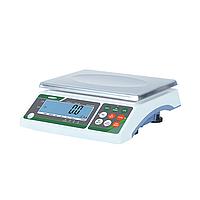
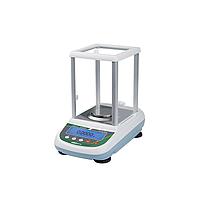
Precision scale
When weighing results directly affect formulation accuracy, quality checks, or laboratory repeatability, choosing the right instrument matters as much as the measurement itself. A precision scale is typically selected for tasks that need a finer readout than a standard bench or school balance, while still covering a practical range for routine industrial and laboratory work.
On this page, you can explore precision scales suited to applications such as sample preparation, incoming material inspection, batching, and general-purpose laboratory weighing. The category includes compact models for small samples as well as higher-capacity units designed for heavier loads without giving up reliable readability.

Where precision scales are commonly used
Precision scales are widely used in laboratories, production environments, educational facilities, and technical service areas. They are often chosen when the job requires a balance between capacity and readability, for example weighing powders, components, containers, prepared samples, or intermediate products with more control than a basic platform scale can offer.
In industrial settings, these instruments support routine verification and process consistency. In research and quality environments, they help users achieve repeatable results during formulation, comparison testing, and sample handling. For applications that demand even finer laboratory performance, users may also compare this category with an analytical balance range.
What defines a precision scale in practice
In practical terms, a precision scale is selected for its ability to provide stable readings at a finer resolution than general-purpose weighing equipment. Depending on the model, that may mean readability down to 0.1 g, 0.01 g, or 0.001 g, with capacities ranging from a few hundred grams to several kilograms.
This makes the category especially useful when the sample is too large for a highly specialized analytical balance, but accuracy still remains important. Many users also consider factors such as stabilization time, calibration method, weighing pan size, and data interface options when narrowing down a suitable model.
Typical product types within this category
The category covers several practical equipment profiles rather than one single format. Compact laboratory units are suitable for benches with limited space, while higher-capacity models are often selected for routine production support, warehouse sampling, or inspection tasks.
For example, the Sartorius Entris 822i - 1S Technical Scales represents the type of instrument often considered for controlled laboratory weighing. From KERN, models such as the KERN PFB 600-3 Precision balance and KERN PFB 6000-2 Precision balance illustrate how users can choose between lower-capacity finer-resolution work and broader-capacity daily weighing. Where verification-related use is relevant, models like the KERN PCJ 600-2M Precision balance or KERN PCJ 6000-1M Precision balance may also be of interest.
How to choose the right model
The first step is to match the scale’s maximum capacity to the heaviest item you expect to weigh, then choose the finest readability your process genuinely requires. Overspecifying resolution can increase cost and sensitivity to environmental conditions, while underspecifying may reduce confidence in your measurements.
It is also important to consider the working environment. Drafts, vibration, temperature variation, and operator workflow all influence weighing stability. For smaller samples or finer readout, a model with a compact weighing area and better shielding may be more suitable; for larger containers or routine production use, a broader pan and higher load range may be the better fit.
Connectivity can also matter in B2B environments. Some product lines in this category support interfaces such as RS-232 or optional communication features, which can help with data transfer, traceability, and integration into inspection or reporting workflows.
Examples from the current range
Several products in this category show how precision scales can address different use cases. The KERN 572-32 Compact laboratory balance is suited to small-sample work where milligram-level readability is useful, while the KERN 572-57 Compact laboratory balance extends capacity for heavier samples with a practical laboratory format.
For routine educational or general technical weighing, the KERN EMS 12K0.1 School balance and KERN EMS 12K1 School balance offer a simpler approach with larger capacity. For compact daily use, the KERN EMB 5.2K1 School balance is another example of a lightweight unit used where portability and straightforward operation are priorities. If your application also requires accessories such as replacement pans or supporting components, you can explore weighing accessories for compatible options like the KERN EMS-A01 Weighing Plate.
Precision scales compared with related weighing equipment
Although the terms are sometimes used interchangeably, precision scales are not identical to every weighing instrument used in laboratories or factories. A bench scale may prioritize higher load capacity and rugged routine handling, while an analytical balance is intended for much finer measurement under more controlled conditions.
That is why this category often serves as the middle ground in the weighing ecosystem. It is suitable for users who need more detail than a general industrial scale can provide, but who do not necessarily require the highest laboratory sensitivity. If your workflow focuses on parts counting rather than direct mass measurement alone, a counting scale may be a more efficient alternative. If moisture content is part of the inspection process, a moisture analyzer may be the better match.
Key operating considerations for reliable results
Even a capable scale will only perform well if it is used in the right conditions. For repeatable measurement, the unit should be placed on a stable surface, protected from airflow, and checked regularly using appropriate calibration or adjustment procedures. Operators should also allow sufficient warm-up time when required by the equipment design.
Routine care is equally important. Keeping the weighing area clean, avoiding overload, and using the correct accessories for container handling all help preserve long-term stability. In quality-sensitive environments, these basic practices are often just as important as the nominal specification on the datasheet.
Finding a practical fit for laboratory and industrial needs
This precision scale category is designed for users who need dependable weighing across a broad range of technical tasks, from sample handling and formulation to inspection and routine production support. The available range includes compact laboratory formats, higher-capacity precision balances, and supporting accessories that can help tailor the setup to the application.
If you are comparing options, start with the required capacity, target readability, and working environment, then review whether communication features, pan dimensions, or calibration approach are important for your process. With the right selection, a precision scale becomes a reliable measurement tool that supports both day-to-day efficiency and consistent technical results.
Get exclusive volume discounts, bulk pricing updates, and new product alerts delivered directly to your inbox.
By subscribing, you agree to our Terms of Service and Privacy Policy.
Direct access to our certified experts