
Weight Mass Comparator
Accurate mass verification is a critical part of calibration work, quality control, and legal metrology. In laboratories, calibration rooms, and industrial environments where reference weights must be compared with a high degree of repeatability, Weight Mass Comparator systems help create a controlled and dependable weighing process rather than a simple routine measurement.
Compared with general-purpose weighing equipment, these instruments are designed for comparison tasks where stability, repeatability, and controlled load positioning matter as much as capacity. This category focuses on mass comparator solutions used for reference weights across a wide working range, from lower-capacity calibration applications to heavy-duty systems for large weights.
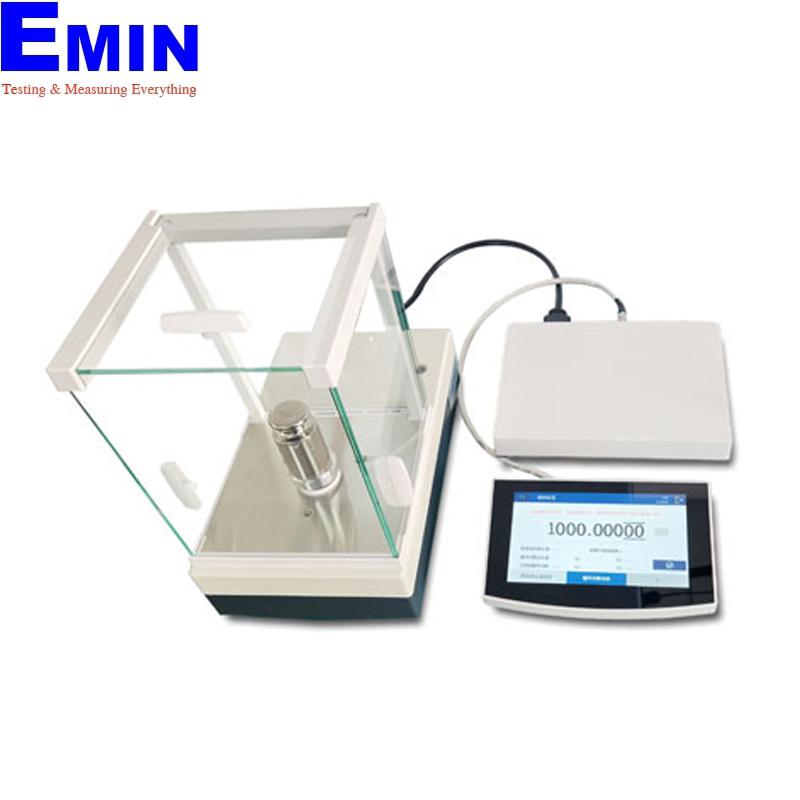
Where mass comparators fit in metrology and calibration work
A mass comparator is typically used when the objective is not just to obtain a displayed weight value, but to compare a reference standard with a test weight under controlled conditions. This makes the equipment especially relevant for calibration laboratories, industrial metrology departments, and organizations that maintain traceability of weights used in production, inspection, or verification processes.
In practical terms, these systems support workflows involving F, M, or other calibration classes depending on the model and working range. For companies building a broader weighing setup, it is also useful to review related equipment such as precision scale solutions for routine high-resolution weighing tasks outside formal mass comparison procedures.
Typical product range in this category
This category includes a broad selection of RADWAG comparators covering very different capacities and resolutions. Examples include compact and mid-range models such as the RADWAG HRP 200.5Y.KO Mass Comparator, RADWAG HRP 500.5Y.KO Mass Comparator, and RADWAG HRP 500.1.5Y.KO Mass Comparator, as well as higher-capacity systems like the RADWAG HRP 1000.5Y.KO, RADWAG HRP 2000.5Y.KO, and RADWAG HRP 2000.5Y.KB.
The range also includes configured solutions such as the RADWAG XA 21.5Y.KO + WX-06-0160, RADWAG WAY 500.5Y.KO + WX-06-0160, and RADWAG APP 64.5Y.KO + WX-001-0448 + WX-06-0160. These combinations show that a comparator system may involve not only the weighing unit itself but also supporting elements such as sensors, anti-vibration options, or a self-centering pan for repeatable load placement.
Key characteristics to evaluate before selecting a system
Selection should start with the actual weight range used in your process. In this category, capacities extend from around 210 kg up to 2100 kg, with readability reaching down to fractions of a gram on selected models. The right balance between maximum capacity and resolution depends on the class of reference weights being handled, the required uncertainty level, and the environment in which the comparator will be installed.
Another important point is repeatability. For comparator applications, repeatability often matters more than headline capacity alone because calibration quality depends on stable, consistent comparison cycles. Buyers should also consider stabilization time, eccentricity behavior, and whether the process benefits from a self-centering weighing pan or anti-vibration support.
Environmental control is equally important. Many models in this category specify operating temperature and humidity windows, reflecting the need for controlled conditions during mass comparison. Even a capable comparator can only deliver reliable results when it is used in a suitable room with stable environmental parameters and good handling practice.
Why load handling and accessories matter
In comparator work, the way a mass standard is placed on the weighing area can directly influence the consistency of results. That is why some systems in this category are offered with a self-centering pan, such as the RADWAG WX-001-0448 Self-Centering Pan for APP 64.5Y.KO mass comparator. This type of accessory helps improve positioning repeatability and supports more disciplined comparison procedures.
Optional sensors and anti-vibration configurations also play a practical role, especially when measurements are sensitive to floor movement or operator influence. If your application requires replacement parts, mounting components, or supporting items around the weighing system, you may also want to explore weighing accessories that complement a metrology setup.
RADWAG solutions across low, medium, and high capacities
RADWAG is the main manufacturer represented in this category, with models suited to different calibration scopes. At the lower and mid end, instruments such as the HRP 200.5Y.KO and HRP 500 series support comparison work where smaller reference weights or moderate-capacity industrial standards are involved. At the upper end, the HRP 1000 and HRP 2000 families address heavy weights while still focusing on controlled comparison performance.
Several models also include modern connectivity features such as USB, Ethernet, Wi-Fi, or display-oriented interfaces, which can be relevant in digital calibration documentation workflows. For users who need a wider weighing portfolio from the same ecosystem, related categories like analyzer scales may be relevant for finer laboratory weighing tasks beyond comparator applications.
Common application scenarios
Weight mass comparators are commonly selected for calibration laboratories that verify working standards against reference standards. They are also used by industrial plants, logistics-related facilities, pharmaceutical environments, and quality departments that need documented control of test weights used in inspection or process verification.
Higher-capacity systems are particularly relevant where large weights must be checked with good repeatability, while smaller or more sensitive models are better suited to controlled laboratory workflows. In all cases, the comparator is part of a broader measurement chain that may also include environmental monitoring, handling tools, and procedures for traceable documentation.
How to choose the right comparator for your workflow
Start by defining the mass range you need to compare most often, then match it with suitable readability and repeatability. A 2100 kg comparator is not automatically better than a 210 kg or 510 kg model; the best fit depends on your actual standards, required uncertainty, and installation conditions. Oversizing can add cost and complexity without improving practical results.
Next, review whether your workflow would benefit from a self-centering platform, anti-vibration configuration, or integrated communication options. It is also worth considering how this equipment will coexist with other weighing devices already used on site, such as routine bench instruments, counting systems, or moisture-specific solutions. Choosing the right comparator is usually less about a single specification and more about the complete measurement process.
Final thoughts
This category brings together comparator systems intended for precise reference weight comparison across a wide range of capacities. With solutions centered on metrological control, repeatability, and stable operation, these instruments are designed for users who need more than conventional weighing performance.
If you are comparing certified weights, building a calibration workflow, or upgrading an existing metrology station, reviewing capacity, readability, environmental requirements, and handling accessories will help narrow the right option. A well-matched comparator supports not only accurate results, but also a more reliable and auditable weighing process over time.
Get exclusive volume discounts, bulk pricing updates, and new product alerts delivered directly to your inbox.
By subscribing, you agree to our Terms of Service and Privacy Policy.
Direct access to our certified experts