Ambient Light Sensors
Light level data is often a small signal with a big impact. In embedded devices, industrial controls, smart displays, and energy-aware systems, the ability to detect ambient brightness helps improve visibility, reduce power consumption, and make automatic adjustments more reliable. This is where Ambient Light Sensors become an important part of the design.
On this category page, you can explore components used to measure surrounding light intensity and, in some cases, additional optical information such as color, IR content, or multispectral response. The range includes compact digital devices for general-purpose illumination sensing as well as more specialized optical detectors for demanding measurement environments.
Where ambient light sensing is used
Ambient light sensors are widely used anywhere a system needs to react to changing illumination conditions. Common examples include automatic display dimming, backlight control, smart lighting, handheld electronics, and connected devices that need to optimize battery life without sacrificing usability.
In industrial and instrumentation contexts, these sensors can also support status monitoring, optical compensation, and light-aware control logic. If your application needs broader environmental monitoring beyond illumination, it may also be useful to review related categories such as air quality sensors or air and gas transmitters for a more complete sensing architecture.
Understanding the types of devices in this category
Not every product here serves the same role. Some devices are classic ambient light sensors designed to output digital light measurements for brightness control and exposure decisions. Others add RGB, IR, or multispectral capability, making them suitable when light quality matters as much as light intensity.
For example, the ROHM Semiconductor BH1726NUC-E2 is a digital 16-bit ALS IC suited to compact electronic designs, while the Broadcom APDS-9251-001 combines digital RGB, IR, and ALS functions in one device. For more advanced spectral analysis, parts from ams OSRAM such as the AS7343-DLGT, AS7343L-DLGT, AS72653-BLGM, and TSL25203M extend the range from basic ambient light measurement to richer optical sensing.
When to choose a standard ALS, RGB/IR sensor, or multispectral sensor
A standard ALS is usually the right fit when the system only needs a dependable reading of surrounding brightness. This is common in display dimming, smart home controls, portable devices, and simple lighting feedback loops. In these designs, digital output, low supply voltage, and compact SMT packaging are often more important than advanced optical detail.
An RGB/IR or multispectral device becomes more relevant when the application must distinguish different light components, compensate for varying sources, or extract more detailed optical information. That can be useful in display management, light source characterization, or application-specific optical monitoring. Devices such as the Broadcom APDS-9251-001 and ams OSRAM AS7343 family illustrate this broader capability within the same category.
High-speed photodetectors and specialized optical sensing
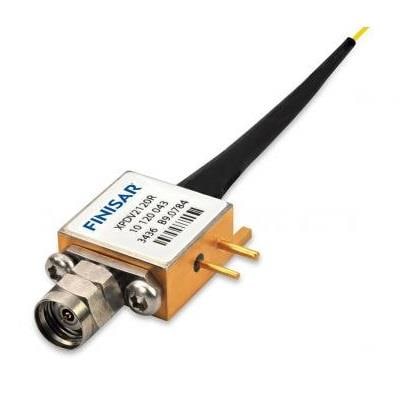
This category also includes highly specialized photodetectors from Coherent, including models such as XPDV2120R-VM-FA, XPDV2320R-VM-FP, XPDV3320R-VF-FP, XPDV3320R-VM-FA, and XPDV4120R-WF-FP. These products are not typical low-cost ambient light components for simple brightness adjustment. Instead, they fit advanced optical and photonics setups where bandwidth, wavelength compatibility, and connector configuration are key selection factors.
For buyers working across optical measurement and environmental sensing, this distinction matters. A compact ALS IC and a 50 GHz to 90 GHz photodetector solve very different problems, even though both respond to light. Reviewing the optical path, expected signal level, package style, and interface requirements early in the selection process helps avoid mismatches.
Key selection criteria for engineers and buyers
The most practical way to compare ambient light sensing devices is to start with the application objective. If the goal is automatic brightness control, focus on output type, operating voltage, package format, and integration effort. If the system must detect visible, IR, or multi-band light behavior, then spectral response becomes a more important consideration.
It is also worth checking mounting style, operating temperature range, and whether the design calls for a digital sensor IC or a more specialized photodetection approach. Many products listed here use SMD/SMT packaging for compact PCB integration, while some optical detector models use through-hole style and connectorized interfaces better suited to lab, telecom, or measurement environments.
- Measurement purpose: simple brightness sensing, RGB/IR detection, or multispectral analysis
- Electrical integration: supply voltage and interface compatibility with the host system
- Mechanical format: SMD/SMT for embedded electronics or connectorized formats for optical setups
- Operating conditions: temperature range, sensitivity needs, and installation environment
Featured product examples in this range
Several representative parts help show the breadth of the category. The ams OSRAM TSL25203M is aimed at high-sensitivity ambient light measurement in compact electronic systems. The ams OSRAM AS7343-DLGT and AS7343L-DLGT expand into multispectral sensing across a broad wavelength range, making them useful where more detailed optical characterization is needed.
The ROHM Semiconductor BH1726NUC-E2 offers a digital ALS approach for embedded applications, while the Broadcom APDS-9251-001 adds digital RGB, IR, and ALS capabilities in a single device. At the specialized end, Coherent XPDV photodetectors support high-speed optical detection for applications that go beyond standard environmental light sensing. If your project is centered specifically on broader optical or atmospheric monitoring, related solutions in aerosol generator products may also be relevant in test and calibration workflows.
Choosing the right supplier ecosystem
Manufacturer selection can be as important as device selection. In this category, brands such as ams OSRAM, Broadcom, Coherent, and ROHM Semiconductor cover different needs, from compact semiconductor sensors to highly specialized optical detectors. That variety helps buyers compare devices for consumer electronics, industrial systems, instrumentation, and photonics applications within one sourcing path.
For procurement teams, it is often helpful to shortlist by use case first and brand second. That keeps the evaluation grounded in technical fit rather than assuming all light-sensing products are interchangeable. A well-matched sensor can simplify calibration, improve control behavior, and reduce unnecessary redesign later in the project.
Final considerations
Ambient light sensing can range from straightforward brightness detection to advanced optical measurement, so the right choice depends on what the system actually needs to observe. A simple ALS IC may be enough for display and lighting control, while RGB, IR, multispectral, or high-speed photodetection options are better suited to more demanding optical tasks.
By comparing sensing method, spectral scope, package style, and integration requirements, engineers and sourcing teams can narrow the category efficiently. Explore the available product range to identify the sensor or photodetector that best matches your electrical design, measurement objective, and operating environment.
Get exclusive volume discounts, bulk pricing updates, and new product alerts delivered directly to your inbox.
By subscribing, you agree to our Terms of Service and Privacy Policy.
Direct access to our certified experts