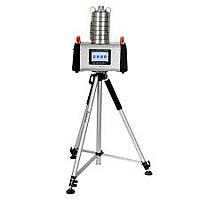
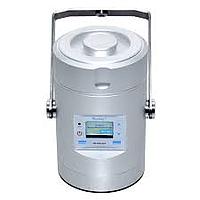
Biological Samplers
Controlling microbial contamination in air is essential in cleanrooms, pharmaceutical production, hospitals, food processing, and environmental monitoring programs. When viable particles need to be collected for culture-based analysis, Biological Samplers provide a practical way to capture airborne microorganisms and support routine monitoring, qualification work, and investigation of contamination events.
On this page, you can explore biological air sampling solutions built for different workflows, from portable microbial sampling to viable impaction systems and stage-based bioaerosol collection. The category is especially relevant for users who need reliable air monitoring methods that fit sterile environments, regulated processes, or field sampling tasks.
Where biological samplers are used
Biological samplers are commonly selected when the objective is not only to detect particles in air, but to collect viable organisms for later incubation and identification. This makes them useful in aseptic manufacturing areas, sterility test isolators, filling lines, biotech applications, indoor air investigations, and other environments where microbial presence must be assessed in a meaningful and traceable way.
In many monitoring programs, these instruments are part of a broader air environment strategy. For example, facilities may combine microbial sampling with continuous condition tracking through air quality sensors or process feedback from air and gas transmitters to build a more complete picture of environmental control.
Common sampling principles in this category
A large share of the products in this category use the impaction principle. In this method, a controlled airflow directs airborne microorganisms onto agar media or another collection surface. After sampling, the media can be incubated so colony growth can be counted and evaluated. This approach is widely used because it aligns well with standard microbiological workflows and supports location-based routine testing.
Some systems focus on direct viable impactor sampling at 1 CFM, while others operate at flow rates such as 25 liters/minute, 100 liters/minute, or adjustable low-to-mid flow ranges for specialized applications. Multi-stage samplers add another layer of analysis by separating particles by aerodynamic size, helping users study how bioaerosols distribute across different size fractions.
Portable microbial samplers for routine cleanroom and field use
For users who need mobility, battery operation, and straightforward setup, portable microbial samplers are often the most practical choice. Models such as the Lighthouse ActiveCount25H Microbial sampler and Lighthouse ActiveCount100 Microbial sampler are designed for routine viable air sampling with features such as programmable sampling presets, data logging, and compatibility with standard petri dishes. This type of platform is well suited to repeated monitoring across many rooms or sampling points.
The Lighthouse ActiveCount100H Microbial sampler is also relevant where a wipedownable design, HEPA filtered exhaust, and compatibility with controlled environments are important. If your team is standardizing around one supplier for contamination monitoring, it can be useful to review the broader Lighthouse product range for related instruments and accessories.
Viable impactor systems for integrated monitoring setups
Some applications require more than a standalone portable sampler. Viable impactor systems such as the Lighthouse ActiveCountR Viable Impactor System (1 CFM) and Lighthouse ActiveCountRp Viable Impactor System (1CFM) are suited to installations where controlled communication, external interfaces, and repeatable operation matter. With Modbus-based communication options and defined operating conditions, these systems can fit into more structured environmental monitoring architectures.
Compared with simple manual devices, this class of equipment is often chosen when users want better integration with facility workflows, software-assisted control, or consistent sampling in fixed locations. In regulated production spaces, that can help support repeatability, traceability, and easier management of routine sampling schedules.
Stage-based samplers for bioaerosol size separation
Not every microbial air study has the same objective. When the goal includes understanding how airborne organisms are distributed by particle size, stage-based samplers become especially useful. The Staplex MBS-6A Six Stage Microbial Air Sampler, Staplex MBS-2A Two stage Microbial Air Samplers, and Staplex MBS-1A Single Stage Microbial Air Samplers illustrate different levels of separation depending on the depth of analysis required.
This approach is often relevant in occupational hygiene, environmental bioaerosol studies, and research-focused applications. Instead of only capturing total viable load, a multi-stage sampler can help distinguish larger and smaller fractions, which may be important for respiratory exposure assessment and interpretation of airborne contamination behavior. For users comparing suppliers in this segment, the Staplex line is a notable reference within this category.
Low-flow and high-flow options for different sampling tasks
Flow rate is one of the most important selection factors because it affects sampling time, sample volume, portability, and the type of media or collection method used. In this category, BUCK instruments show how different airflow ranges can support different use cases. The BUCK BioAire™ B520 covers lower flow applications, while the BUCK BioSlide™ B1020 and BUCK BioCulture™ B30120 extend into higher flow sampling with portable operation.
Lower flow devices can be practical where longer run time, compact size, or specific sterile workflows matter. Higher flow options may reduce total sampling time or increase throughput when many samples are needed. The right balance depends on the environment, organism recovery method, and whether the priority is routine monitoring, investigation work, or broader air hygiene assessment. You can also explore the wider BUCK portfolio when comparing portable biological air sampling tools.
How to choose the right biological sampler
A good starting point is to define the sampling objective clearly. If the requirement is routine cleanroom monitoring with easy data handling and location presets, a portable microbial sampler may be the right fit. If the process needs fixed-location operation and communication with monitoring infrastructure, a viable impactor system can make more sense. If the task is research, occupational exposure work, or particle-size investigation, a stage-based sampler may be more appropriate.
It is also important to consider practical factors such as flow rate, compatibility with standard petri dishes or other media, sterilization needs, portability, battery operation, exhaust handling, and calibration practices. In some validation or containment-related workflows, supporting tools such as an aerosol generator may also be part of the wider testing setup, although it serves a different purpose from microbial collection.
Category overview and buying considerations
This category brings together several distinct families of biological samplers: portable microbial air samplers, viable impactor systems, and staged bioaerosol samplers. Leading names represented here include Lighthouse, BUCK, Staplex, and Aqualabo, each reflecting a different application focus within environmental and microbiological monitoring. Aqualabo BACTcontrol, for example, is more aligned with bacteria monitoring workflows rather than conventional agar-plate air impaction, which may be useful for users evaluating broader microbiological control strategies.
When comparing products, it is worth looking beyond headline flow rate alone. The overall workflow matters just as much: how the sample is collected, how easy the unit is to clean or sterilize, how data is recorded, and how well the instrument fits the operating environment. Choosing with those factors in mind usually leads to a more efficient and defensible monitoring program.
Whether the priority is routine cleanroom surveillance, aseptic process support, field bioaerosol investigation, or structured environmental monitoring, the right sampler depends on the sampling method and the operational context. Reviewing the instruments in this category by application, flow range, and collection principle is the best way to identify a solution that matches your monitoring goals.
Get exclusive volume discounts, bulk pricing updates, and new product alerts delivered directly to your inbox.
By subscribing, you agree to our Terms of Service and Privacy Policy.
Direct access to our certified experts