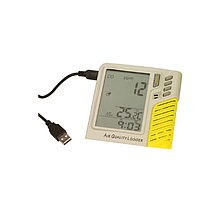
Single gas detector
Gas exposure risks are rarely uniform across a facility. In many workplaces, the immediate concern is one specific hazard such as oxygen deficiency, carbon monoxide, chlorine, methane, refrigerant leakage, or VOC presence. That is where a single gas detector becomes a practical choice: it focuses on one target gas, delivers a fast warning, and supports day-to-day safety checks without the complexity of a broader multi-gas platform.
On this category page, you can explore handheld and portable instruments designed for focused detection tasks in industrial plants, utilities, HVAC service, building maintenance, laboratories, and indoor air assessment. The product mix includes compact personal monitors, ambient meters, leak detectors, and application-specific instruments from recognized manufacturers such as Honeywell, TESTO, FLUKE, Chauvin Arnoux, Riken Keiki, and SATO.
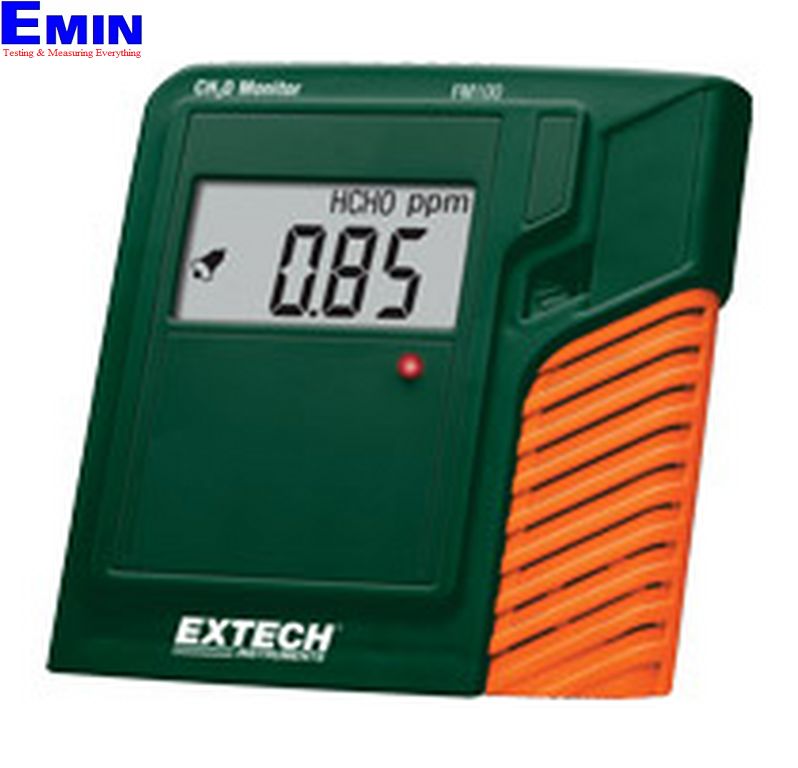
Why single gas detection is still the right fit for many applications
Not every environment requires simultaneous monitoring of multiple gases. In many maintenance, commissioning, inspection, and confined-space support tasks, personnel already know the main hazard and need a device optimized for that one gas. A dedicated instrument can simplify training, speed up checks, and make alarm interpretation more straightforward for operators and technicians.
This is especially relevant where compliance and safety routines are tied to a defined exposure risk. Typical examples include oxygen monitoring around inerting processes, carbon monoxide checks in occupied spaces, chlorine detection in water treatment, hydrocarbon leak tracing in gas systems, and refrigerant leak detection in HVAC or cooling applications.
Typical gases covered in this category
The category spans several common detection needs rather than a single sensing principle. Oxygen instruments are intended for identifying depletion or enrichment conditions, while carbon monoxide meters help evaluate combustion-related exposure. Chlorine detectors are used where toxic gas release must be identified quickly, and hydrocarbon leak detectors support gas pipework or appliance servicing.
There are also solutions for CO2 and VOC-related air assessment, depending on the instrument design. If your project involves fixed installation rather than portable measurement, it may also be useful to review air and gas transmitters or air quality sensors for permanent monitoring strategies.
Examples of instruments available
For carbon monoxide spot checks, the FLUKE FLUKE-CO-220 Carbon Monoxide Meter is an example of a focused handheld meter covering 0 to 1000 ppm. For broader ambient CO monitoring, the TESTO 317-3 Ambient CO meter supports higher-range checks where combustion safety and indoor exposure are part of the evaluation process.
Where oxygen monitoring is the priority, models such as the Riken Keiki OX-04 Handheld Gas Detector and Riken Keiki OX-08 Handheld Oxygen Meter illustrate portable single-gas solutions aimed at personal safety and field use. For toxic gas applications, the Honeywell BW Solo Cl2 Single-gas Detector represents the type of compact monitor commonly used for chlorine detection with visual, audible, and vibration alarm functions.
This category also includes application-specific leak detection devices. The TESTO 316-2 Gas Leak Detector is positioned for methane, propane, and hydrogen leak tracing, while the TESTO 316-4 Set 2 Refrigeration Leak Detector for Ammonia addresses refrigeration service requirements. For indoor air checks centered on carbon dioxide, the Chauvin Arnoux C.A 1510 and SATO SK-40CTH CO2 Monitor Mini show how some single-target devices extend beyond basic alarm-only use into assessment and trend observation.
How to choose the right detector for your task
The first selection point is the target gas. A detector built for O2, CO, Cl2, CH4, NH3, refrigerants, or VOCs is not interchangeable with another gas unless the product is explicitly designed for it. Start by identifying the exact hazard, expected concentration range, and whether you need presence detection, concentration measurement, or leak localization.
The second point is the measurement method. Diffusion-type personal monitors are well suited to continuous area exposure around the user, while leak detectors often prioritize fast response and probe-based searching. For example, a compact personal chlorine monitor serves a very different job than a gooseneck leak detector used to trace refrigerant escape points in service work.
It is also worth considering alarm style, battery life, ingress protection, and operating environment. In field and plant conditions, users often look for clear audible and visual alerts, vibration alarms, compact dimensions, and protection against dust or moisture. Where records matter, some models also support logging or communication functions for traceability and reporting.
Applications across industry and facilities
Industrial safety remains one of the main use cases. Oxygen detectors help protect workers in tanks, process rooms, and enclosed spaces where atmospheric composition can shift. Carbon monoxide and chlorine detection are relevant in utilities, boiler rooms, water treatment, and process operations where even short-term release events require an immediate response.
In building services and HVAC work, leak detectors are used to identify faults before performance drops or safety issues escalate. Instruments for methane, propane, hydrogen, or refrigerants are especially useful during maintenance, repair, and commissioning. VOC-focused devices such as the Honeywell MiniRAE 3000+ Portable Handheld VOC Monitor are also relevant when screening for solvent or chemical vapor presence in industrial hygiene and environmental checks.
For indoor environmental assessment, CO2 monitors can support ventilation reviews and occupancy-related air quality evaluations. Some users comparing portable spot meters with broader IAQ workflows may also want to explore Chauvin Arnoux instruments for air quality measurement applications where logging, humidity, and temperature context are important alongside CO2.
Key features to compare before buying
When comparing products in this category, focus on the factors that affect real use rather than only the headline range. Useful points include response time, resolution, alarm thresholds, portability, battery autonomy, and whether the device is intended for continuous wear, handheld surveying, or pinpoint leak detection.
Environmental suitability is another important filter. Some detectors are made for wide temperature ranges, some offer stronger ingress protection, and others are better suited to indoor technical inspections. If the instrument will be used in demanding plant conditions, check whether the product data indicates rugged housing, safety approvals, or explosion-protected design.
Finally, think about workflow. A simple ambient meter may be enough for routine checks, while service technicians may need a flexible probe, fast warm-up, or data export capability. The best match is usually the one that fits the measurement objective, user environment, and maintenance routine without adding unnecessary complexity.
Single gas detector vs other air monitoring equipment
A single gas detector is best suited to a defined hazard and a clear task. If your site requires ongoing fixed-point supervision, a transmitter-based setup may be more appropriate. If the goal is broader IAQ evaluation with multiple environmental parameters, a dedicated air quality platform or sensor network can provide more context than a single-target instrument alone.
That does not reduce the value of single-gas devices. In practice, they often play a critical role as frontline safety tools, service instruments, or portable verification devices alongside larger monitoring systems. Their strength lies in targeted detection, fast deployment, and straightforward operation around known gas risks.
Find a detector matched to your gas risk and workflow
This category brings together portable solutions for focused gas detection across safety, maintenance, HVAC, utilities, and environmental assessment. Whether you need oxygen monitoring, carbon monoxide screening, chlorine detection, hydrocarbon leak tracing, refrigerant leak checks, or CO2/VOC measurement, the right choice depends on the gas involved, the way the instrument will be used, and the conditions on site.
By comparing sensing purpose, alarm behavior, portability, and operating environment, you can narrow the options to the detector that truly fits your application. If your project later expands to fixed monitoring or broader air measurement, related categories and manufacturer pages can help you build out a more complete gas and air quality solution.
Get exclusive volume discounts, bulk pricing updates, and new product alerts delivered directly to your inbox.
By subscribing, you agree to our Terms of Service and Privacy Policy.
Direct access to our certified experts