
Sound level meter
Controlling workplace noise starts with reliable measurement. In factories, building services, maintenance areas, laboratories, and commercial facilities, sound data is used to assess operator exposure, investigate machine conditions, verify compliance targets, and document environmental conditions over time. A well-selected sound level meter helps turn subjective impressions of “too loud” into measurable, repeatable values in dB.
This category brings together handheld instruments for routine noise checks, spot inspections, and more advanced logging tasks. Depending on the application, users may need a simple meter for quick surveys, a datalogging model for trend analysis, or supporting accessories such as calibration tools and connection cables for a complete measurement workflow.
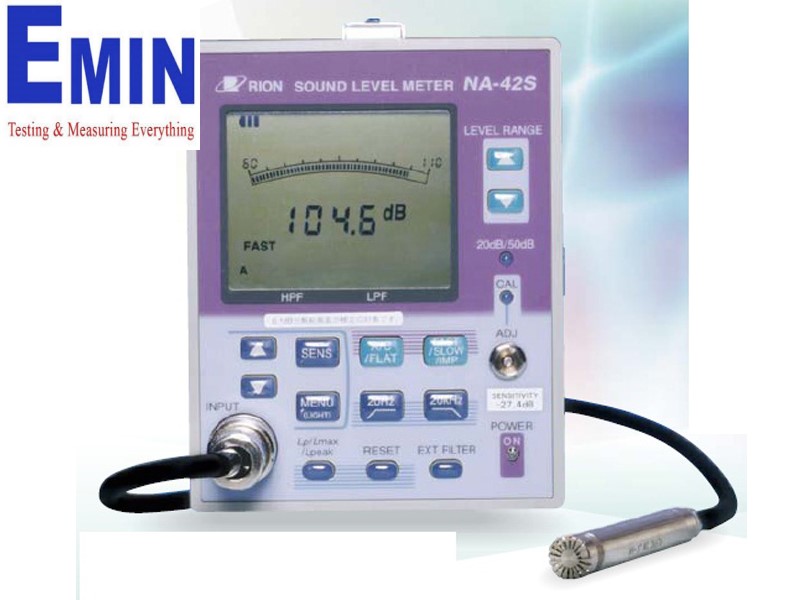
Where sound level meters are commonly used
Noise measurement is relevant in many technical environments. Common use cases include checking production line noise, evaluating HVAC and utility rooms, monitoring office or public-space sound conditions, and comparing background noise before and after process changes. In maintenance work, abnormal noise can also be an early sign of vibration, wear, airflow issues, or mechanical imbalance.
These instruments are also useful when sound needs to be considered alongside other environmental parameters. In broader monitoring programs, noise checks may be reviewed together with data from air quality sensors or building condition measurements to support a more complete view of indoor and industrial environments.
Core functions that matter when choosing a meter
Most professional and semi-professional models in this category measure across a range around 30 to 130 dB, which suits many industrial and commercial tasks. Important selection points typically include measurement range, resolution, stated accuracy, frequency response, and whether the instrument supports A or C weighting. A-weighting is widely used for perceived environmental noise, while C-weighting can be useful when evaluating higher-energy or mechanical sound.
Time weighting is another key feature. FAST response helps capture changing sound levels, while SLOW response is often easier to read for steadier assessment. Some meters also provide Min/Max capture, bargraph display, or autoranging, which can make field use more practical when sound conditions vary during testing.
Basic meters, datalogging models, and accessories
Not every application requires the same level of functionality. A compact meter such as the FLUKE FLUKE-945 ESP Sound Meter or the Amprobe SM-10 can be suitable for routine checks, facility walkthroughs, and general-purpose troubleshooting. These types of instruments are often chosen when portability, straightforward operation, and quick readings are the main priorities.
For users who need to store readings and review trends later, a datalogging sound meter may be the better choice. The Chauvin Arnoux C.A 1310 Sound Level Meter and OMEGA HHSL402SD Digital Sound Meter with Data Logger illustrate this more advanced tier, where recorded data supports reporting, audits, and longer observation periods. Accessories also play an important role in the measurement chain. For example, the Amprobe SM-CAL1 Sound Meter Calibrator is designed to help verify instrument performance, while the Chauvin Arnoux CA1310 cable supports data handling within a broader test setup.
Examples of instruments available in this category
Several well-known manufacturers are represented here, including FLUKE, Chauvin Arnoux, TESTO, Amprobe, BKPRECISION, OMEGA, and Casella. This gives buyers a practical spread of options, from straightforward handheld units to models with logging, interface connectivity, or application-focused measurement modes.
Typical examples include the TESTO 815 for everyday sound checks, the TESTO 816-1 for users who want a broader data-handling workflow, and the BK Precision 735 Digital Sound Level Meter for general acoustic measurement tasks. The Casella CEL-63X Noise meter appears in this category for users looking into dedicated noise-monitoring solutions, while the FLUKE FLUKE-945 ESP offers a familiar option for maintenance and industrial users already working within that brand ecosystem.
How to select the right sound level meter for your application
Start with the measurement objective. If the goal is fast verification of room noise, equipment noise, or operator-area conditions, a standard handheld meter with A/C weighting and FAST/SLOW response may be sufficient. If records must be retained for comparison, audits, or engineering review, it makes sense to prioritize onboard memory, logging capability, or PC data transfer.
Next, consider the operating environment and workflow. Battery type, display readability, portability, tripod mounting, and output interfaces may all affect day-to-day use. In some facilities, environmental monitoring extends beyond noise, so users may also review related instruments such as air and gas transmitters when building a broader monitoring system.
Why calibration and measurement practice matter
Even a capable meter depends on correct handling. Microphone positioning, distance from the source, wind effects, and surrounding reflections can all influence readings. Consistent measurement practice is especially important when comparing results across shifts, locations, or maintenance stages.
Calibration checks should also be part of the process. A dedicated calibrator helps confirm that the meter is operating within expected performance before or after critical measurements. This is one reason accessories such as the Amprobe SM-CAL1 are relevant in this category: they support confidence in the data, not just the reading on the screen.
Choosing by brand, workflow, and site requirements
Different buyers prioritize different things. Some prefer a familiar brand for standardization across teams, while others focus on logging, interface options, or portability. If you already use instruments from OMEGA or other established manufacturers in your maintenance or environmental workflow, selecting a compatible sound meter can simplify training and documentation.
In practice, the best choice is usually the model that fits the actual task: quick spot checks, regular facility surveys, maintenance diagnostics, or data-backed environmental reporting. Reviewing the available range in this category makes it easier to match the instrument to the measurement method rather than overbuying or missing needed functions.
Final considerations
A sound level meter is a practical tool for converting workplace and environmental noise into usable technical data. Whether you need a compact handheld unit, a datalogging model, or supporting calibration and connection accessories, the right instrument depends on how the measurements will be taken, recorded, and used afterward.
Explore the products in this category to compare measurement approach, data features, and accessory needs. A clear understanding of your site conditions and reporting requirements will help you select a meter that supports reliable noise assessment over time.
Get exclusive volume discounts, bulk pricing updates, and new product alerts delivered directly to your inbox.
By subscribing, you agree to our Terms of Service and Privacy Policy.
Direct access to our certified experts
