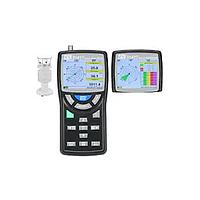
Weather Meter
Reliable environmental data is essential when operations depend on changing outdoor conditions. In agriculture, renewable energy, construction, logistics, and site safety, a suitable Weather Meter helps teams monitor wind, temperature, humidity, pressure, and rainfall with better consistency and faster decision-making.
This category brings together weather measurement instruments for different levels of use, from compact all-in-one stations to more robust monitoring systems with logging and communication functions. Depending on the installation environment and the parameters you need to track, the right solution may be a simple station for local observation or a modular device designed for integration into a broader monitoring network.
What these instruments are used to measure
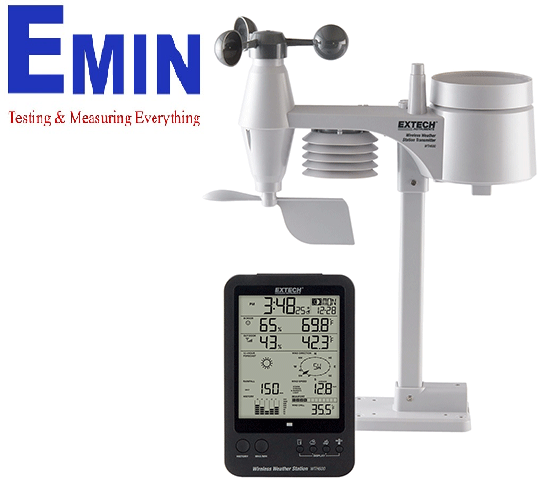
Most weather meters in this category are designed to capture a combination of key meteorological values rather than a single variable. Typical measurements include wind speed, wind direction, ambient temperature, relative humidity, atmospheric pressure, and rainfall. For many B2B users, combining these values in one system is more practical than deploying multiple separate instruments.
This is especially useful where weather conditions affect process quality, equipment protection, or field safety. A sudden rise in wind speed can change crane operation planning, while humidity and pressure trends can influence storage conditions, ventilation strategies, or outdoor testing schedules. In some projects, weather data is also reviewed alongside signals from air quality sensors to build a more complete picture of the environment.
Integrated stations and modular monitoring systems
Not every application needs the same type of instrument. Some users prefer compact weather stations with a display and basic data transfer, while others need a more configurable platform for permanent installation, logging, and system integration. The products in this category illustrate both approaches well.
For example, the PCE FWS 20N Weather Station and PCE FWS 20N-1 Weather Center are suited to users who want multi-parameter monitoring in a relatively accessible format. These models combine indoor and outdoor measurement functions and support core parameters such as temperature, humidity, pressure, rainfall, and wind. They are a practical choice for general site monitoring, facility management, and educational or light industrial applications.
At the other end, systems such as the OMEGA WMS-25 series are better aligned with installations where data logging, wired power, and structured deployment matter more than consumer-style convenience. These modular stations are relevant when weather information needs to be retained, reviewed over time, or connected to plant-level monitoring workflows.
Examples of measurement coverage in this category
The range of products here shows how weather monitoring can scale from general observation to more demanding field use. The Cirrus research MO901 Compact Weather Stations, for instance, cover wind speed, wind direction, temperature, humidity, dew point, pressure, and precipitation in a compact format. With optical precipitation measurement and an IP66-rated design, this type of station is more suitable for exposed outdoor environments than entry-level devices.
The Cirrus research MO902 Compact Weather Stations focus specifically on wind speed and direction, which can be the right fit when projects do not require full weather analysis. In practice, this narrower approach is often useful for turbine siting checks, rooftop equipment protection, temporary event infrastructure, or safety-related wind observation.
Meanwhile, several OMEGA WMS-25 variants add features such as logging, display, and enclosure options, making them relevant for continuous weather monitoring where recorded data is part of routine reporting or compliance documentation.
How to choose the right weather meter
The most effective selection process starts with the measurement objective, not the product name. If the main concern is operational awareness, a compact weather station may be enough. If the site requires historical records, remote review, or connection to a control panel, a more structured monitoring system is typically the better choice.
It also helps to define which parameters are truly necessary. Some users need only wind speed and direction, while others must track rainfall, humidity, and barometric pressure together. Measurement range matters too. Within this category, examples include wind measurement up to 50 m/s in the PCE models and up to 60 m/s in the Cirrus research compact stations, which may be relevant for harsher outdoor exposure.
Another practical consideration is installation environment. For fixed outdoor deployment, enclosure protection, sensor durability, and maintenance access all influence long-term reliability. Where a project also needs direct output to automation hardware, related solutions in air and gas transmitters may be useful for adjacent environmental measurements inside ducts, rooms, or process areas.
Installation factors that affect data quality
Even a capable weather meter can produce misleading data if it is installed poorly. Wind sensors should be mounted in a clear, unobstructed location to reduce turbulence caused by buildings, walls, or surrounding structures. Rainfall measurement also depends heavily on placement, as nearby trees, roof edges, or uneven surfaces can distort actual precipitation readings.
Temperature and humidity readings are similarly sensitive to direct sunlight, reflected heat, and inadequate airflow. For this reason, users should evaluate mounting height, orientation, and local microclimate before selecting the final installation point. In many projects, measurement quality is determined as much by deployment discipline as by instrument specification.
For broader environmental monitoring programs, weather data is often interpreted alongside other instruments such as ambient light sensors when solar exposure or daylight conditions affect the analysis.
Applications across industry and infrastructure
Weather meters are used in a wide variety of professional settings. In agriculture and greenhouse operations, they support irrigation planning, ventilation control, and general crop environment tracking. In solar and wind energy projects, wind and atmospheric measurements help operators understand site conditions and interpret system performance more accurately.
On construction sites and industrial facilities, local weather data can support safety procedures, temporary structure management, and maintenance scheduling. Universities, laboratories, and technical training environments also use weather stations for field observation, data collection, and practical instruction.
Some users only need on-site visibility, while others need archived records that can be reviewed over days or months. That difference often determines whether a basic integrated station is sufficient or whether a logging-oriented system such as the OMEGA WMS-25 family is more appropriate.
Featured manufacturers and product examples
This category includes products from recognized manufacturers such as OMEGA, Cirrus research, and PCE. Each serves a slightly different use case within weather monitoring. PCE models are a clear fit for general-purpose multi-parameter observation, while OMEGA systems align more naturally with industrial-style monitoring and stored data. Cirrus research compact stations offer a strong option where environmental resistance and compact outdoor deployment are priorities.
Representative products in this category include the PCE FWS 20N Weather Station, PCE FWS 20N-1 Weather Center, Cirrus research MO901 Compact Weather Stations, Cirrus research MO902 Compact Weather Stations, and several OMEGA WMS-25 configurations. Reviewing these examples can help narrow the selection based on parameter coverage, installation style, and expected data handling.
Final considerations before purchase
Choosing a weather meter is ultimately about matching measurement scope, installation conditions, and data requirements. A compact station may be the right answer for straightforward local monitoring, while a modular or logging-enabled system is often better for permanent installations and structured reporting.
If you are comparing products in this category, focus on the parameters you actually need, the environment where the instrument will operate, and whether the data will simply be viewed locally or integrated into a wider monitoring workflow. A well-chosen system will be easier to deploy, easier to maintain, and more useful over the long term.
Get exclusive volume discounts, bulk pricing updates, and new product alerts delivered directly to your inbox.
By subscribing, you agree to our Terms of Service and Privacy Policy.
Direct access to our certified experts