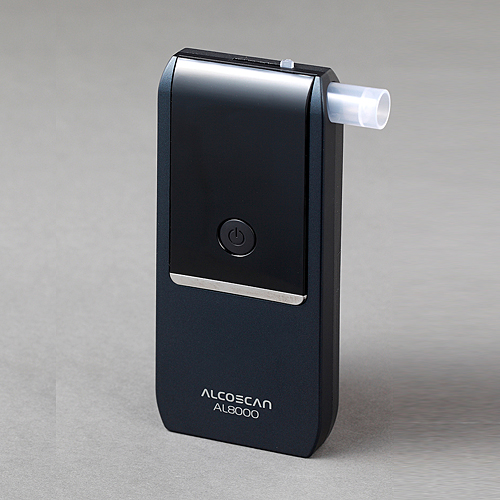
Alcohol concentration meter
Accurate alcohol measurement matters whenever product consistency, process control, or formulation verification is part of the job. In beverage production, fermentation monitoring, and solvent preparation, a reliable alcohol concentration meter helps teams check liquid samples quickly without adding unnecessary complexity to routine testing.
This category focuses on portable instruments used to evaluate alcohol-related concentration in liquid samples, especially refractometer-based models for ethyl alcohol, isopropyl alcohol, and wine-related scales. For laboratories, wineries, distilleries, food and beverage processors, and quality control teams, the right device can improve repeatability while reducing sample volume and test time.
Where alcohol concentration meters are commonly used
These instruments are typically selected for applications where fast liquid testing is more practical than complex bench analysis. Common use cases include checking ethyl alcohol content in spirits, verifying process conditions in wine production, and measuring isopropyl alcohol solutions used in industrial or laboratory settings.
In many workflows, operators need a reading from only a few drops of sample and want results within seconds. That makes handheld digital refractometers especially useful for production floors, incoming inspection, batch comparison, and field measurement where portability and speed are important.
How this type of instrument works
Most products in this category are based on the refractive index of a liquid. As alcohol concentration changes, the way light passes through the sample also changes. The instrument converts that optical behavior into a displayed value using a dedicated scale such as mL/100mL, g/100g, Baume, KMW, or T.A. scales depending on the intended application.
Because the measurement principle depends on the selected scale, choosing the correct model is essential. A meter intended for ethyl alcohol is not automatically the best choice for grape must or isopropyl alcohol solution, even if the instruments look similar in format.
Choosing the right scale for your sample
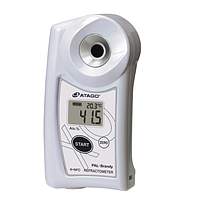
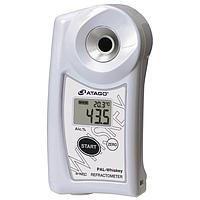
One of the most important buying criteria is the measurement scale. For direct ethyl alcohol reading, models such as the ATAGO PEN-Ethanol(V) Digital Hand-held and ATAGO PAL-Brandy Ethyl alcohol Refractometer are designed to display alcohol concentration in liquid-friendly units used for production and inspection work.
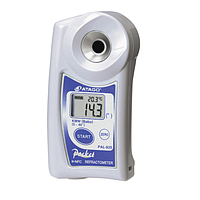
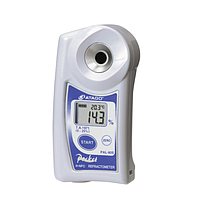
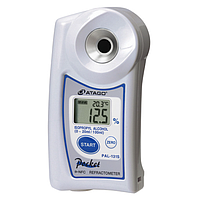
If the application involves isopropyl alcohol dilution, a specialized model such as the ATAGO PAL-131S Isopropyl alcohol Refractometer is more appropriate because its scale is built for that solution type. For wine-related process control, instruments like the ATAGO PAL-84S, PAL-83S, PAL-80S, PAL-79S, and WM-7 are better aligned with winery measurement practices because they use wine-focused scales rather than general alcohol-only readouts.
When the testing task is broader than alcohol alone, it may also be useful to review related liquid analysis tools such as test paper for quick screening in supporting workflows.
Portable digital models for routine QC work
Many buyers prefer compact digital units because they are easy to operate, fast to stabilize, and simple to read. Several featured ATAGO models in this category work with only 2 to 3 drops of sample and provide a result in about 3 seconds, which is practical for repetitive checks during production.
Handheld designs also help when measurements need to be taken near tanks, blending stations, grape receiving points, or sample preparation areas. Water-resistant construction on selected models can be valuable in humid or splash-prone environments, while battery-powered operation supports mobile use across different workstations.
For buyers comparing manufacturers, the ATAGO range is particularly relevant in this category because it includes dedicated models for spirits, wine scales, and alcohol solution measurement in compact digital formats.
Examples of instruments in this category
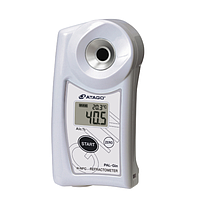
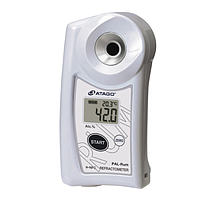
For distilled beverage applications, ATAGO PAL-Brandy, PAL-Rum, and PAL-Gin models illustrate a focused approach: each is built around an ethyl alcohol scale with a measuring range up to 53.0% and is intended for fast concentration checks in corresponding product types. These are suitable when the target sample and scale are already clearly defined.
For broader wine process evaluation, the ATAGO WM-7 Digital Wine Refractometer stands out because it combines multiple scales in one device, including Brix, T.A. 1990, T.A. 1971, Oe, KMW, and Baume. That makes it a practical option for users who need more than a single alcohol-related parameter during grape must and wine production.
Where unit preference matters, PEN-Ethanol(W) and PEN-Ethanol(V) show why the display basis must be checked carefully. One is intended for g/100g and the other for mL/100mL, so selection should match the reporting format used by your QC procedure, specification sheet, or production standard.
What to check before buying
Start with the actual liquid being measured. Ethyl alcohol, isopropyl alcohol, grape must, and wine process samples can require different scales and different interpretation methods. A good purchasing decision begins with sample type, expected concentration range, and the unit that your team needs to report.
Next, review practical factors such as sample volume, response time, environmental conditions, and whether the instrument offers temperature compensation within your working range. In routine production, these details often matter more than a long feature list because they directly affect day-to-day usability.
It is also helpful to consider how the alcohol meter fits into the wider testing workflow. Some facilities combine concentration checks with other liquid analysis methods, including reagent-based verification or specialized optical tools. Depending on the application, related categories such as other reagents or a refractometer-based liquid testing device may help expand the testing setup.
Who typically benefits from this category
This category is relevant for wineries, distilleries, beverage processors, food labs, chemical handling teams, and technical service providers that need quick liquid concentration checks. It is also useful for R&D teams comparing batches, validating dilution steps, or monitoring process variation over time.
Because many models are compact and require minimal sample volume, they are well suited to both laboratory and on-site use. That flexibility is valuable in environments where operators need to move between incoming inspection, in-process verification, and final quality checks without switching to large benchtop systems.
Finding a suitable alcohol concentration meter for your process
The best choice depends less on appearance and more on fit: fit to sample type, fit to measurement scale, and fit to the reporting method used in your operation. A spirits producer may prioritize direct ethyl alcohol readout, while a winery may need Baume, KMW, or T.A. scales for process monitoring.
Within this category, you can compare compact digital models for alcohol-focused testing and wine-related refractometers built for specific production needs. If you begin with the sample matrix and required unit, it becomes much easier to narrow down the most appropriate portable measurement solution for accurate, repeatable liquid testing.
Get exclusive volume discounts, bulk pricing updates, and new product alerts delivered directly to your inbox.
By subscribing, you agree to our Terms of Service and Privacy Policy.
Direct access to our certified experts