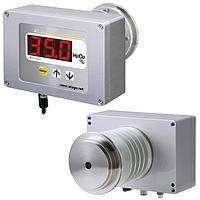
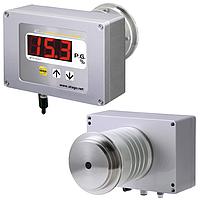
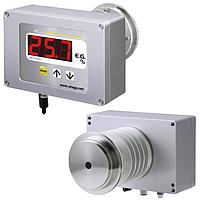
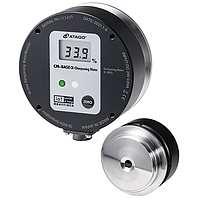
Density and concentration meter
Accurate liquid concentration control affects product quality, process stability, and operating cost in many industrial environments. When teams need a fast way to verify solution strength, dilution ratio, or density-related concentration, a density and concentration meter becomes a practical tool for routine checks in production, quality control, and field testing.
In this category, the focus is on instruments suited to liquid testing applications where quick sample-based measurement is important. Many models are used for chemical solutions, industrial wash fluids, and process liquids that must stay within a defined concentration range to ensure repeatable results.
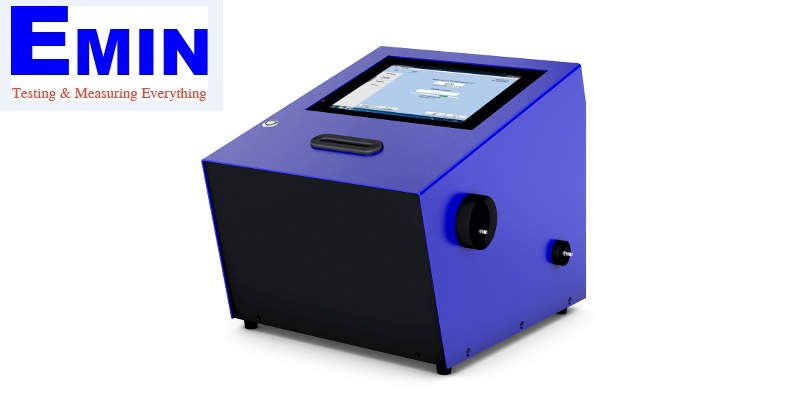
Why concentration measurement matters in liquid testing
In daily plant operation, concentration is rarely just a laboratory number. It directly affects mixing consistency, cleaning performance, reaction control, and the usability of process liquids. If a solution is too dilute, performance may drop; if it is too concentrated, material cost, corrosion risk, or downstream variation can increase.
That is why many facilities use portable measuring devices for rapid verification at the point of use. Alongside tools such as test paper for quick screening, digital concentration meters help operators obtain more repeatable numerical results when tighter control is needed.
Typical applications across industry
These instruments are widely relevant in chemical handling, maintenance fluids, water-related process control, and industrial cleaning. In practical use, operators may check whether a prepared solution matches the target ratio before it enters production, or confirm whether an in-service liquid still falls within its acceptable working range.
For environmental and water-focused workflows, concentration measurement can support routine checks on treatment chemicals and specialty liquids used in maintenance or process support. In some cases, it is also used together with more specific analytical tools such as a ion measurement electrode when users need both general concentration control and parameter-specific verification.
Common use cases include:
- Checking industrial cleaning fluid concentration
- Verifying prepared chemical solutions before use
- Monitoring dilution consistency between batches
- Supporting QC inspection for specialty liquids
- Performing quick on-site measurements with small sample volumes
Portable digital refractometers as a practical solution
Many products in this category are compact digital refractometer-style instruments. They typically require only a few drops of sample, provide results within seconds, and are convenient for operators who need a simple workflow without a full laboratory setup. This makes them well suited to production floors, utility rooms, service teams, and incoming or outgoing quality checks.
A clear example is the ATAGO lineup, which includes application-specific models for different liquid types and concentration scales. Rather than relying on one universal setting, these instruments are often designed around a particular solution, helping users measure within the range and resolution that best fit the intended application.
For low-concentration industrial wash solutions, the ATAGO PAL-Cleaner is a relevant example. Its fine resolution supports applications where small concentration changes can affect cleaning effectiveness. Other models in the same family are tailored to substances such as polyvinyl alcohol, sodium carbonate, sodium bicarbonate, sodium tartrate, potassium carbonate, sodium thiosulfate, sodium molybdate, sodium tungstate, and potassium oxalate.
How to choose the right density and concentration meter
The best choice depends less on general instrument type and more on the liquid being measured. Different solutions behave differently, so the first step is to identify whether you need a dedicated scale for a known chemical or a meter intended for a broader concentration-checking task.
Range and resolution should be matched to the working process. A low-concentration cleaning solution may need finer decimal resolution, while another application may require a wider measuring range. Accuracy, ambient operating conditions, and temperature compensation are also important, especially when measurements are taken outside a controlled lab environment.
Buyers should also consider practical factors:
- Sample volume required for each reading
- Measurement speed for repetitive checks
- Water resistance for field or plant use
- Battery operation for mobile work
- Whether the device is optimized for a specific chemical solution
Examples of product fit by application
When the task is monitoring industrial wash solution strength, the ATAGO PAL-Cleaner is a strong fit because it is designed for low-concentration cleaner measurement with fine resolution. For processes involving polymers, the ATAGO PAL-85S Polyvinyl alcohol Refractometer is more relevant, giving users a direct scale for that application instead of forcing interpretation from a generic reading.
For specialty chemicals, application-specific models can simplify routine work. Examples in this category include the ATAGO PAL-71S for sodium molybdate, PAL-72S for sodium tungstate, PAL-69S for sodium thiosulfate, PAL-65S for sodium tartrate, PAL-64S for sodium bicarbonate, PAL-63S for sodium carbonate, and PAL-62S for potassium carbonate. This approach is useful in B2B settings where operators want a straightforward reading tied closely to the process liquid they handle every day.
Some users may also compare these instruments with a urine refractometer or other refractometer categories. The key difference is application focus: category-specific meters are better aligned with industrial and technical liquid measurement, especially when the scale must match a defined chemical or maintenance fluid.
Operational benefits for QC, maintenance, and production teams
A portable concentration meter supports faster decision-making on the shop floor. Instead of sending every sample to a central lab, operators can perform a quick check during preparation, replenishment, or troubleshooting. This helps reduce wasted chemicals, avoid off-spec batches, and improve consistency between shifts.
For QC teams, the value lies in repeatable spot checks and easier standardization of routine measurement. For maintenance teams, it supports field verification of service fluids and cleaning mixtures. For production teams, it helps confirm that a prepared solution is ready before the process continues.
In practice, these benefits often matter more than highly complex features. Fast readings, easy handling, and application-specific scales are what make this category useful in everyday industrial work.
What to review before ordering
Before selecting a model, confirm the target liquid, expected concentration range, and how the reading will be used in the workflow. If the process depends on one specific chemical solution, a dedicated model is often the most efficient choice. If the environment is wet or measurements are taken near tanks and process lines, device protection and portability become more important.
It is also worth checking whether the instrument will be used mainly for incoming inspection, batch preparation, line-side verification, or maintenance support. That operating context helps determine whether you need finer resolution, broader range coverage, or simply a fast handheld device that can be used with minimal training.
Final thoughts
This category is designed for buyers who need a reliable way to monitor liquid concentration in real working conditions. Whether the task involves industrial cleaning solutions or specific chemical formulations, the right density and concentration meter can make routine testing faster, more consistent, and easier to manage across production and QC activities.
If you already know the substance you need to measure, start by matching the instrument scale and range to that application. A well-matched portable meter is usually the most efficient path to dependable day-to-day concentration control.
Get exclusive volume discounts, bulk pricing updates, and new product alerts delivered directly to your inbox.
By subscribing, you agree to our Terms of Service and Privacy Policy.
Direct access to our certified experts