
Iron content meter
Accurate iron measurement matters whenever water quality affects process stability, equipment life, or compliance reporting. In utility water, industrial water treatment, environmental monitoring, and laboratory testing, even relatively low iron concentrations can influence color, taste, scaling behavior, corrosion control, and downstream analytical results. This category brings together iron content meter solutions used for routine testing, spot checks, and portable field analysis.
Depending on the required detection level, iron can be measured in ppb or mg/L ranges using compact checkers, portable photometers, and the matching reagent systems that support repeatable colorimetric analysis. The selection here is especially relevant for users who need a practical workflow for dissolved iron testing without moving immediately to more complex bench instrumentation.
Where iron testing is commonly used
Iron testing is a routine requirement across many water-related applications. Operators may monitor raw water, boiler feed water, cooling systems, wastewater streams, process water, or treated drinking water to track contamination, treatment performance, or changes in source quality.
In practical terms, an iron meter is often selected when users need fast on-site readings, simple sample handling, and a more consistent method than visual comparison alone. For teams that also manage multiple wet-chemistry tests, related consumables such as other reagents may be useful for building a broader water testing workflow.
Instrument types in this category
This category includes several common formats for iron analysis. Compact checker-style instruments are suitable for quick routine measurements, while portable photometers offer more robust handling, clearer displays, and features that support regular field or plant use.
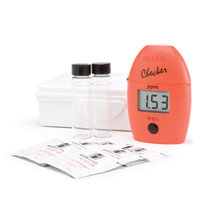
For example, the HANNA HI721 Iron checker is designed for high-range iron measurement from 0.00 to 5.00 ppm, making it suitable for applications where iron levels are expected in the mg/L range. At lower concentration levels, the HANNA HI746 Iron Low Range Checker supports measurements down to the ppb range, which is helpful when tighter control or more sensitive monitoring is needed.
Users who need a more advanced portable format may also consider the HANNA HI97721 Iron High Range Portable Photometer or the HANNA HI97746 Iron Low Range Portable Photometer. These models are aligned with field testing workflows where repeatability, easy reading, and better instrument handling are important.
How colorimetric iron measurement works
Most products in this category are based on colorimetric measurement. In this method, the sample reacts with a dedicated reagent to produce a color change. The instrument then measures how much light is absorbed or transmitted at a specific wavelength, converting that optical response into an iron concentration reading.
This approach is widely used because it combines relatively simple sample preparation with practical accuracy for routine water analysis. The context here includes reagent systems based on methods such as phenanthroline chemistry and other established wet-chemical approaches, depending on the specific instrument and measurement range.
Because reagent quality directly affects result quality, many users purchase meters together with compatible consumables and calibration tools rather than treating them as separate items. That is especially important for organizations that run recurring test schedules in plants, service teams, or environmental fieldwork.
Choosing the right range: low range vs high range
One of the most important buying criteria is the expected iron concentration in the sample. If the application involves trace or low-level monitoring, a low-range instrument is usually the better fit. The HANNA HI746, for instance, is positioned for low-range analysis with readings in ppb, while the HANNA HI97746 provides low-range portable photometer capability in mg/L resolution suitable for more formal field measurement.
When iron concentration is expected to be higher, a high-range model is generally more practical. The HANNA HI721 and HANNA HI97721 cover iron testing up to 5.00 mg/L, which aligns with many routine industrial and water treatment tasks. Choosing a range that matches real sample conditions helps avoid repeated dilution, out-of-range readings, and unnecessary retesting.
Users comparing iron testing methods alongside other analytical approaches may also review tools in categories such as ion measurement electrodes when building a broader liquid analysis setup.
Reagents, standards, and accessories matter as much as the meter
An iron measurement system is not just the handheld instrument. Day-to-day usability depends heavily on the availability of the correct reagents, standards, and replacement consumables. This category includes several examples that support ongoing operation, such as HANNA HI93721-01 Iron High Range Reagents, HANNA HI93721-03 for higher test volume, and HANNA HI38040-100 replacement reagents for medium-range kit workflows.
For low-range operation, the HANNA HI746-25 reagent supports continued use of the HI746 checker. Where verification is important, products such as the HANNA HI721-11 Iron Checker HC Calibration Check Set and HANNA HI97746-11 Iron Low Range CAL Check™ Standards help users confirm that instrument response remains within expected performance.
This matters in B2B environments because instrument downtime is often caused not by the meter itself, but by missing consumables, expired reagents, or lack of verification tools. A complete purchasing decision should therefore consider test frequency, stocking needs, and the ease of maintaining a repeatable workflow.
Why many buyers focus on portable photometers and checker systems
Portable iron testing solutions are popular because they reduce the gap between field sampling and result availability. Instead of sending every sample to a central laboratory, maintenance teams, water treatment operators, and service engineers can obtain immediate data where the sample is collected.
Checker-style devices are especially useful for fast routine checks and operator-friendly workflows. Portable photometers typically add benefits such as stronger instrument housing, improved displays, data handling features, and easier verification using standards. The HANNA range shown in this category is a good example of how compact instruments, photometers, and supporting reagent kits can work together as a practical water testing workflow.
For buyers evaluating manufacturers, it may also be helpful to explore the broader HANNA product range alongside other measurement brands listed on the site, including HACH, depending on preferred testing methods and existing site standards.
Selection tips for industrial and laboratory buyers
Before choosing an iron content meter, start with the sample type and the concentration range you actually expect. Then confirm whether the instrument is intended for spot checking, routine field testing, or more structured quality control. This usually determines whether a compact checker or a portable photometer is the better choice.
Next, review the operating ecosystem around the meter: reagent availability, number of tests per pack, calibration check options, cuvettes, and carrying accessories. For users managing many parallel water tests, consistency across methods and consumables can be just as important as the meter’s range or display design.
If your team needs repeatable iron analysis with straightforward operation, this category offers a focused set of solutions covering low-range and high-range measurement, plus the consumables required to keep testing practical over time. A well-matched combination of instrument, reagent, and verification standard will usually deliver better long-term results than choosing the meter alone.
Get exclusive volume discounts, bulk pricing updates, and new product alerts delivered directly to your inbox.
By subscribing, you agree to our Terms of Service and Privacy Policy.
Direct access to our certified experts