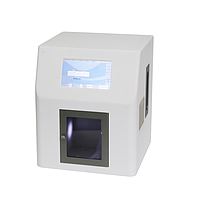
Liquid Particle Counter
When fluid cleanliness directly affects product quality, equipment reliability, or regulatory compliance, the ability to measure suspended contamination becomes essential. A Liquid Particle Counter helps quantify particles in liquids by size and count, giving laboratories, production teams, and maintenance engineers a clearer view of contamination levels across water-based systems, chemicals, pharmaceuticals, and other process liquids.
On this category page, you can explore instruments suited to both online monitoring and batch analysis. The range includes compact remote counters for integration into process lines, as well as benchtop samplers designed for controlled laboratory testing where repeatability and reporting are important.

Where liquid particle counting is used
Particle measurement in liquids is relevant anywhere contamination can affect performance, safety, or consistency. Typical use cases include monitoring purified water, checking process fluids, evaluating filtration efficiency, and verifying cleanliness in production environments where particulate control matters.
Depending on the application, users may need to detect submicron particles, monitor larger contamination in utility or industrial fluids, or compare particle levels before and after filtration stages. In broader liquid quality workflows, teams may also combine particle analysis with tools such as test paper for quick screening or reagents for liquid testing when chemical parameters must be evaluated alongside particulate contamination.
Common instrument formats in this category
This category covers more than one measurement approach. Remote liquid particle counters are typically selected for inline or near-line installation, especially where continuous monitoring, alarm output, or digital communication with a control system is required. These models are useful for process environments where operators want stable sampling conditions and regular trending data.
Batch samplers, by contrast, are better suited to laboratory workflows. They are often chosen when samples are collected manually, mixed before analysis, or tested against internal methods and pharmacopeia-style procedures. This makes them practical for QA/QC tasks, incoming material inspection, and comparative testing between lots.
For example, the Lighthouse Remote LPC series includes options spanning very fine detection ranges such as the Lighthouse Remote LPC Liquid particle counter (0.1 - 0.5 μm), 0.2 - 2.0 μm, and 0.3 - 3.0 μm. For larger size ranges and different flow conditions, the Remote LPC LE versions extend into broader channels such as 1.0 - 50 μm and 1.0 - 200 μm.
What to compare when selecting a Liquid Particle Counter
The first point to review is particle size range. Some applications focus on ultrafine contamination, while others are concerned with larger particles that may affect filtration, wear, or visible clarity. In this category, available examples range from very fine detection at 0.1 μm up to larger particle monitoring reaching 200 μm or even 400 μm in batch-oriented systems.
The second key factor is sampling method and flow rate. Remote counters in this selection include flow configurations such as 30 mL/min, 50 mL/min, and 100 mL/min, which can influence response time, sample compatibility, and installation layout. Batch samplers such as the Lighthouse LS-20 Liquid Batch Sampler and Lighthouse LS-60 Liquid Batch Sampler support controlled sample handling, syringe-based operation, and laboratory-style workflows.
It is also important to confirm pressure and temperature compatibility, wetted materials, communication interfaces, and data handling. Many users look for RS232, RS485, Modbus, or analog output when integrating into plant systems, while laboratory users may care more about software support, recipe-based reporting, and stored records for traceability.
Examples of product fit by application
For continuous or semi-continuous process monitoring, the Lighthouse Remote LPC family is a strong reference point in this category. Models such as the Lighthouse Remote LPC LE Liquid particle counter (1.0-200μm, 30 mL/min) and the 1.0-50μm, 50 mL/min version are designed for remote installation and support industrial communication modes that can simplify connection to supervisory systems.
Where finer contamination monitoring is required, the Lighthouse Remote LPC Liquid particle counter series offers lower detection thresholds including 0.5 - 5.0 μm, 0.3 - 3.0 μm, 0.2 - 2.0 μm, and 0.1 - 0.5 μm. These ranges may be relevant in cleaner processes, high-purity liquid applications, or environments where submicron particle control is part of the qualification strategy.
For batch testing, the Lighthouse LS-20 and LS-60 provide a different workflow centered on prepared samples and controlled analysis. The Bonnin BN-LE100 Liquid Particle Counter (2-400 μm) is another example in the category for users evaluating broader particle ranges in laboratory or inspection settings.
Integration, communication, and data management
In B2B environments, a particle counter is rarely used as a stand-alone device for long. It typically becomes part of a larger monitoring and quality control workflow, which is why communication options matter. Several models listed here support serial communication and Modbus-oriented integration, making them easier to connect with PLCs, SCADA platforms, or facility monitoring systems.
Built-in record storage, alarm outputs, and service indicators can also reduce the burden on operators by making routine monitoring more structured. For facilities that require broader contamination control or validation activities, it may also be useful to review related instrumentation from TSI where relevant to test setups and clean process environments, although the exact device choice should always match the liquid application and measurement objective.
Materials, sample compatibility, and operating conditions
Not all liquids behave the same in a particle counting system. Sample pressure, temperature, and chemical compatibility should be checked carefully before selection. In the products shown on this page, wetted materials such as stainless steel 316L, quartz, PTFE, PFA, and Kalrez appear across different models, which can be important when handling process fluids that demand clean, corrosion-resistant flow paths.
Connection style also affects installation planning. Some remote models use 1/4” compression fittings, while others use 1/4” FlaretekTM connections. These details influence how easily the instrument can be installed into an existing loop, and they can help determine whether a compact remote counter or a separate batch sampler is the more practical choice.
How to narrow down the right option
A practical way to shortlist instruments is to define the required detection threshold, expected particle concentration, preferred sampling mode, and reporting needs. If your process requires continuous trending and digital communication, a remote LPC model is usually the logical starting point. If you need standardized sample preparation and repeatable laboratory analysis, a batch sampler may be the better fit.
It is also worth considering how particle measurement fits into the wider testing workflow. Some facilities complement particulate analysis with concentration or optical checks using tools such as a refractometer for liquid measurement in specific applications, depending on the process and sample type.
Choosing from this category
This collection is intended for users who need reliable visibility into liquid cleanliness, whether for process control, laboratory testing, or contamination investigation. The available range covers fine-particle remote monitoring, broader-range liquid particle counting, and batch-based analysis from manufacturers such as Lighthouse and Bonnin, with additional brand context available from TSI.
If you are comparing models, focus on the actual sample conditions and the decision you need the data to support. Matching detection range, flow characteristics, communications, and material compatibility will usually lead to a more suitable Liquid Particle Counter than selecting by specification headlines alone.
Get exclusive volume discounts, bulk pricing updates, and new product alerts delivered directly to your inbox.
By subscribing, you agree to our Terms of Service and Privacy Policy.
Direct access to our certified experts