
Turbidity Meter
Clear water does not always mean low particulate content, and a slightly cloudy sample does not always indicate a serious quality issue. In practical water testing, visual judgment is often too subjective, which is why a Turbidity Meter is an important tool for process control, inspection, and routine monitoring. It helps users convert appearance into measurable data, making decisions faster and more consistent across industrial, environmental, and service applications.
On this category page, you can explore turbidity meters used for spot checks, laboratory work, and application-specific analysis, along with calibration consumables that support reliable measurement over time.
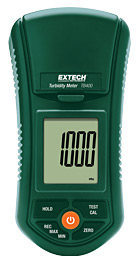
Why turbidity measurement matters in water testing
Turbidity is commonly used as an indicator of suspended particles in water. These particles can come from sediment, organic matter, biological growth, process contamination, or incomplete treatment. In many systems, rising turbidity is an early sign that filtration, clarification, or cleaning performance should be reviewed.
This makes turbidity measurement relevant in water treatment plants, aquaculture, pools and spas, food and beverage production, and environmental monitoring. For users who also manage broader water quality parameters, turbidity is often assessed alongside pH, conductivity, and other indicators using tools such as a water multiparameter tester where application needs extend beyond clarity alone.
Typical applications for turbidity meters
In industrial and municipal water treatment, turbidity meters are used to check raw water, intermediate filtration stages, and final water quality. A sudden change in readings may point to filter breakthrough, unstable feed conditions, or problems with chemical dosing. Because of this, the instrument often serves as a practical warning tool before larger quality deviations occur.
In aquaculture and general field sampling, handheld units are useful because they allow quick on-site checks without sending every sample to a laboratory. In commercial facilities such as pools and spas, turbidity values support routine maintenance and help operators verify that water remains visually acceptable and operationally controlled.
There are also more specialized uses. For example, the Hanna HI847492-02 Haze Meter for Beer Quality Analysis is designed for beverage haze assessment, showing how turbidity-related measurement principles are applied beyond standard water treatment tasks.
Common instrument types in this category
This category includes portable and bench-style solutions depending on how and where measurements are performed. Portable turbidity meters are typically preferred for field work, mobile service teams, and routine sampling at multiple points in a plant. They are compact, faster to deploy, and suitable for daily operational checks.
Examples include the HANNA HI987134-02 Pool Line ISO Portable Turbidity Meter and the Eutech TN 100 handheld models such as ECTN100NOSTDS and ECTN100IR. These instruments illustrate the type of solution often chosen for flexible measurement across a wide NTU or FNU range, with features such as auto-ranging, calibration support, and data handling suited to regular use.
For more fixed testing workflows, a benchtop-style option such as the PCE TUM 50 may be more appropriate. This type of setup is generally useful when measurements are performed in a controlled environment and documentation or repeat testing is part of the workflow.
How turbidity meters work in practice
Most modern instruments in this category measure the scattering of light caused by suspended particles in a sample. The meter sends light through the sample and evaluates how much light is scattered at a defined angle. This optical approach allows the instrument to estimate turbidity in units such as NTU or FNU, depending on method and instrument design.
Several listed products use infrared light sources around 850 nm or 860 nm and reference methods aligned with ISO practice. In practical terms, this helps reduce the influence of sample color and improves consistency for many water applications. Even so, good sampling technique, clean cuvettes, and proper calibration remain essential for dependable results.
What to consider when selecting a turbidity meter
The right choice depends first on the measurement environment. If the instrument will be used across multiple sampling points, a portable waterproof unit may be the better fit. If the work is more laboratory-based, larger instruments with memory and interface functions may be more convenient for structured testing.
Next, review the expected measurement range and the level of resolution needed at low turbidity. Some applications focus on very clear water where fine resolution matters, while others need a broader range for wastewater or process samples. It is also worth checking calibration options, memory capacity, interface availability, and the type of standards required for routine verification.
Brand preference may also influence selection when buyers want consistency with existing equipment. This category includes solutions from manufacturers such as HANNA, Eutech, and PCE, each relevant for different budgets, workflows, and application styles.
Calibration and accessories are part of measurement quality
A turbidity meter is only as useful as the stability of its measurement process. That is why calibration standards and supporting accessories should be treated as part of the testing system, not as optional extras. Regular calibration helps maintain confidence in trend data, especially when the instrument is used in production, compliance, or quality control routines.
This category includes items such as Hanna HI88703-11 and HANNA HI98703-11 turbidity calibration standards, as well as single-point solutions like HANNA HI93102-20 and Hanna HI 93102-0. Accessories such as HANNA HI98703-58 Silicone Oil can also help improve sample vial surface condition during measurement, which is important when optical methods are sensitive to scratches, fingerprints, and light interference.
For buyers who also need supporting consumables for broader lab workflows, related categories such as other reagents may be useful depending on the testing setup.
Practical tips for obtaining stable readings
Consistent turbidity measurement depends on more than the instrument itself. Sample cells should be clean, dry on the outside, and handled carefully to avoid fingerprints or droplets. Bubbles, inconsistent sample mixing, and dirty vials can all affect light scattering and create unnecessary variation.
It is also good practice to measure representative samples and follow a repeatable routine for calibration and verification. In environments where readings are used for trend analysis, documenting the sampling point, time, and instrument condition can be just as important as the number shown on the display.
FAQ
Does water color affect turbidity readings?
It can. Instruments that use infrared optical systems are often selected to reduce this effect, but sample characteristics can still influence results depending on the method and application.
How often should a turbidity meter be calibrated?
That depends on usage frequency, application criticality, and internal quality procedures. In routine industrial use, regular checks with calibration standards are recommended to maintain reliable data.
Is a handheld meter enough for industrial work?
For many field and routine inspection tasks, yes. If the workflow requires more structured testing, storage, or bench-based operation, a larger laboratory-style instrument may be more suitable.
Choosing the right solution for your workflow
The best turbidity meter is usually the one that fits the sampling environment, required range, and maintenance routine of your operation. Some users need a compact instrument for fast daily checks, while others need a more structured setup with data storage and calibration control. Reviewing the application first makes product selection much more efficient.
This category brings together practical turbidity measurement options, from handheld instruments to calibration consumables, so buyers can build a solution that matches real operating conditions. If you are comparing models for water treatment, field inspection, beverage clarity checks, or general laboratory use, focusing on method, range, portability, and calibration support will lead to a more dependable choice.
Get exclusive volume discounts, bulk pricing updates, and new product alerts delivered directly to your inbox.
By subscribing, you agree to our Terms of Service and Privacy Policy.
Direct access to our certified experts